

Places · St. George, Utah
St. George, Utah: Red Rocks, Downtown Rambles, and Dixie Days
Four days exploring St. George's red-rock overlooks, desert gardens, downtown water features, an outdoor concert, and a parade led by longhorn cattle.
When we first heard of St. George, Utah, our reaction was something along the lines of, Where the heck is St. George, Utah? After four days in this corner of the Southwest, we understood the appeal a lot better.
The city sits among red sandstone hills in southwestern Utah, within striking distance of Zion National Park, but it has plenty to offer between excursions into the surrounding desert. We found scenic places to explore almost within sight of downtown, inviting public spaces, good coffee, and a little more local character than we had expected. A downtown mural featuring a cosmic Mojave desert tortoise seemed like a fitting welcome for Soaring Tortoise.
St. George is also changing quickly. According to the U.S. Census Bureau, its population grew from about 73,000 in 2010 to nearly 109,000 in 2025. The newer residential and commercial development is hard to miss, but the historic center and surrounding landscape give the city a sense of place that goes beyond its growth statistics.
Sunrise Above the City at Pioneer Park
One morning, we headed up to Pioneer Park to watch the sunrise from a red-rock outcropping overlooking St. George. It was striking how quickly we could go from city streets to a landscape of sculpted sandstone, little passages between rock walls, and broad views over town.
Pioneer Park sits along Red Hills Parkway just above downtown. Rather than a conventional grassy city park, its main attractions are the sandstone formations themselves. We wandered among the rocks and found a place to take in the early light as the city spread out below us. The contrast between the built-up valley and the rugged terrain immediately around us was one of our favorite things about St. George.
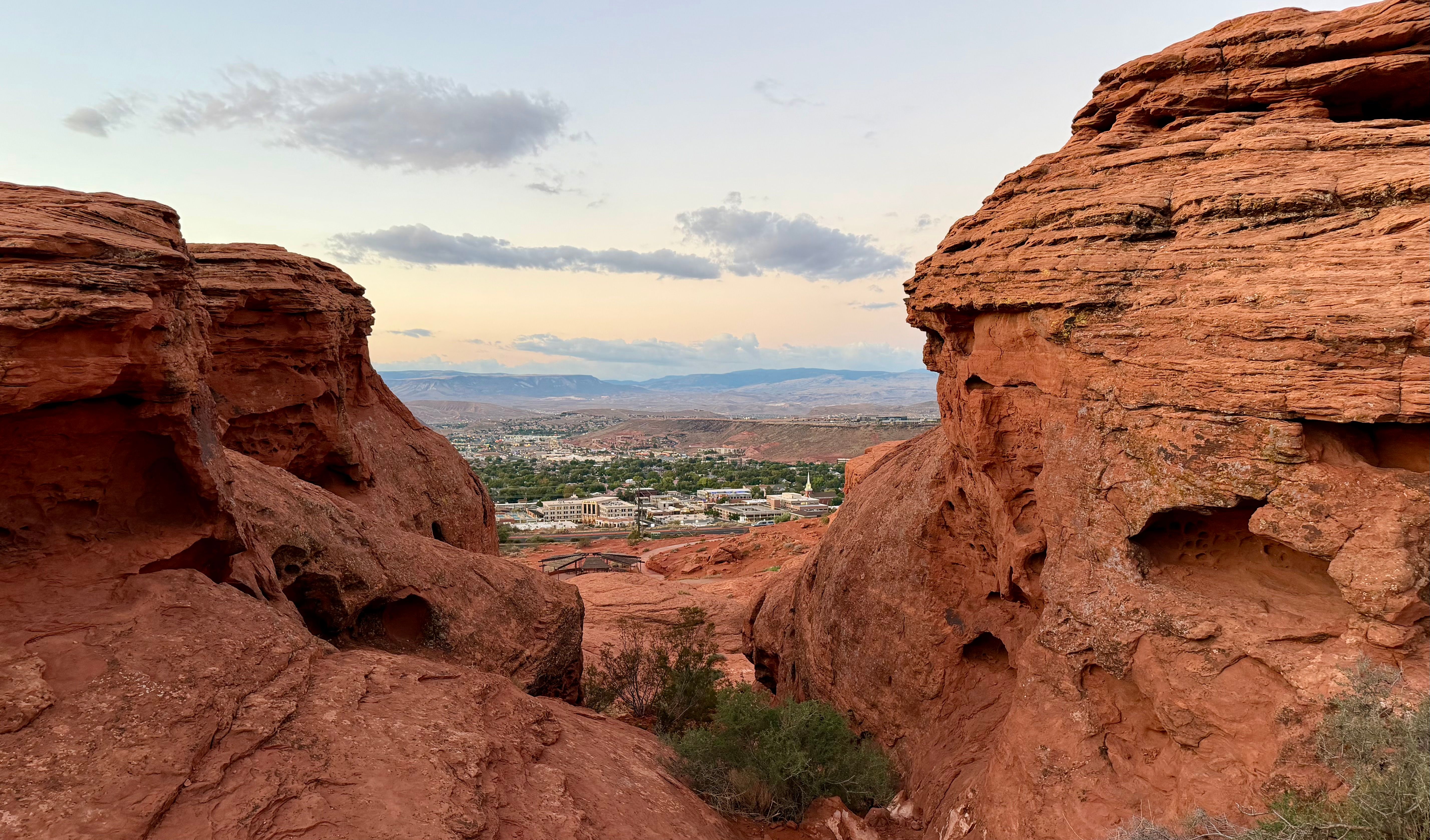
The park is free to visit, with parking areas close to the rock formations. Some of the most interesting viewpoints involve walking over uneven sandstone, so sturdy shoes and a little care around the edges are worthwhile. For a visitor with limited time, it's a rewarding way to get a feel for the local terrain without committing to a long hike.
A Desert Garden That Makes Water Conservation Interesting
Just down the road, we spent time wandering through the Red Hills Desert Garden, and this was another pleasant surprise. The public garden is beautifully laid out, with winding paths, thoughtfully grouped desert plants, water features, and places to sit among the vegetation.
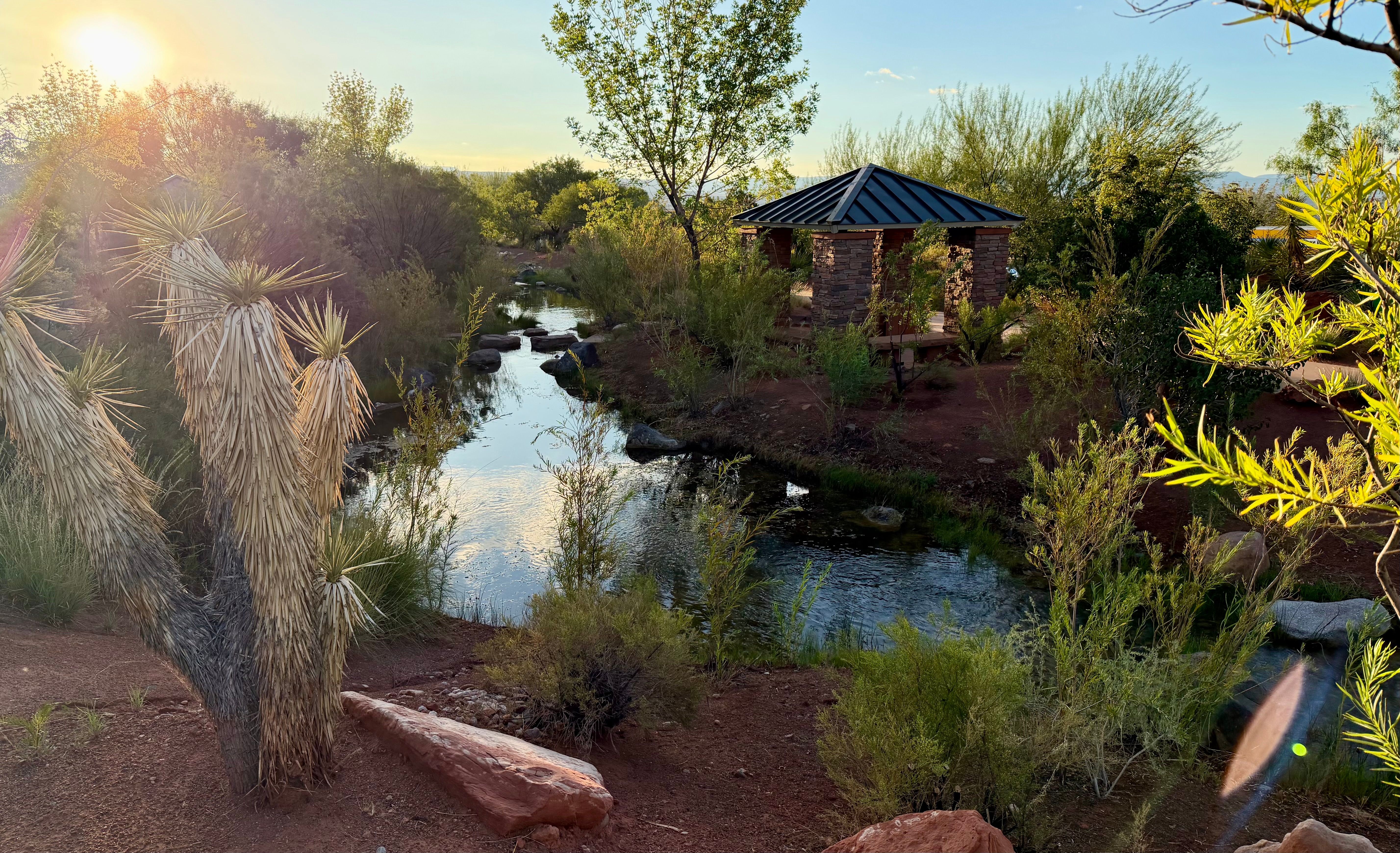
The nearly five-acre garden is maintained by the Washington County Water Conservancy District as a demonstration of water-efficient landscaping. It includes thousands of climate-appropriate plants, interpretive exhibits, and displays connected to the region's native fish and prehistoric past. The emphasis is practical: a landscape can be varied and attractive without relying on a conventional thirsty lawn.
One especially playful feature was a large bison sculpture incorporating plant materials, set among cacti and other desert vegetation. It fit the garden's blend of art, education, and landscaping without feeling out of place.
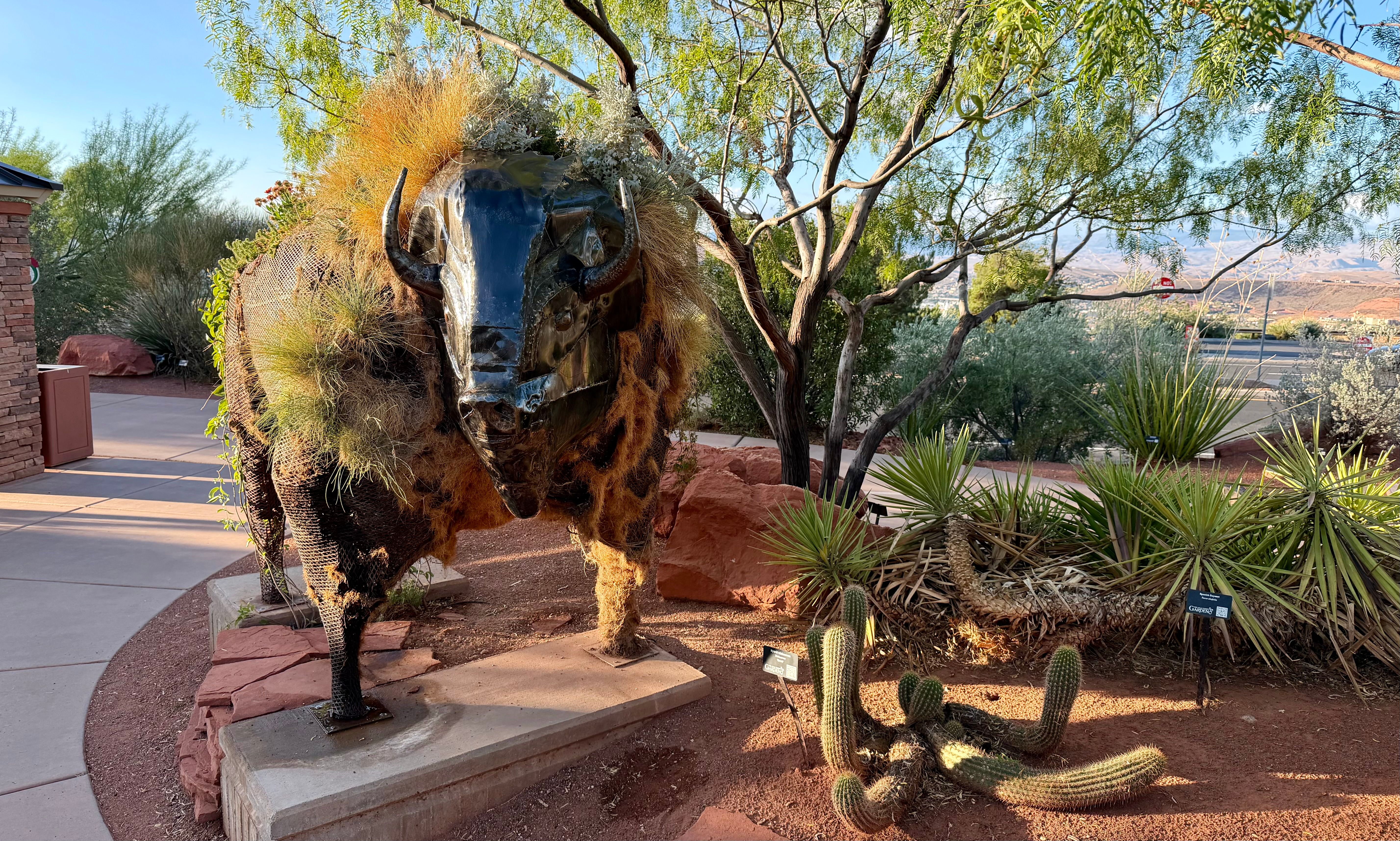
Admission is free, and the garden is open to the public daily; check its official visitor information for current hours. We would happily have spent longer there, particularly during the cooler parts of the day.
Downtown St. George: Shops, Shade, and Flowing Water
Between outings, we enjoyed wandering around central St. George, browsing shops and finding places to eat. The downtown has a mix of older buildings, newer apartments, and small gathering spaces that make it more interesting to explore on foot than we had anticipated.
What stood out most was the creative use of water. We kept coming across streams and channels that seemed to emerge from one landscaped area, disappear beneath a walkway, and spring back to life somewhere else. Water wound between seating areas, trees, storefronts, and courtyards, giving us something new to notice around the next corner.
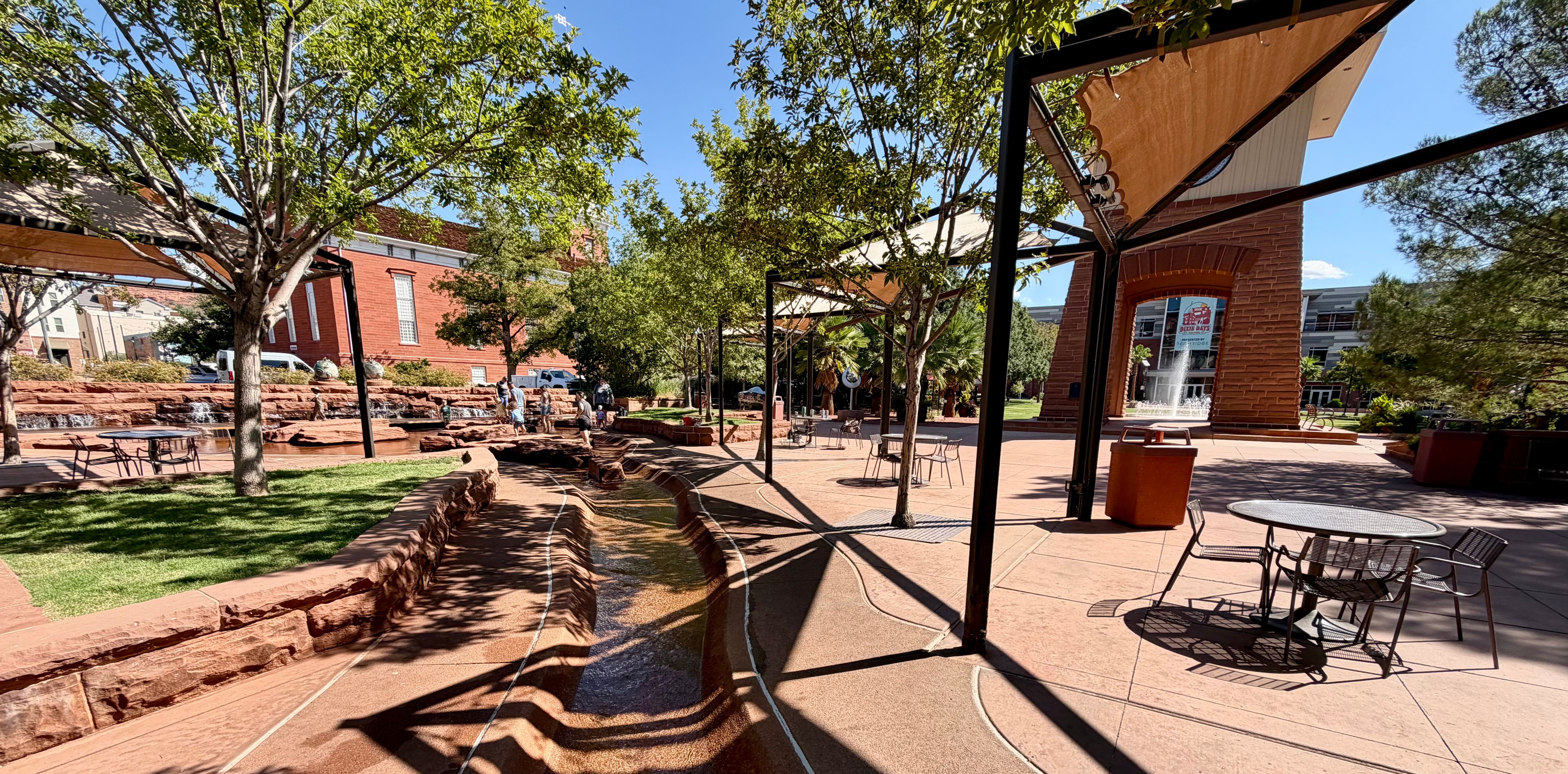
There's a historical reason for that theme. St. George was settled in 1861 as part of an effort by Latter-day Saint pioneers to grow cotton and other warm-climate crops in southern Utah. Irrigation was essential, and it was never easy in a place where heat, drought, and occasional floods could undo a season's work. The city's Water Walk project was designed in part to recognize that history. What initially struck us as a clever bit of urban landscaping also reflects the importance of water to the community's past and future.
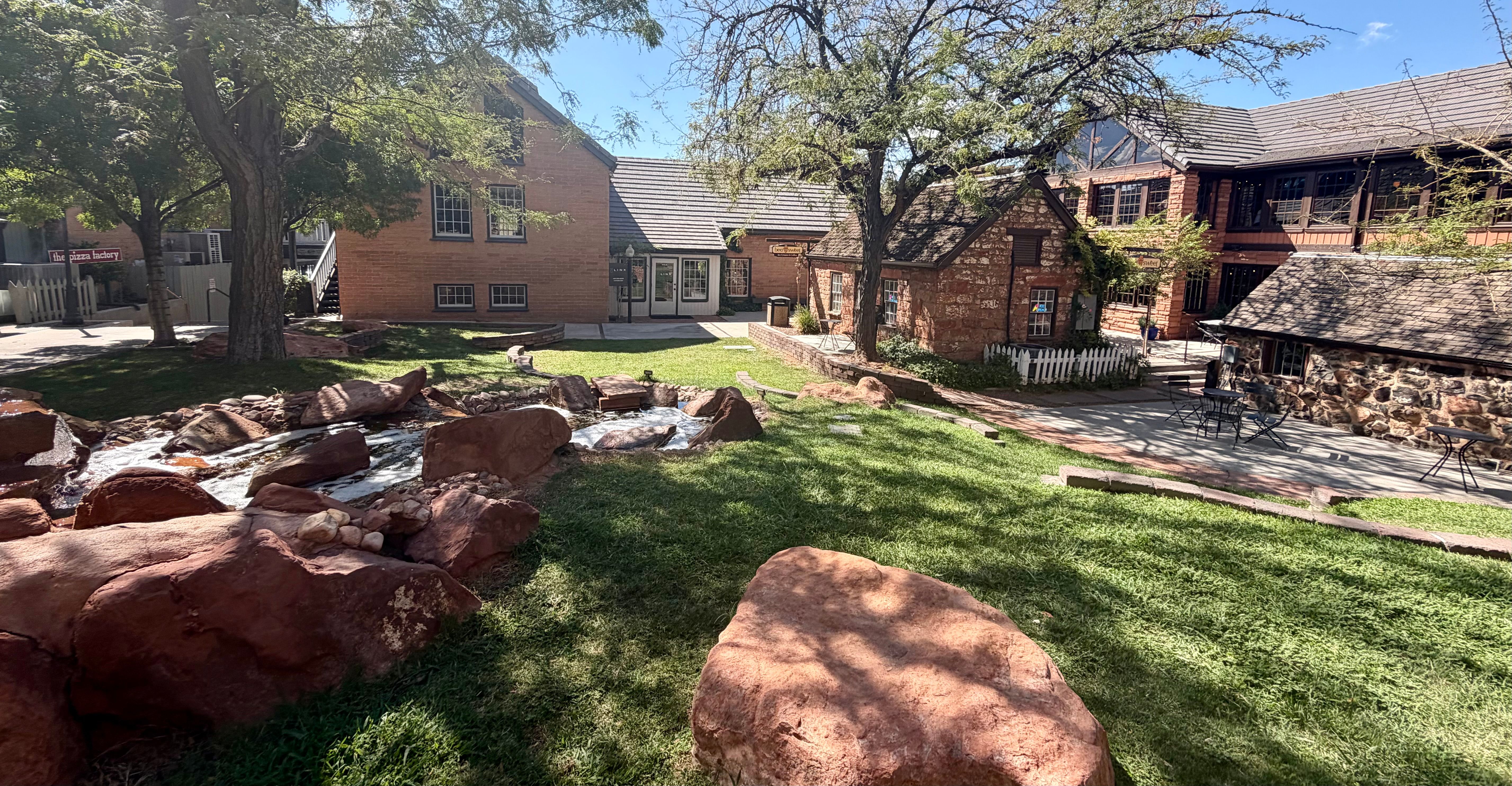
This combination of public space and desert surroundings helped us see St. George as more than a convenient place to sleep before heading into the national parks.
An AC/DC Tribute Concert at the Rock Bowl
We did make time for a day exploring Zion National Park during the trip, but one evening took us in a different direction: out to Sand Hollow Resort near Hurricane for a concert at the Rock Bowl.
The venue takes advantage of a natural gap between enormous red sandstone formations. A stage is tucked into the opening, with the audience facing both the performers and the landscape beyond. It's an intelligent use of a setting that already had plenty of visual interest before anyone added lights or speakers.
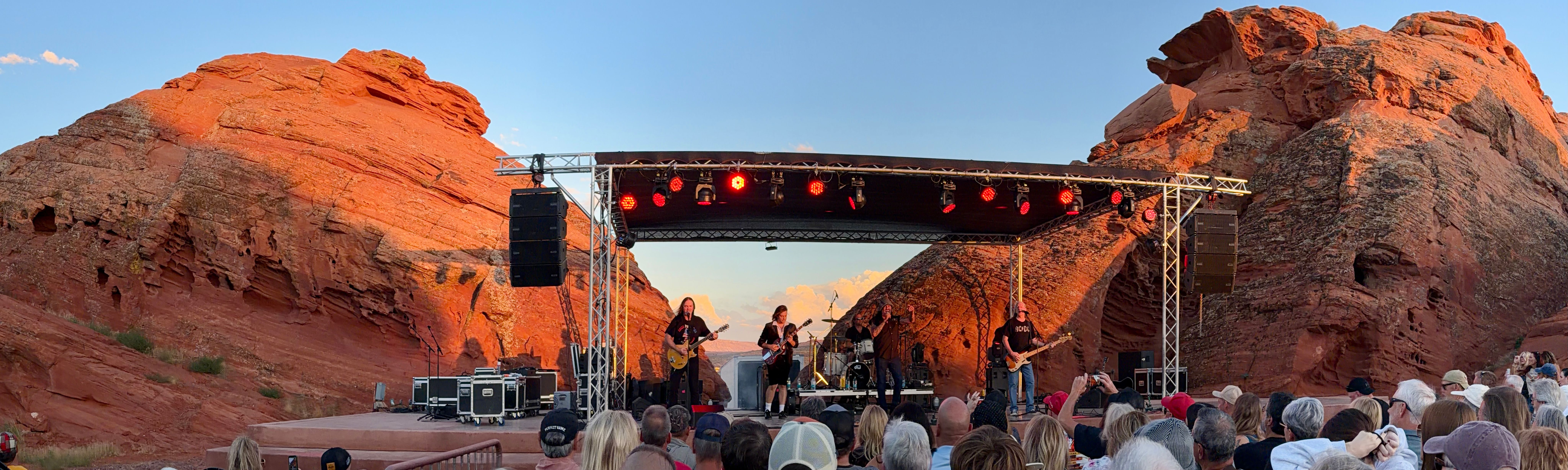
That night's band was Noise Pollution, an AC/DC tribute act that delivered a lively show. They rocked, no pun intended. The band had our attention, but we kept finding ourselves looking past the stage at the distant thunderheads framed by the sandstone. The changing sky was competing pretty successfully with the music for our attention.
If you're visiting the area, it's worth checking Sand Hollow Resort's event calendar to see whether something is scheduled at the Rock Bowl. The outdoor setting is a big part of the experience, so the weather and evening temperature matter almost as much as who's playing.
Dixie Days and a Main Street Full of Longhorns
Our visit happened to coincide with Dixie Days, a September celebration of St. George's local history and community traditions. The modern festival began in 2024, but its centerpiece, the Lions Dixie Round-Up Rodeo, dates back to 1935. The long-standing rodeo and parade have since been joined by other festivities and heritage activities.
The name “Dixie” has deep local roots. Southwestern Utah acquired the nickname “Utah's Dixie” in the nineteenth century because of its warm climate and the early settlers' attempts to grow cotton, a crop strongly associated with the American South. The history of the region reaches much further back, of course, including the Southern Paiute people whose homeland this was long before St. George was founded.
We didn't make it to the rodeo, but we were downtown in time for the Dixie Round-Up parade, and what a parade it was. Horseback riders, covered wagons, Jesuit mule drivers, and other groups rolled and clip-clopped through town. Then came something we had never seen before: dozens of longhorn cattle being herded straight down Main Street.
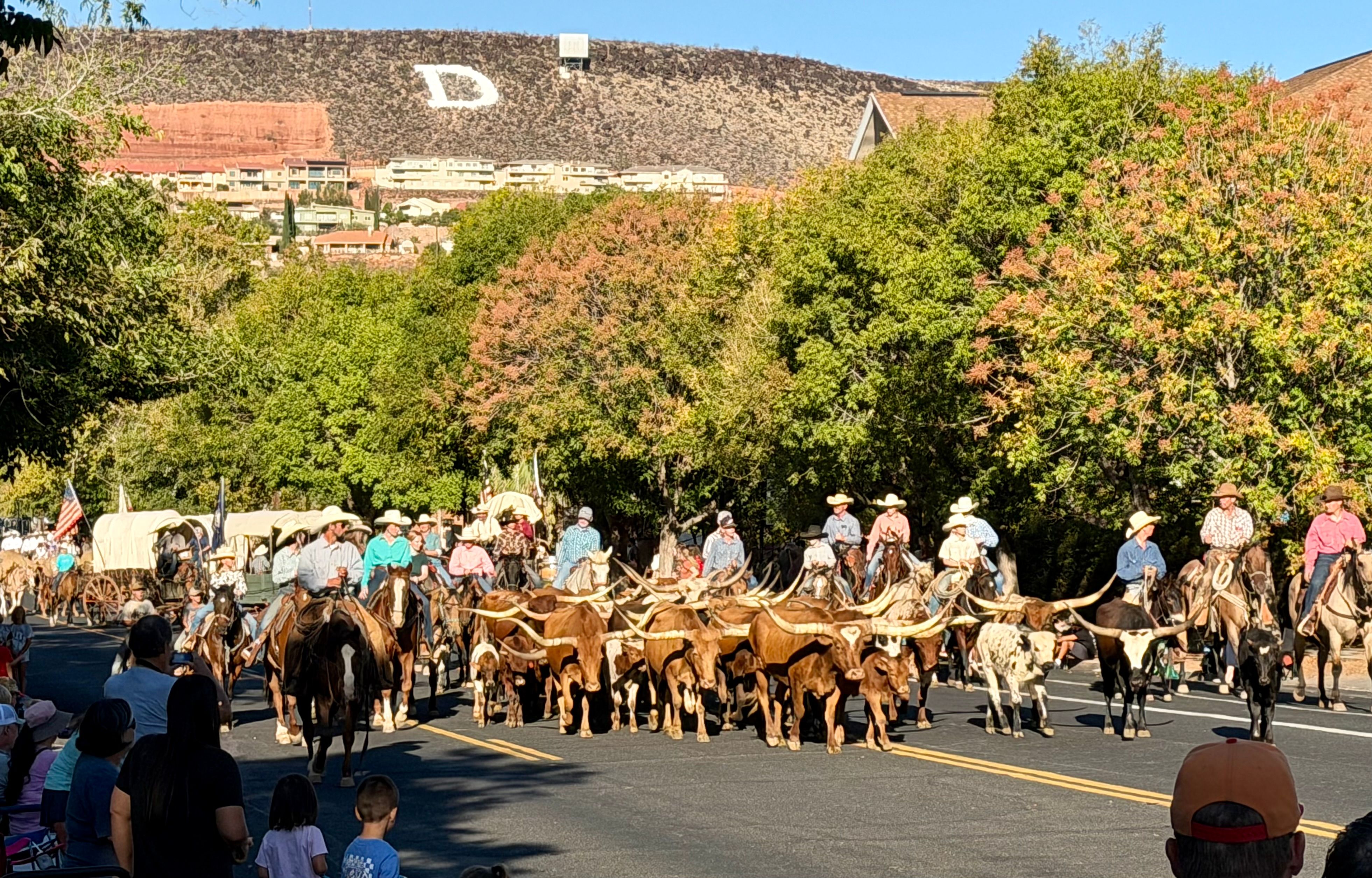
The mix of Western heritage, local organizations, horses, wagons, and everyday spectators made the whole morning feel wonderfully specific to this part of Utah. We were glad our timing worked out. Even without attending the rodeo itself, the parade was an entertaining introduction to a local tradition. The city's Dixie Days information and the St. George Lions Club are good starting points for future schedules.
One Last Coffee Before Heading Home
After the parade, we still had time to stop at West Village Neighborhood Cafe for breakfast and excellent coffee before collecting our bags and heading to the airport. It was a satisfying way to finish a busy few days: one last local stop rather than rushing straight out of town.
Travel Tips for St. George
- Plan outdoor stops for cooler hours. Pioneer Park and other exposed red-rock areas can get hot quickly. Bring water, sun protection, and shoes suited to uneven surfaces.
- Pair Pioneer Park with Red Hills Desert Garden. They are close together along Red Hills Parkway, and the combination provides a good mix of natural sandstone and accessible landscaped paths.
- Leave time for downtown. St. George is worth exploring on foot rather than treating it only as a gateway to Zion.
- Check event dates before traveling. Dixie Days, the rodeo, and Rock Bowl concerts have their own schedules; parade attendance and garden admission are generally free, while concerts and rodeo performances require tickets.
A City We'd Happily Return To
Four days was enough to overturn our initial uncertainty about St. George, but not enough to exhaust what the area has to offer. We came for the red-rock country and found ourselves just as interested in the public gardens, downtown streets, local traditions, and an outdoor concert venue with scenery of its own.
Between the sunrise, the garden, the thunderheads above the Rock Bowl, and that improbable herd of longhorns downtown, St. George made a strong impression on both of us. Four thumbs up.