

Places · Ottawa, Ontario, Canada
Ottawa Beyond Parliament Hill: ByWard Market, Pubs, and Canal Walks
From pickled eggs at Ottawa's oldest tavern to BeaverTails, historic landmarks, and a summer stroll along the Rideau Canal, we found plenty of reasons to return to Canada's capital.
When people think about visiting Canada, Ottawa probably isn't the first destination that comes to mind. Toronto, Montréal, and Vancouver tend to get more attention, while the country's capital can sound like a place devoted mainly to politics and museums. But after a second visit, we came away thinking Ottawa deserves another trip.
It has the distinctive architecture and monuments you'd expect from a national capital, but much of downtown feels approachable and easy to explore. The streets around ByWard Market are busy with places to eat and drink, the waterways and green spaces are never far away, and there's a noticeably international character to the city. That last part struck us as especially interesting given how close Ottawa is to the United States. In fact, when we went looking for local news on the hotel television, we ended up watching a station from Buffalo, New York.
ByWard Market: The Lively Side of Downtown
We kept finding our way back to ByWard Market, a historic market district just east of Parliament Hill. Its roots go back to the early days of Bytown, as Ottawa was originally known, when a public market was established in 1827. Nearly two centuries later, the brick market building remains a neighborhood landmark, surrounded by restaurants, pubs, shops, and street life.
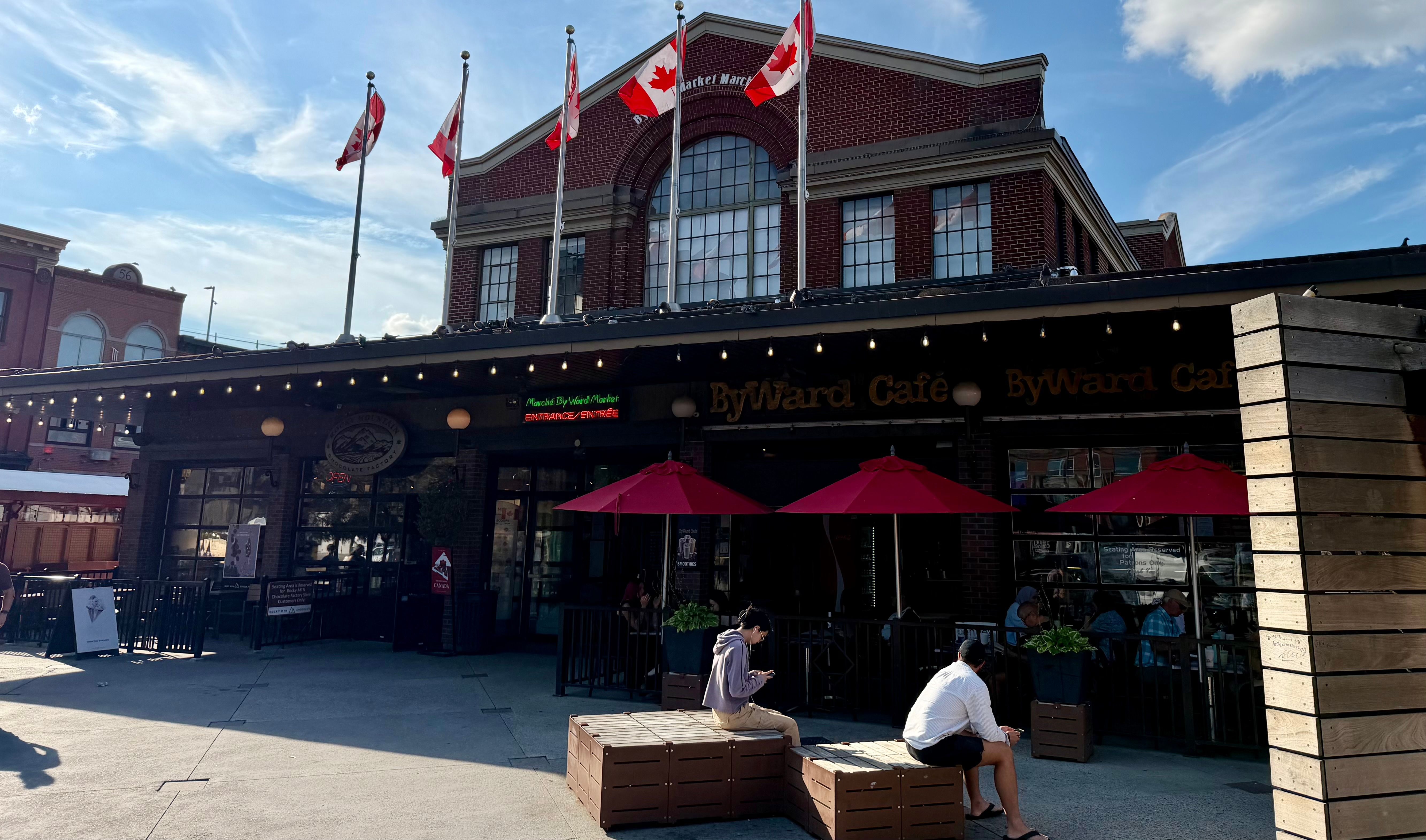
It's a pleasant area for wandering without much of a plan. We enjoyed watching people come and go, checking out the surrounding streets, and stopping for food and drinks when something caught our attention. The mix of visitors, locals, older storefronts, and newer businesses gave the district more personality than we expected from a government town.
One stop was Château Lafayette, better known as the Laff. Established in 1849, it's Ottawa's oldest tavern, having opened long before Canadian Confederation. There's something satisfying about drinking a beer in a pub that has been part of the neighborhood for that long, particularly one that doesn't seem overly concerned with polishing away its barroom character.
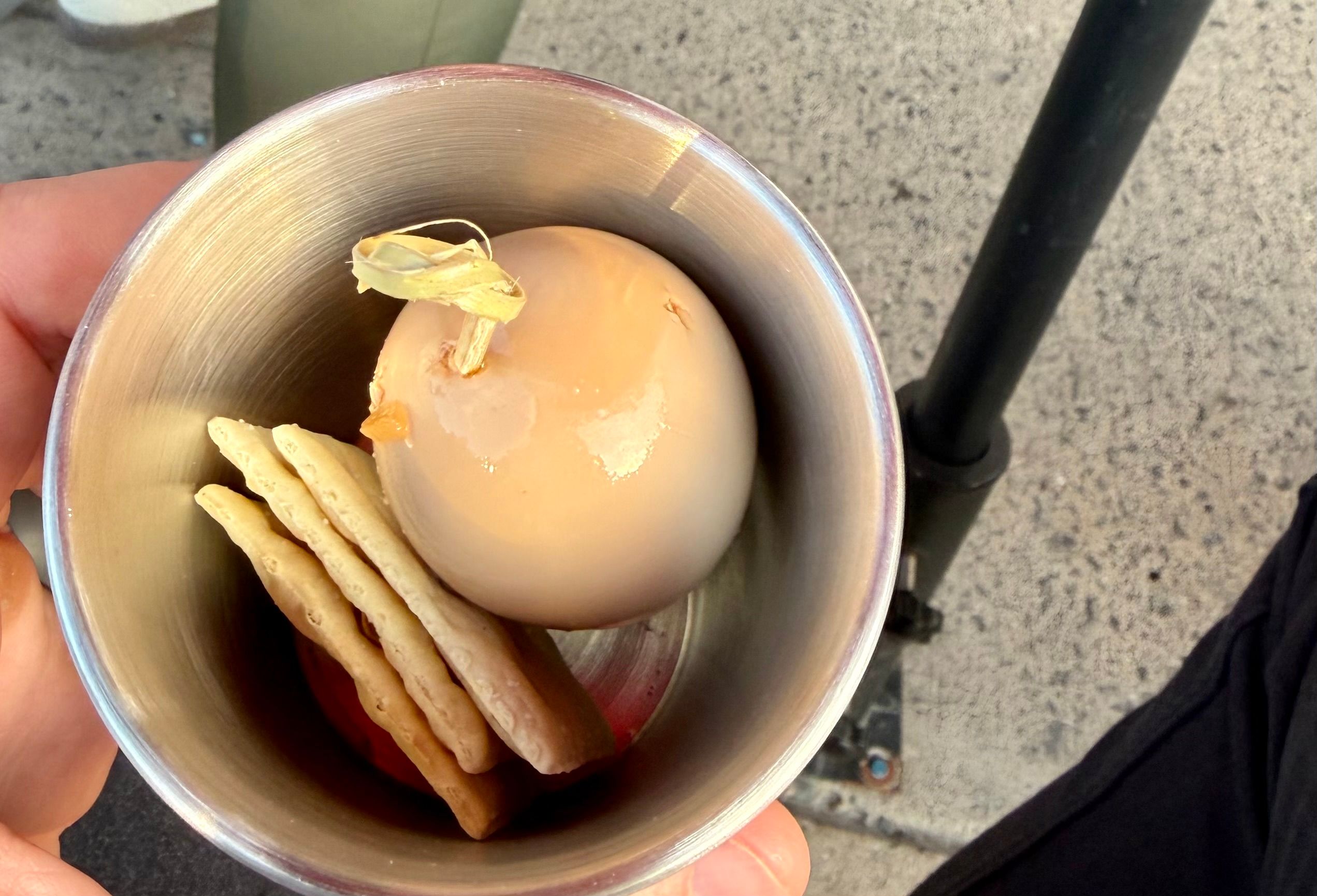
We also tried one of the more unusual snacks of the trip: a pickled egg, served with a few crackers. It's not the first thing most of us would seek out on vacation, but it seemed appropriate for a stop at the Laff.
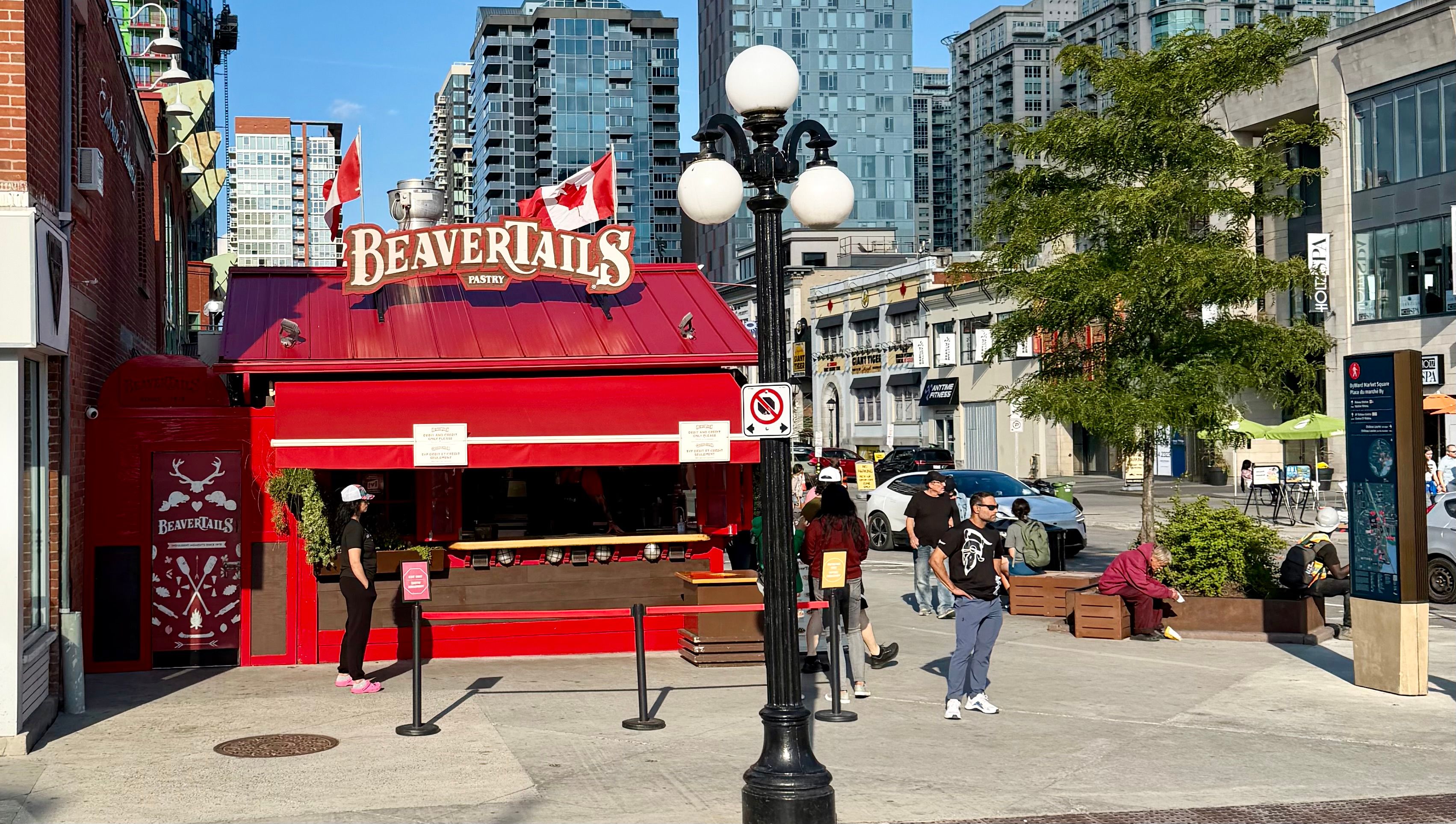
For something considerably sweeter, we stopped for BeaverTails. The Canadian treat is an elongated piece of fried dough, usually finished with a sweet topping. It's straightforward, indulgent, and well suited to a day spent walking around town. After all, who doesn't like fried dough?
The neighborhood was worth revisiting after dark, too. The mood changed as storefronts lit up and people moved between restaurants and bars. On one evening, a graffiti-covered car with a bicycle mounted on top caught our eye near the market. It wasn't a conventional Ottawa landmark, but it was a memorable bit of street scenery.

Parliament Hill and the Grandeur of Château Laurier
Of course, we weren't going to visit Ottawa without spending time around Parliament Hill. The Gothic Revival towers and stonework give this part of downtown an unmistakably Canadian identity, especially alongside the city's memorials and formal public spaces.
The one disappointment on our most recent visit was the amount of construction around Parliament. The Centre Block rehabilitation is a major restoration project, and fencing and equipment made some of the familiar views harder to enjoy. Having seen the buildings on an earlier visit, we found ourselves wishing for a clearer look. The work is important, but it does change the experience for visitors and photographers.
Nearby, the Fairmont Château Laurier provides plenty of architectural interest of its own. Opened in 1912, the hotel looks almost like a castle, with steep roofs, turrets, and pale stone walls. Seen from the area around the National War Memorial, it makes an imposing backdrop to an already distinctive part of the city.
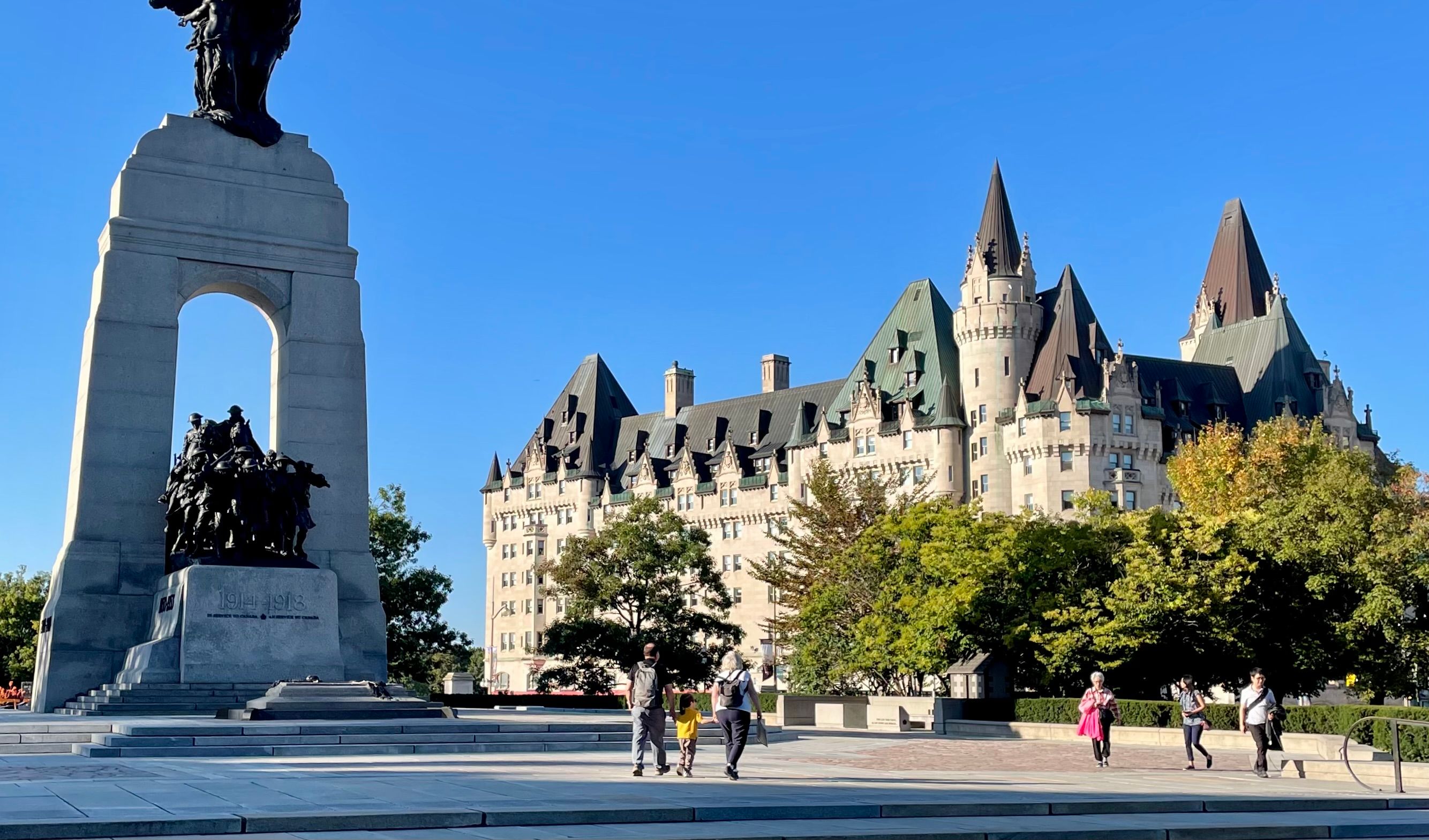
We didn't need to be staying at the Château to appreciate it. Just seeing the building from the surrounding streets was enough to make us slow down and take in the details.
An Evening Along the Rideau Canal
One of our favorite stretches of the visit was much simpler: a walk beside the tree-lined Rideau Canal on a lovely summer evening. Away from the busiest streets, the water and greenery gave us a different perspective on downtown.
The Rideau Canal is more than a pleasant place for a stroll. Completed in 1832, the waterway was developed as a strategic transportation route following the War of 1812. It stretches roughly 202 kilometers (126 miles) between Ottawa and Kingston, and its historic locks and engineering earned it UNESCO World Heritage status in 2007. Today, boats use the canal in warmer months, while paths alongside it make parts of the route easy to enjoy on foot or by bicycle.
We were content to walk, enjoy the evening air, and appreciate how much open space fits into the center of a capital city. Ottawa's waterways are a big part of what makes it feel different from a typical downtown.
One Last Glimpse Along the Rideau River
Even the ride to the airport gave us another reason to come back. Our Uber driver took us along the scenic Rideau River, past stretches of parkland and a glimpse of the rugged cascades at Hog's Back Falls. We also noticed preparations underway for weekend activities in some of the parks. Instead of feeling ready to leave, we found ourselves wondering what we might have discovered with another day.
Hog's Back Park is worth keeping in mind for a future visit. The park has walking areas and views of the falls, making it an appealing stop beyond the immediate downtown core.
Travel Tips for Ottawa
- Start downtown on foot. ByWard Market, Parliament Hill, Château Laurier, and the northern end of the Rideau Canal are close enough to combine into a relaxed walking itinerary. The ByWard Market area also has public transit connections and paid parking.
- Check Parliament access before visiting. Centre Block is closed during rehabilitation, but other Parliament tours and experiences are available. Free tour tickets can be reserved online, subject to availability.
- Leave time for the market at different hours. The district is enjoyable in daylight for food and browsing, and the restaurants and pubs make it worth returning in the evening. Check the Laff and BeaverTails for current hours.
- Plan for the season. Summer is well suited to canal-side walking and outdoor patios. The canal's navigation season and park facilities are seasonal, and National Capital Commission notices are useful for checking pathway disruptions.
- Consider a little time beyond downtown. If your schedule allows, Hog's Back Park offers a closer look at the falls we only glimpsed on our way out.
Why We'd Return
Ottawa won't replace Canada's bigger cities for everyone, and the construction around Parliament was a reminder that even iconic destinations don't always look their best. But across two visits, we've found an engaging mix of architecture, casual pubs, distinctive local food, and places to walk beside the water. There's enough to explore without feeling that we need to rush from one attraction to the next.
The airport ride left us with a short list of things we'd like to see next time. That's a good sign for a city we hadn't originally thought of as an obvious vacation destination.