
Places · Key West, Florida
Key West, Beyond Old Town: Sunrises, Gardens, and Coffee
An early drive to Sugarloaf Key, a garden growing inside a Civil War fort, colorful coffee stops, and one last aerial view of the Florida Keys.
Key West offers plenty to keep us occupied in Old Town, but some of our favorite moments came from getting away from its busier streets. Over a couple of mornings, we found ourselves chasing a sunrise on Sugarloaf Key, wandering through a former Civil War fort that has become a botanical garden, and returning more than once to a colorful neighborhood coffee shop. We managed one last drone stop on the drive home, too.
An Early Start on Sugarloaf Key
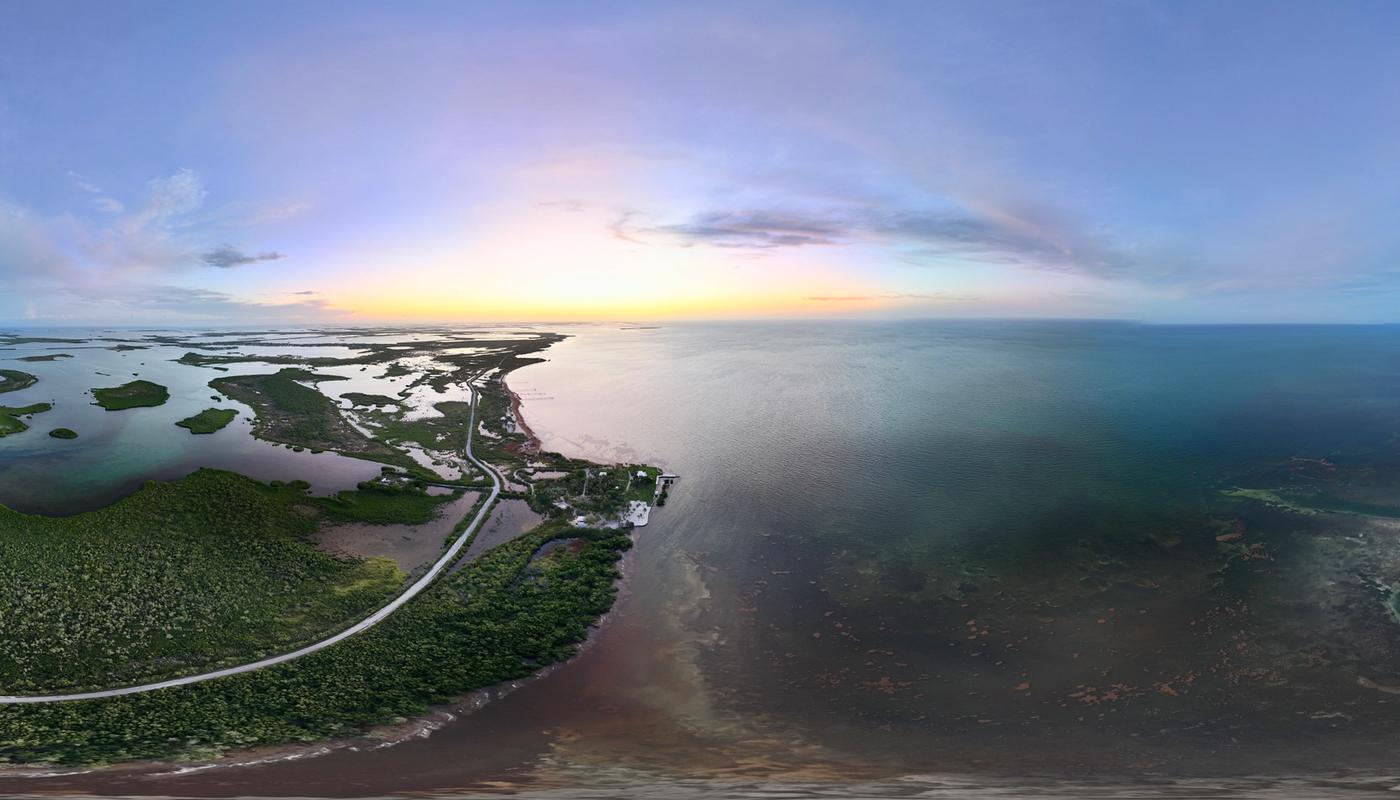
I'd brought my DJI Mini along, even though the airspace around Key West's airport and naval facilities makes drone flying complicated and limits where it can be done. The aircraft spent much of our visit tucked away. Then, one morning, we both woke up well before dawn and decided to make something of the early start.
With about an hour until sunrise, I checked the map and suggested driving east toward a quiet stretch of Sugarloaf Key with access to the water. We gathered our things, headed out of Old Town, and stopped at Baby's Coffee on US 1 at Mile Marker 15. We poured ourselves coffees, said hello to a group of local police officers doing the same, and continued toward the shore.
Roughly half an hour after leaving Key West, we reached a small, well-kept waterfront park on the Atlantic side of Sugarloaf. The sky was beginning to brighten, with bands of blue and pink stretching above the water. It was a peaceful change of pace from Duval Street, and a pretty good return on an unexpectedly early alarm.
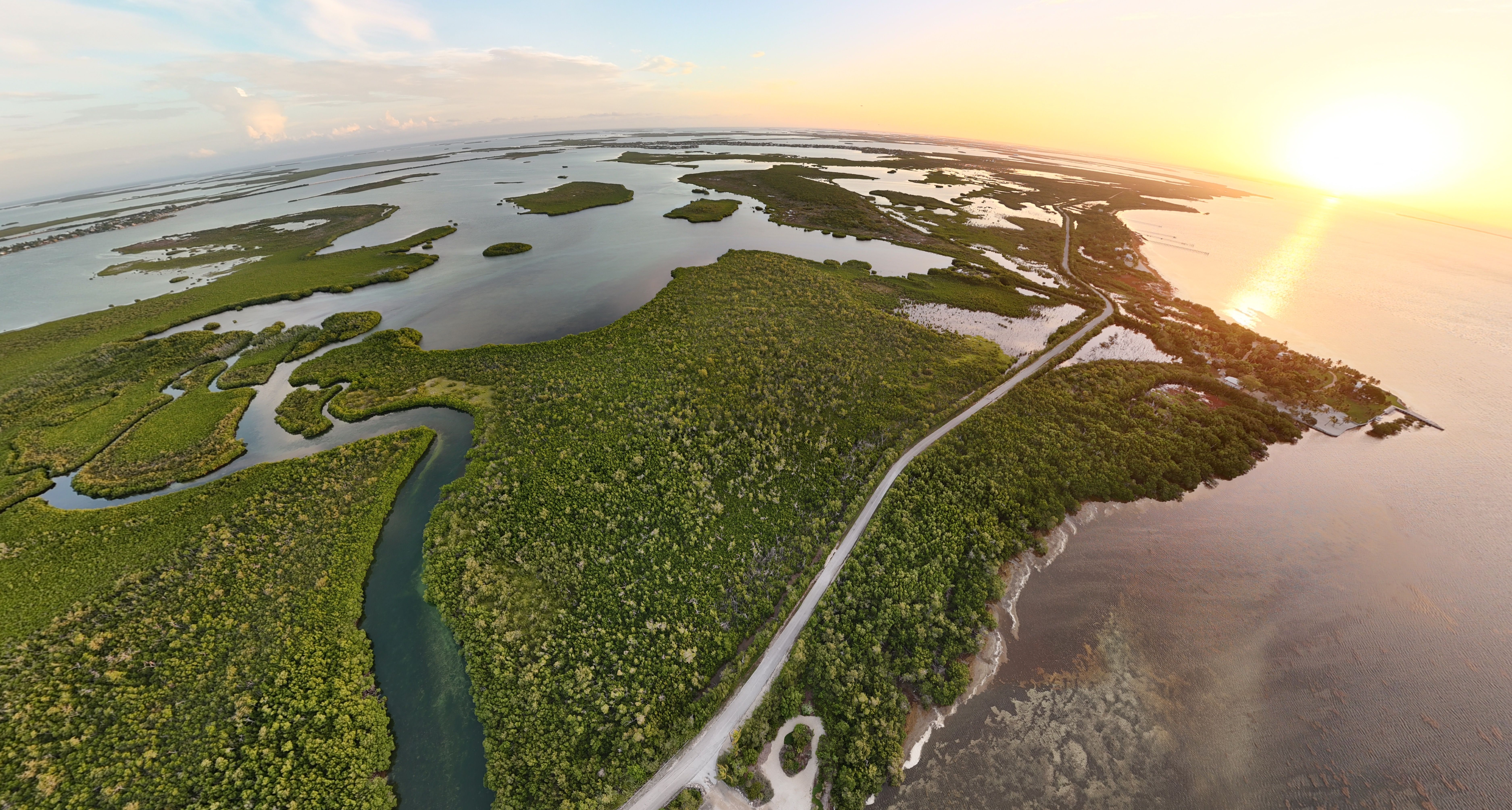
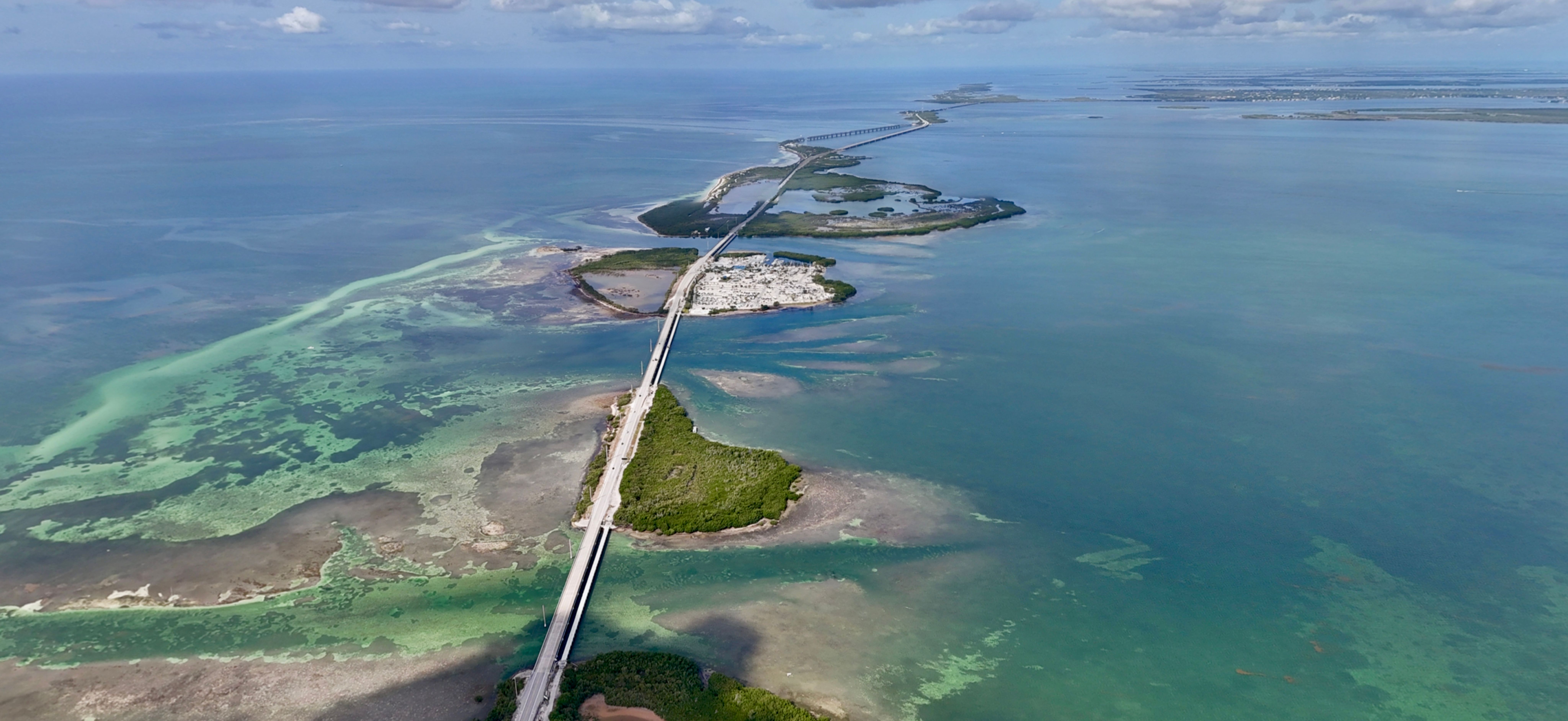
The aerial perspective made the trip particularly worthwhile. From the road, the Keys can feel like a continuous line of connected communities. From above, they look more like what they really are: scattered, low-lying islands surrounded by broad stretches of shallow water. Mangrove channels curl through the greenery, and narrow roads seem almost incidental to the landscape.
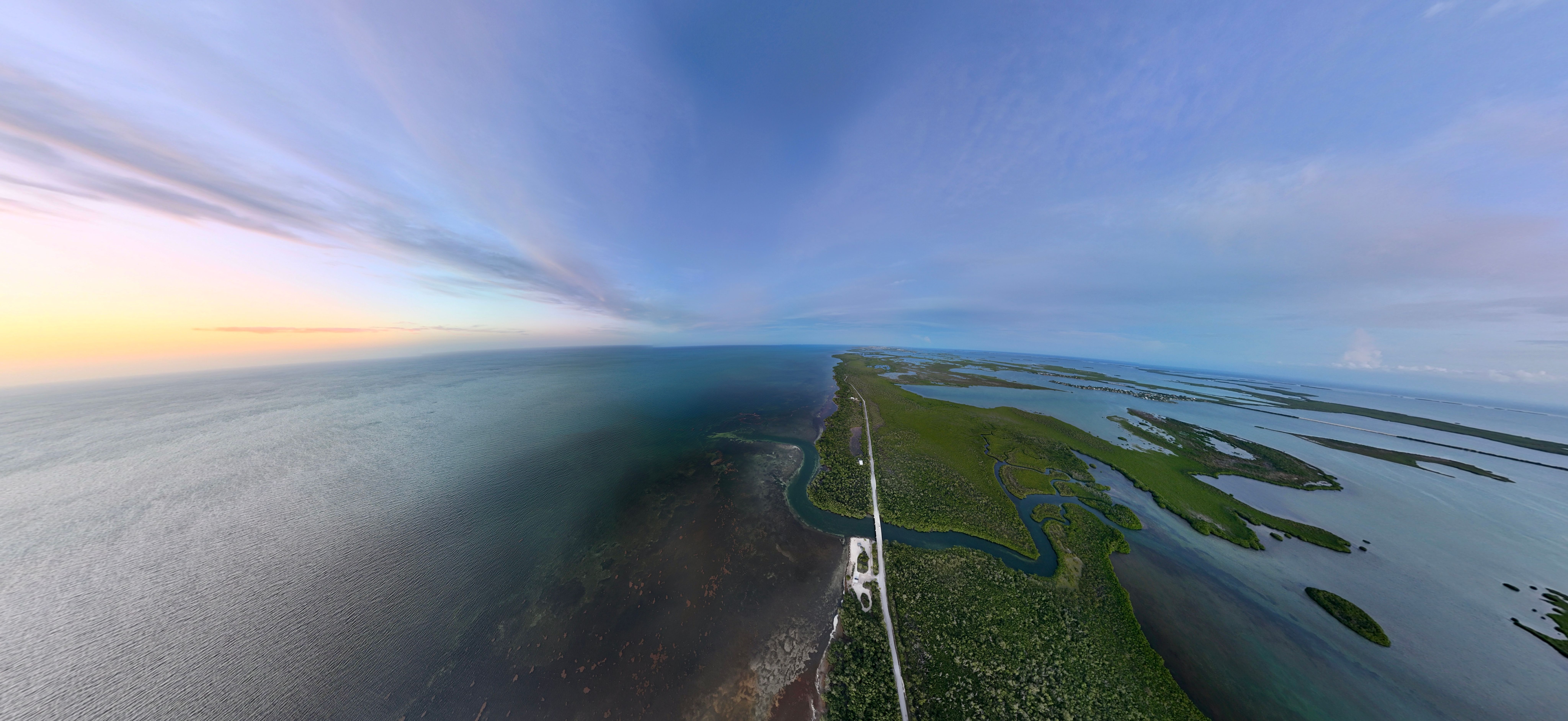
Seeing the islands this way made us think about how isolated life must have been before the Overseas Highway tied them together. Getting people, building materials, food, and fresh water from one place to another was a much bigger undertaking than today's drive through the Lower Keys suggests. It also put the historic fortifications we visited later in a different light.
Tropical Gardens in a Civil War Fort
Back in Key West, we spent part of another hot day at the Key West Garden Club's gardens at Fort West Martello. It's an unusual combination: a former coastal defense installation where brick arches, old masonry walls, and open-air rooms have been taken over by palms, broad-leaved tropical plants, and flowering greenery.
The fort's history goes back to the decades before the Civil War. Although Florida seceded from the Union in 1861, Key West remained in federal hands. Fort Zachary Taylor helped protect the harbor and support Union efforts to stop Confederate shipping. Farther west in the Dry Tortugas, Fort Jefferson served as another strategic Union outpost. The East and West Martello towers were intended to strengthen Key West's coastal defenses, but work on them began during the war and neither ever saw combat.
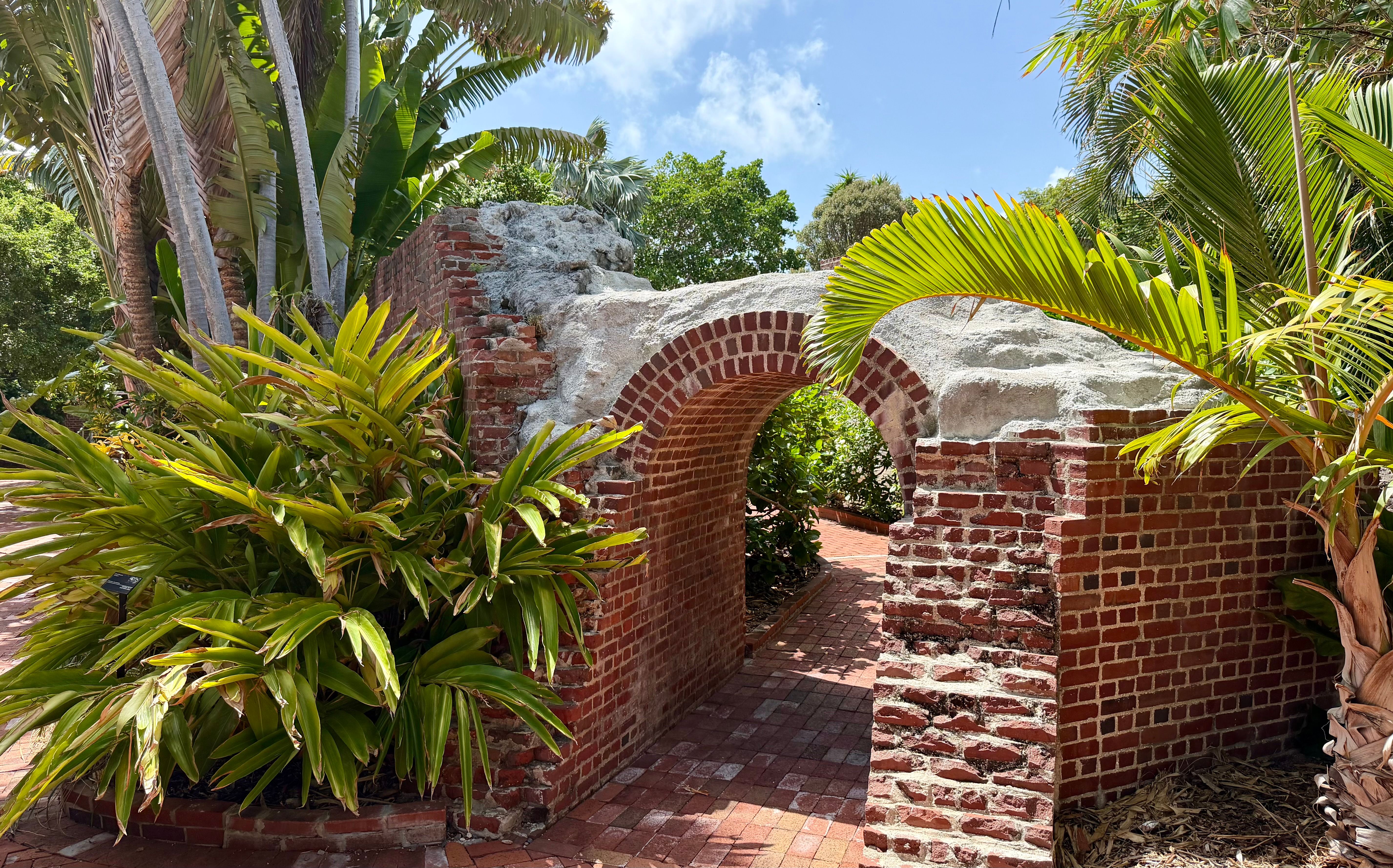
West Martello eventually fell into disrepair. By the early 1950s, demolition was underway when local representative Joe Allen intervened to save the ruins. The Key West Garden Club took over in 1953, bringing in soil and donated plants and gradually turning the old military structure into a public garden. It's hard to imagine a more fitting second life for the place.
The gardens are beautifully maintained, and we particularly liked how the plantings work with the fort rather than simply hiding it. The contrast between rough red brick and lush vegetation gives each courtyard a different character. Even in the shade, the heat was oppressive, though the enclosed garden rooms offered a little relief from the sun.
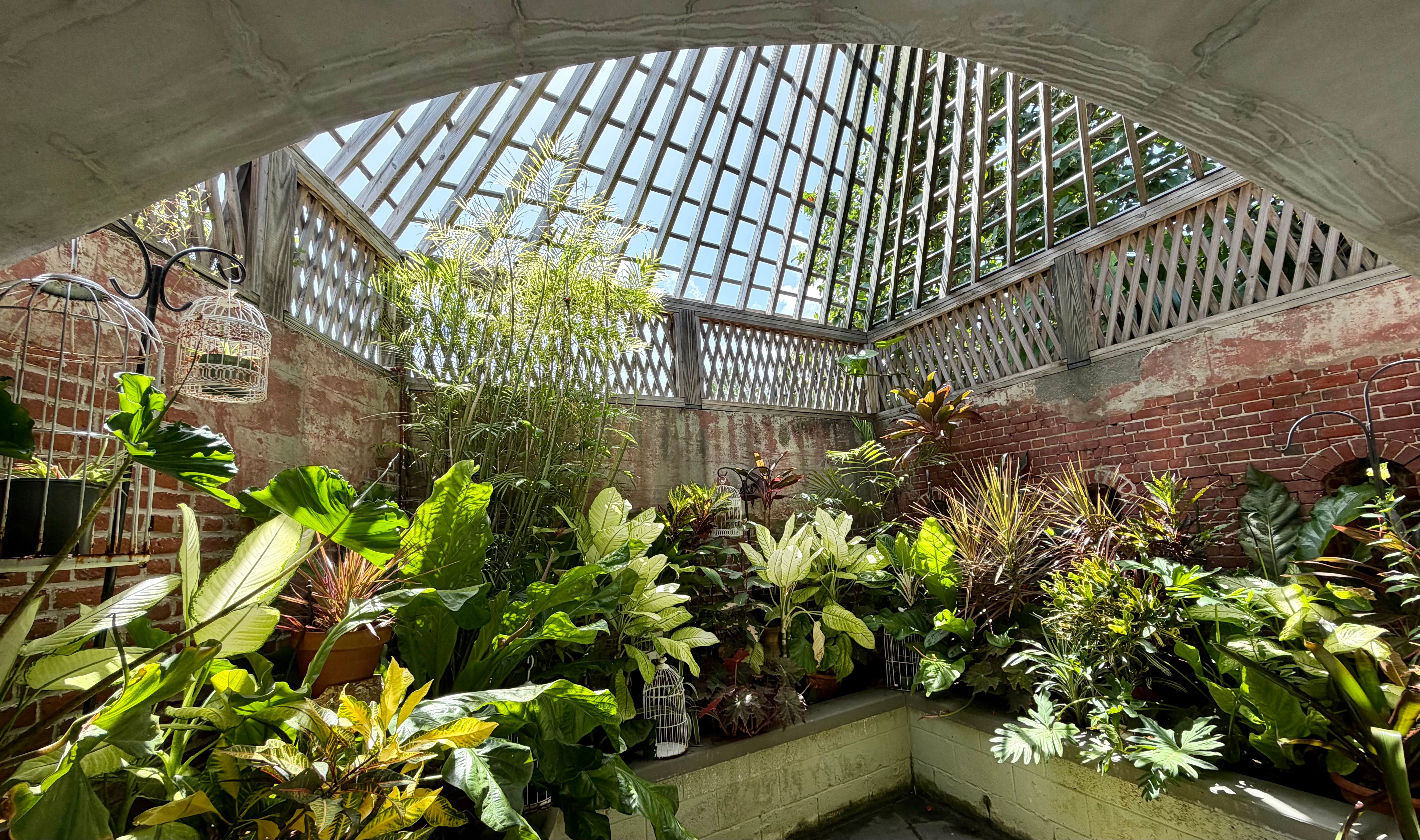
My favorite was the Birdcage Room, where an old artillery space now holds a dense collection of plants under an airy wooden lattice. Decorative birdcages hang against the masonry, adding a whimsical touch without losing the sense of the building's original purpose. The latticework itself has a preservation story: in 1958, Gene Otto used salvaged pine from a fire-damaged Key West hotel to help create the Birdcage and Pavilion rooms. It's an appealing example of reuse layered on top of reuse.
Finding the Garden's Coffee-Shop Counterpart
The following morning, we found what felt like the coffee-shop version of West Martello. The Koffie House, on Greene Street a short walk from Mallory Square and Duval Street, trades historic fort walls for brightly painted murals, abundant greenery, and a playful collection of seating. It has the same tropical, slightly fanciful sensibility as the gardens, just with breakfast and caffeine.
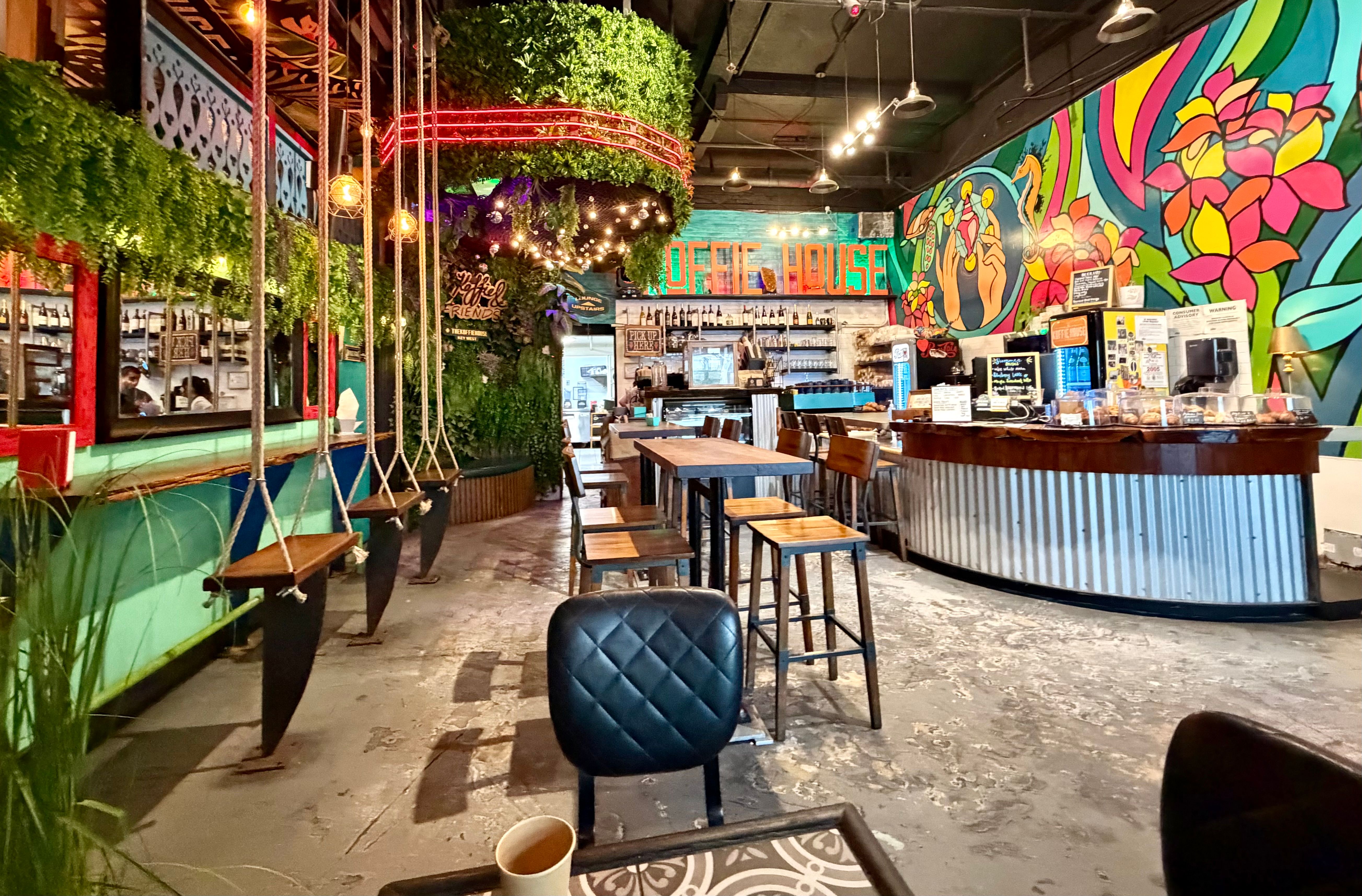
We ordered drip coffees and Turkish eggs, which arrived on flatbread with a generous mix of sauces and toppings. It was a satisfying change from a standard breakfast sandwich, and the coffee was solid, too. The space is busy with color and detail, but we found it comfortable enough to linger over breakfast.
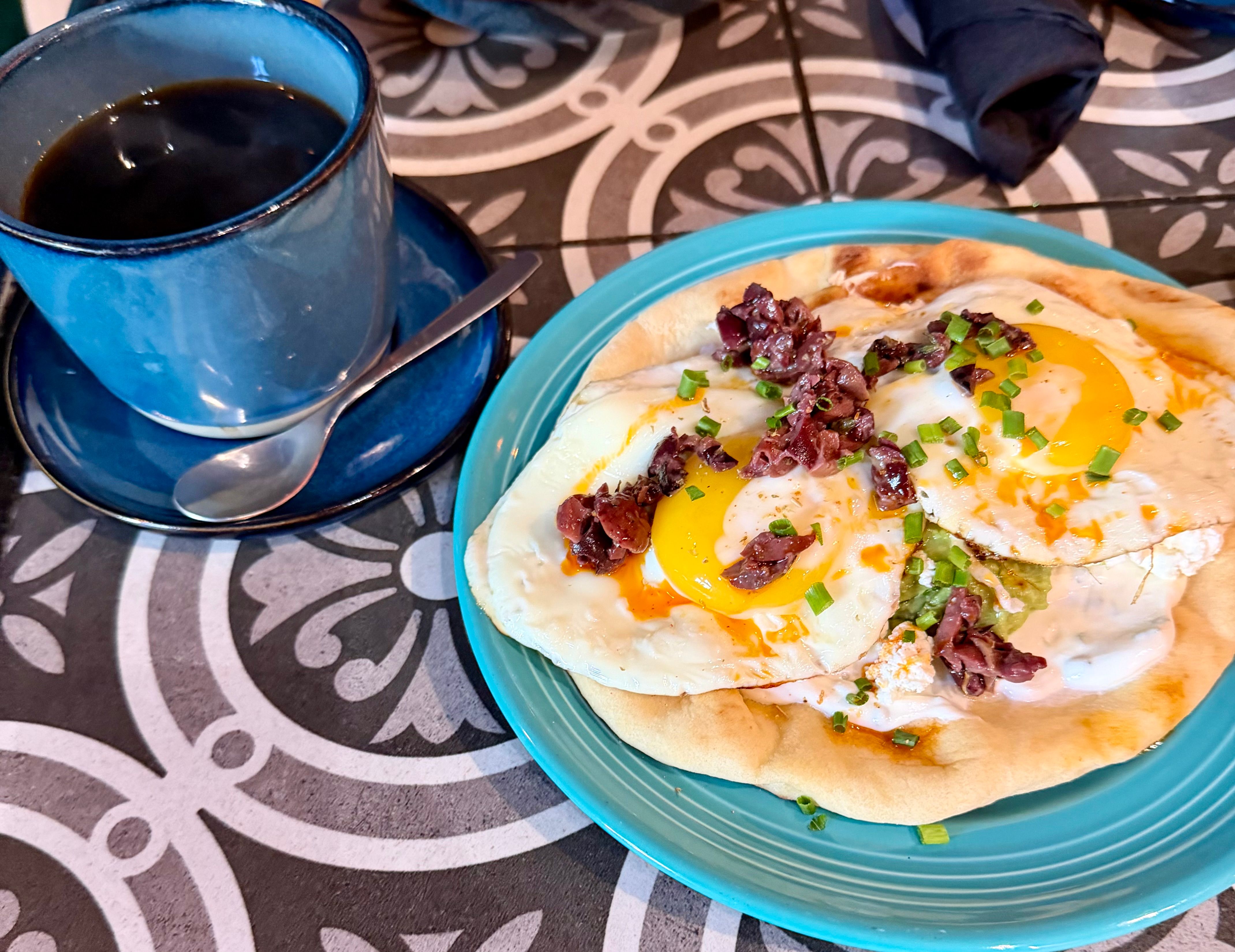
We liked it enough to come back twice more during the trip. That probably says more about our opinion than any elaborate restaurant review could.
One Last Look from Above at Seven Mile Bridge
Before finally heading north, I had a few more potential drone locations in mind, including the area around Seven Mile Bridge and some spots farther up the Keys. Our most productive stop was near Little Duck Key, at the western end of the bridge. From above, the highway draws a thin line across water that shifts from pale turquoise to deep blue, with patches of seagrass and shallow banks visible below.
We had less luck as we continued north. There are surprisingly few convenient places to pull off US 1, and several locations that had looked promising on a map were either closed for roadwork or lacked public access. The wind was picking up as well. After a couple of halfhearted attempts to find another suitable stop, we decided that making good time mattered more than squeezing in another flight.
So the drone went away, and we enjoyed the familiar sequence of bridges, mangroves, and open water through the windshield instead.
Travel Tips
- For an early start: Baby's Coffee at Mile Marker 15 is a useful stop between Key West and Sugarloaf Key. Check its current hours before setting out for sunrise.
- For the gardens: West Martello is generally open daily from 9:30 a.m. to 5 p.m., with free admission. Allow time to explore the separate garden rooms, and confirm hours before visiting.
- For breakfast in Old Town: The Koffie House is at 602 Greene Street, within walking distance of Mallory Square.
- For drone photography: Check the FAA's B4UFLY resources and any local launch restrictions before flying. A small drone does not exempt you from airspace rules, and national wildlife refuges have their own prohibitions. Public roadside access and wind conditions can limit your options, too.
A Quieter Side of the Keys
These stops gave us a different perspective on the Keys than the one we got from Key West's restaurants and crowded streets. The sunrise revealed how much water and mangrove habitat lies between the islands. West Martello showed how a piece of military history could become a place to enjoy plants and shade. And a cheerful coffee shop provided a good reason to revisit the same block three times. None of it required an elaborate itinerary—just a little curiosity, an early start, and a willingness to leave Old Town for a while.