

Places · Hocking, Ohio
Exploring Hocking Hills State Park: Ohio’s Unexpected Sandstone Wilderness
Towering sandstone cliffs, cool forested gorges, and hidden caves make Hocking Hills State Park one of Ohio’s most memorable outdoor destinations—and an easy day trip that leaves you wanting more.
When most people picture Ohio, they probably imagine rolling farmland, quiet small towns, and gently wooded hills. Hocking Hills State Park turns that image on its head.
Located in the rugged hills of southeastern Ohio, Hocking Hills feels almost transported from another part of the country. Massive sandstone cliffs rise above cool hemlock forests, waterfalls tumble into narrow gorges, and enormous recess caves invite visitors to wander beneath their towering overhangs. It’s easy to understand why Hocking Hills is widely considered the crown jewel of Ohio’s state park system.
We visited on an unusually hot day in early June, with the heat index pushing toward 100°F. While the exposed parking lots and trailheads felt almost oppressive, we quickly discovered one of Hocking Hills’ greatest surprises: the deep sandstone canyons create their own microclimate. As we descended into the shaded gorges, the air became noticeably cooler—at least ten degrees cooler than the rim above—and the temperature relief alone made the hikes worthwhile.
A Landscape Millions of Years in the Making
The dramatic scenery owes its existence to Black Hand Sandstone, a rock formation deposited more than 300 million years ago when this region was covered by ancient river deltas. Over countless centuries, streams gradually carved through the sandstone, creating the narrow gorges, towering cliffs, waterfalls, and recess caves that define the park today.
Although glaciers reshaped much of Ohio during the Ice Age, they stopped just north of Hocking Hills. That left these rugged valleys largely untouched, preserving one of the state’s most distinctive landscapes.
Today, Hocking Hills State Park protects several separate natural areas connected by scenic drives, each offering its own unique character.
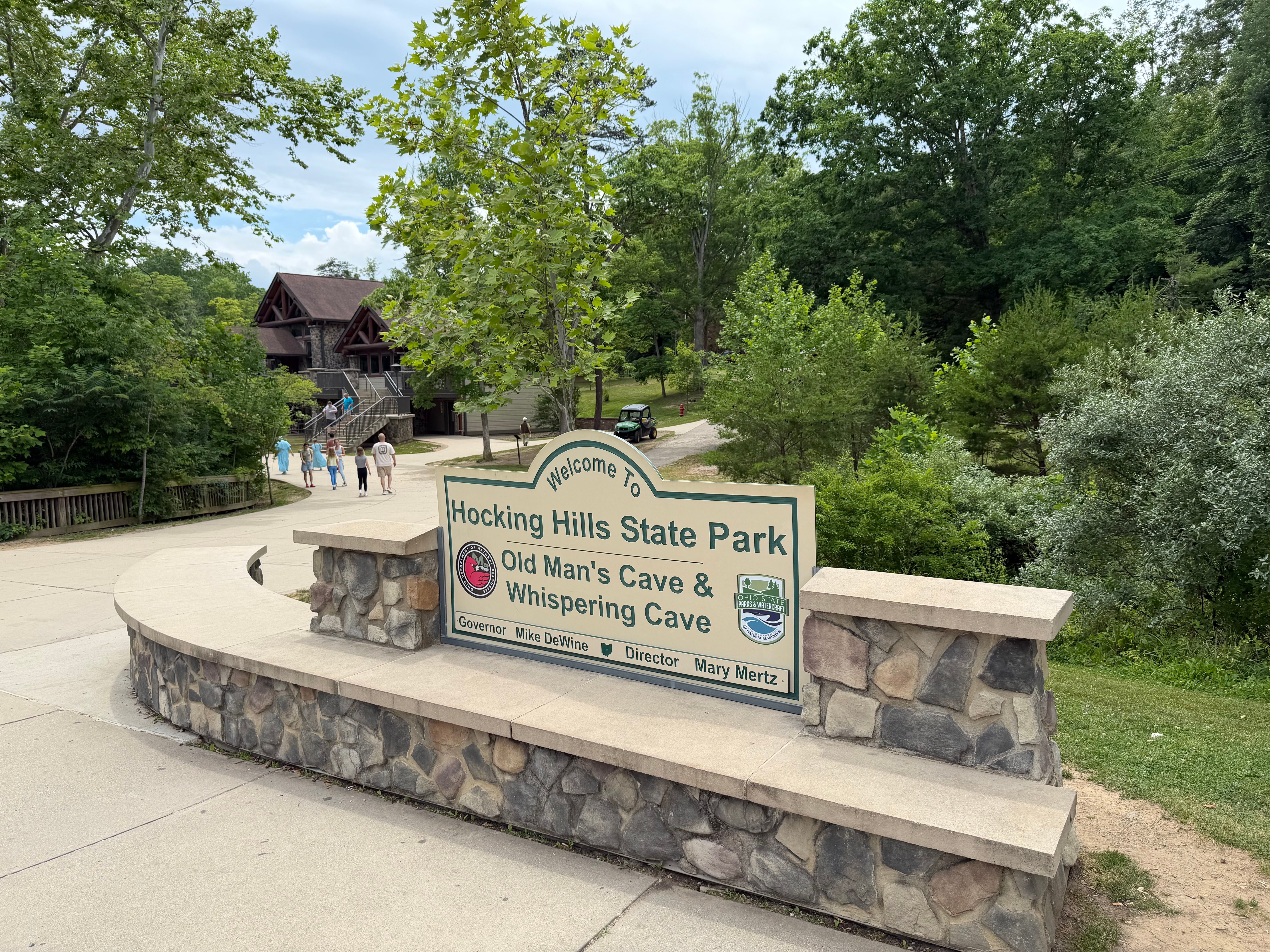
Our first stop was the modern Hocking Hills Visitor Center near Old Man’s Cave. It’s well worth spending a few minutes inside before hitting the trails. The exhibits provide a helpful overview of the area’s geology, wildlife, and history, while rangers can answer questions about trail conditions and recommend hikes based on the day’s weather.
Descending into Old Man’s Cave
From the visitor center, a short walk leads directly into the park’s best-known attraction.
Despite the crowds, Old Man’s Cave never felt overly busy once we reached the gorge. The trail follows a trickling stream through a narrow sandstone canyon, crossing back and forth over a series of distinctive pedestrian bridges that fit naturally into the landscape. Towering cliffs rise overhead while moss-covered rocks, clear pools, and dense hemlock forest create one of the coolest and most inviting sections of the park.
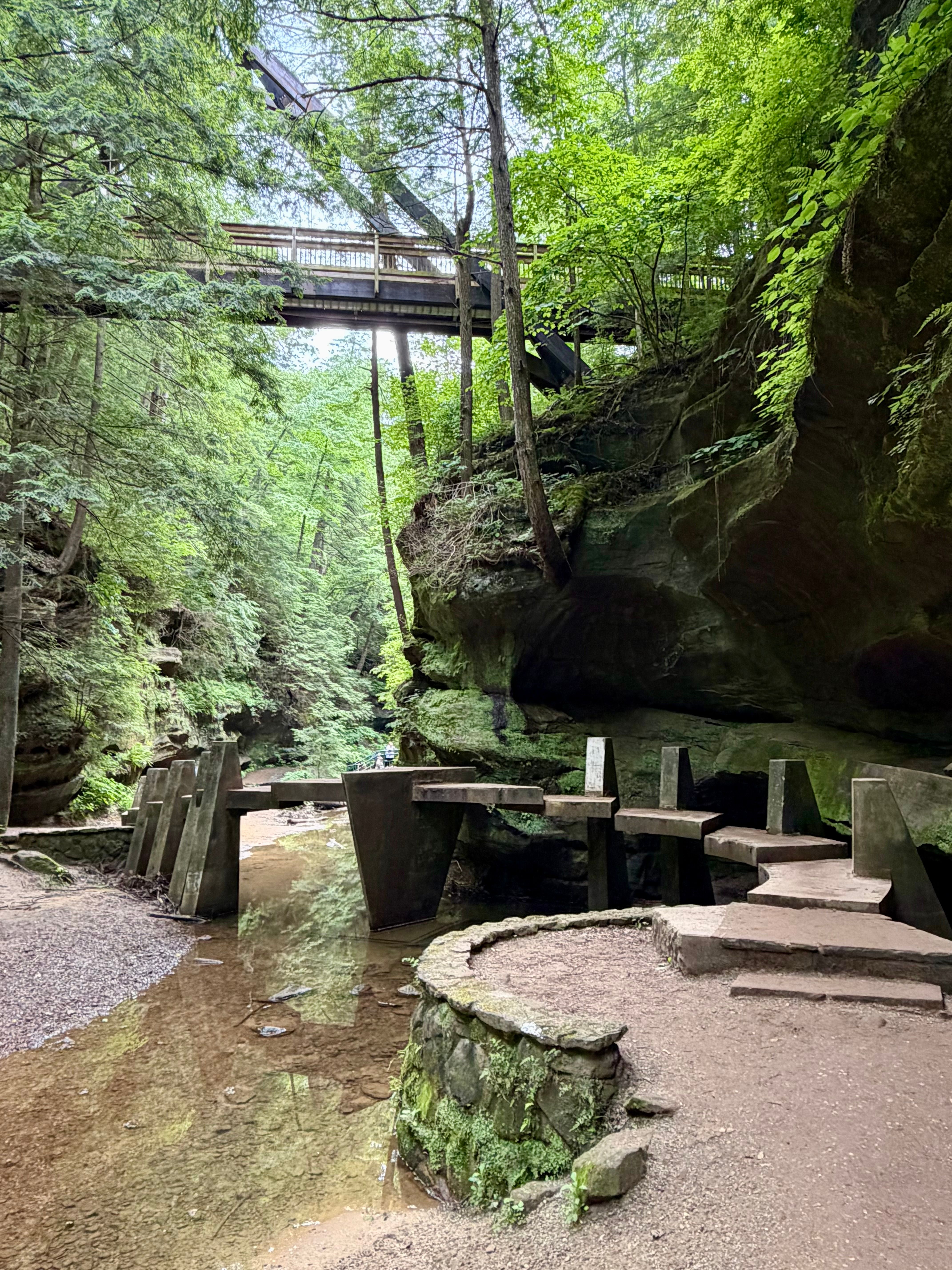
Towering cliffs rise overhead while moss-covered rocks, waterfalls, and shaded pools line the creek below. The enormous sandstone overhang that gives the area its name creates an irresistible temptation to explore every nook and alcove.
The cave itself isn’t a cave in the traditional sense but a broad recess carved into the sandstone cliff. It was named after Richard Rowe, a hermit who lived here during the late 1700s and early 1800s. Standing beneath the overhang, it’s easy to imagine why someone might have chosen this cool, sheltered place as a home.
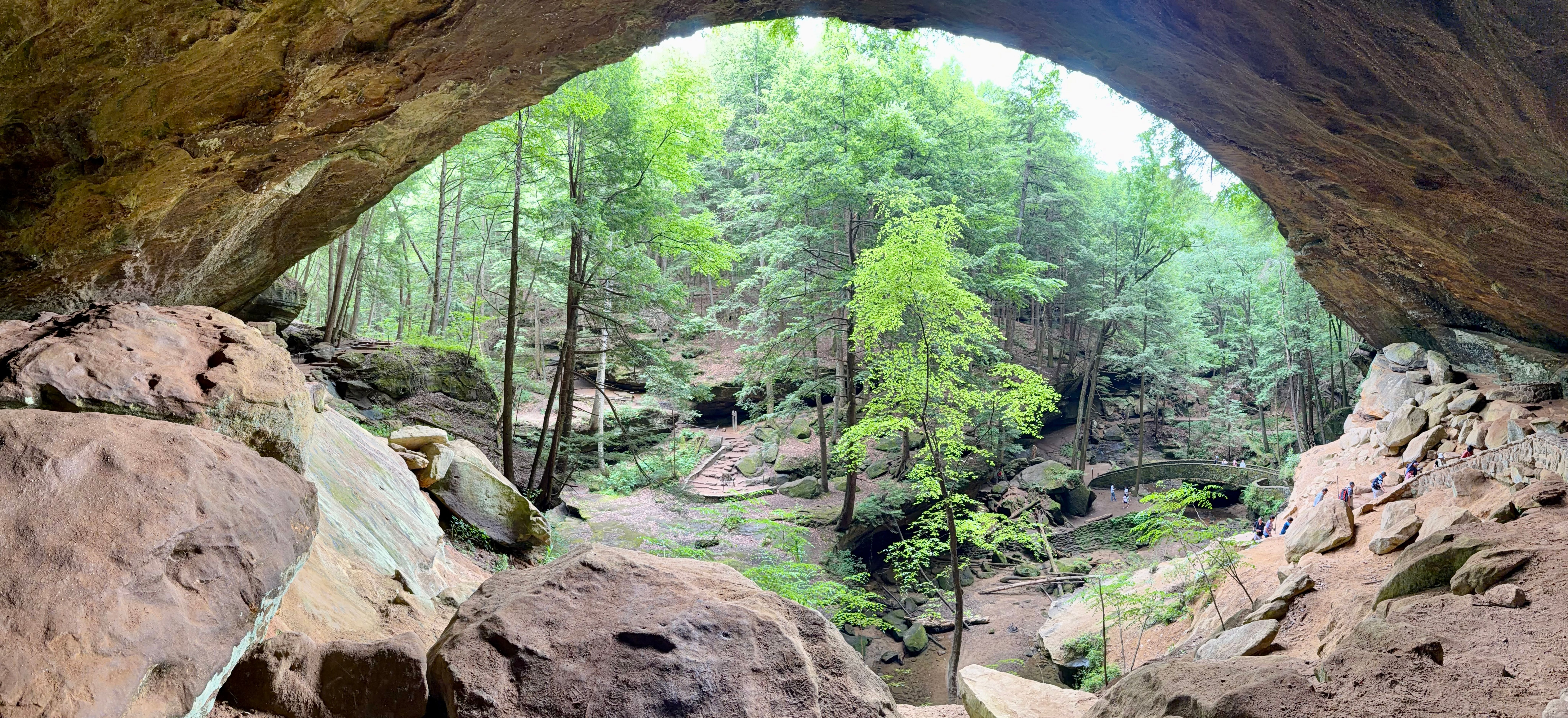
The shaded canyon also provided a welcome escape from the heat. After baking in the parking lot just minutes earlier, the cool air flowing through the gorge felt almost like natural air conditioning.
The Simplicity of Ash Cave
A short drive brought us to Ash Cave, another of the park’s signature destinations.
Unlike the more rugged trail through Old Man’s Cave, Ash Cave is reached by an easy, mostly level walk that makes it one of the park’s most accessible attractions.
The reward is immediate. A massive horseshoe-shaped sandstone overhang towers above the sandy floor while a slender ribbon of water spills from the cliff into a shallow pool below.
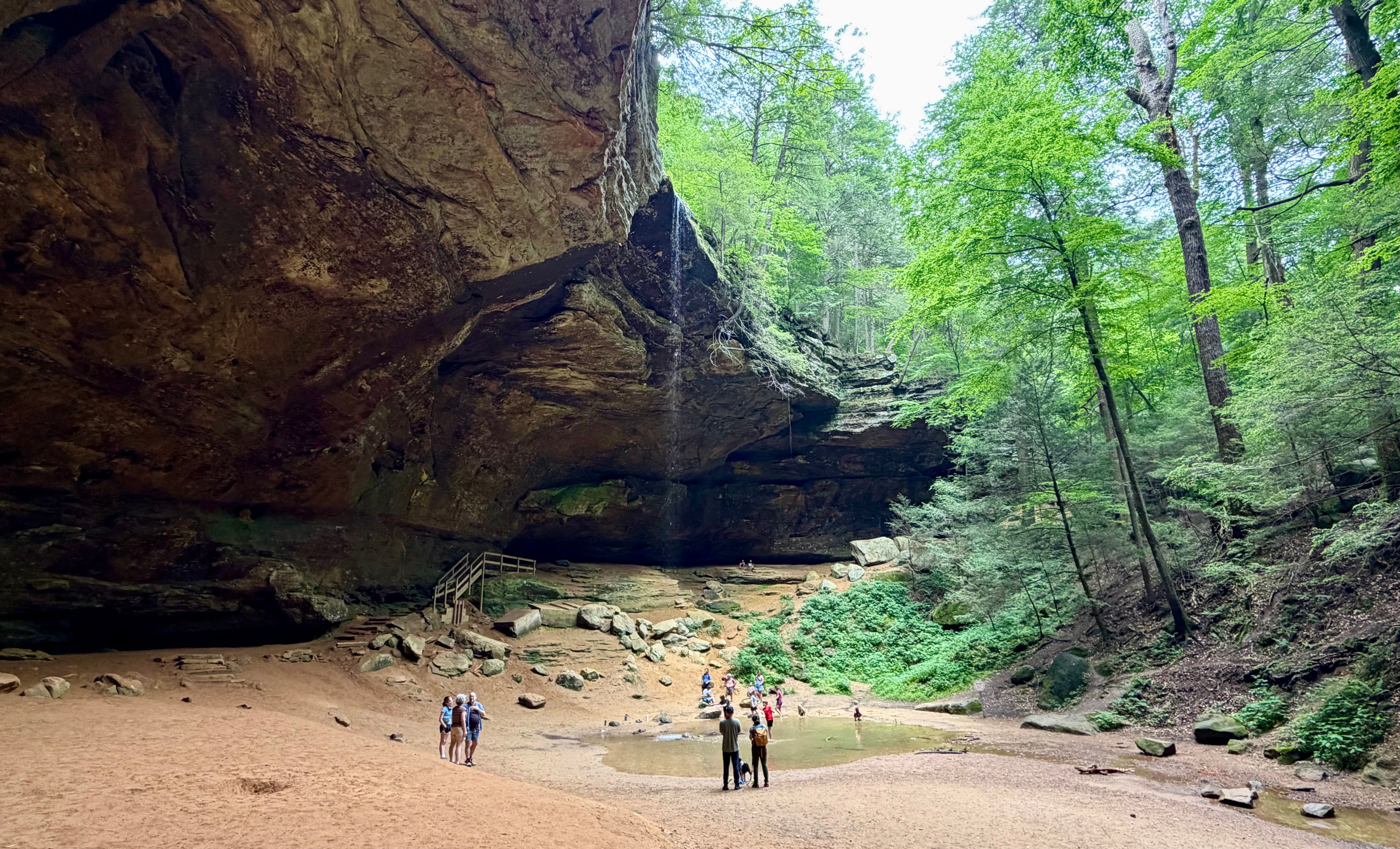
Children splashed happily in the water while families lingered beneath the sheltering cliff. With our limited schedule, I had to resist the urge to kick off my hiking shoes and join them. On a day this hot, the cool water looked especially inviting.
Even with only a trickle of water flowing, the sheer scale of the rock formation made Ash Cave one of the highlights of our visit.
Exploring Rock House
Our final stop was Rock House, perhaps the most unusual destination in the park.
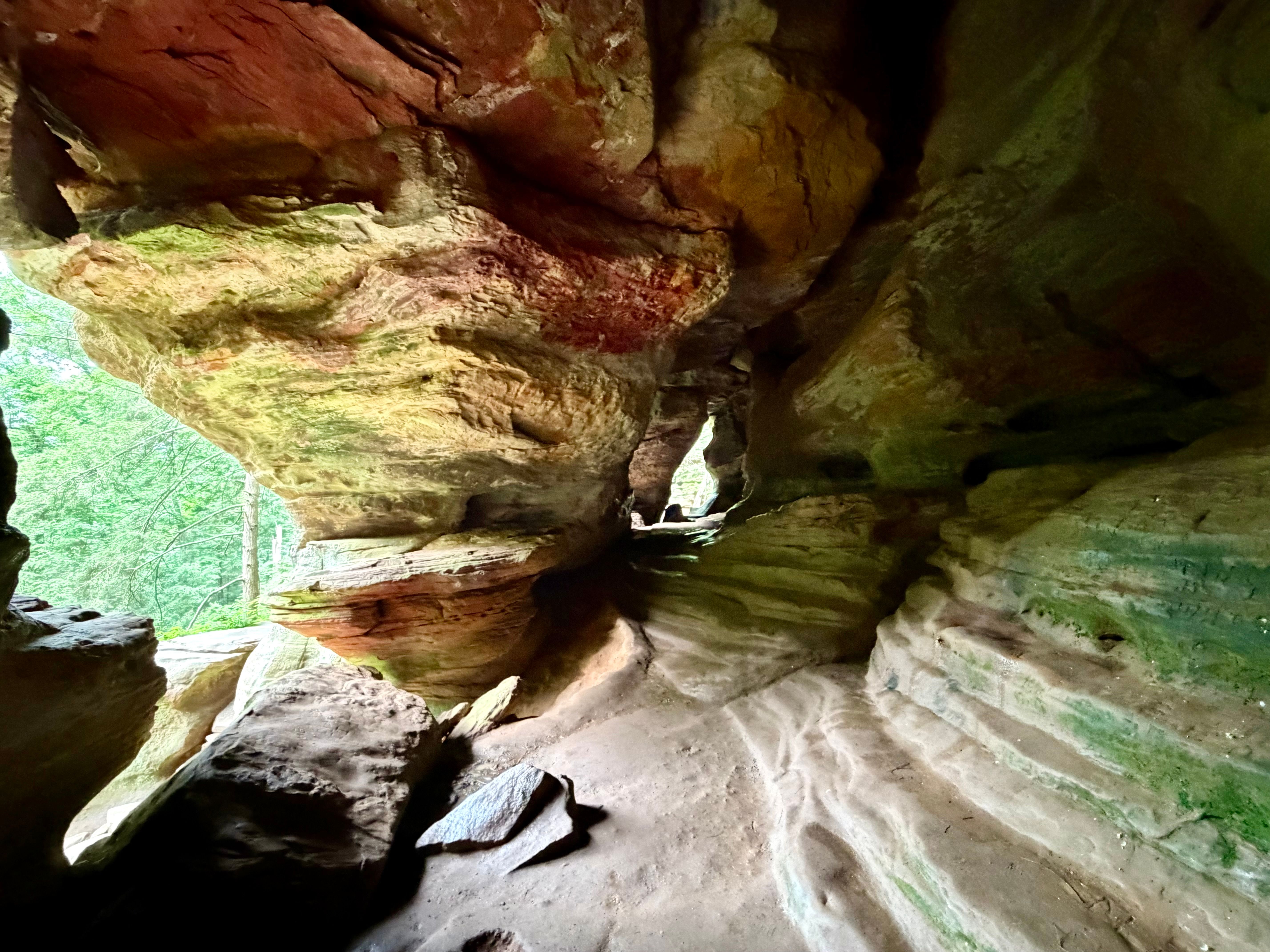
Unlike the broad overhangs at Old Man’s Cave and Ash Cave, Rock House is a true tunnel-like cave carved through the sandstone ridge. Inside, large openings—or “windows”—frame views of the densely forested canyon below, allowing shafts of natural light to illuminate the colorful layers of stone.
To our surprise, we had the cave almost entirely to ourselves. The only other occupants were a few resident pigeons whose soft cooing echoed through the chambers, adding an unexpectedly eerie soundtrack to the experience.
Without the crowds, it was easy to slow down and appreciate the intricate textures of the sandstone and the cool stillness inside the cave.
Planning Your Visit
One of Hocking Hills’ strengths is that its major attractions are spread across several nearby trailheads connected by short drives. We comfortably visited Old Man’s Cave, Ash Cave, and Rock House in a single day, making the park an excellent destination for travelers passing through southeastern Ohio.
That said, a single day only scratches the surface. Nearby trails lead to Cedar Falls, Cantwell Cliffs, Conkle’s Hollow, Whispering Cave, and other scenic destinations, while the surrounding Hocking Hills region offers cabins, campgrounds, canoeing, ziplining, wineries, and scenic byways that reward a longer stay.
Travel Tips
- Start early, especially on weekends and during fall color season, when parking areas fill quickly.
- Even on hot summer days, the gorge trails stay noticeably cooler than the exposed rim trails.
- Wear sturdy shoes—the stone steps can become slippery after rain.
- Carry water, particularly during humid summer weather.
- The Visitor Center is an excellent first stop for current trail conditions and maps.
- Admission to Hocking Hills State Park is free.
- Official park information, maps, and trail updates are available through the Ohio Department of Natural Resources: https://ohiodnr.gov/go-and-do/plan-a-visit/find-a-property/hocking-hills-state-park
Final Thoughts
Our visit may have been defined by oppressive summer heat, but Hocking Hills found a way to turn that challenge into part of the experience. Every descent into a cool sandstone gorge felt like stepping into another world, where waterfalls, towering cliffs, and quiet forests replaced the sweltering conditions above.
For a state better known for gentle hills than dramatic geology, Hocking Hills is full of surprises. It’s an easy place to explore on a day trip, but it’s also the kind of destination that leaves you planning a return visit before you’ve even left the parking lot.