Places · Apopka, Florida
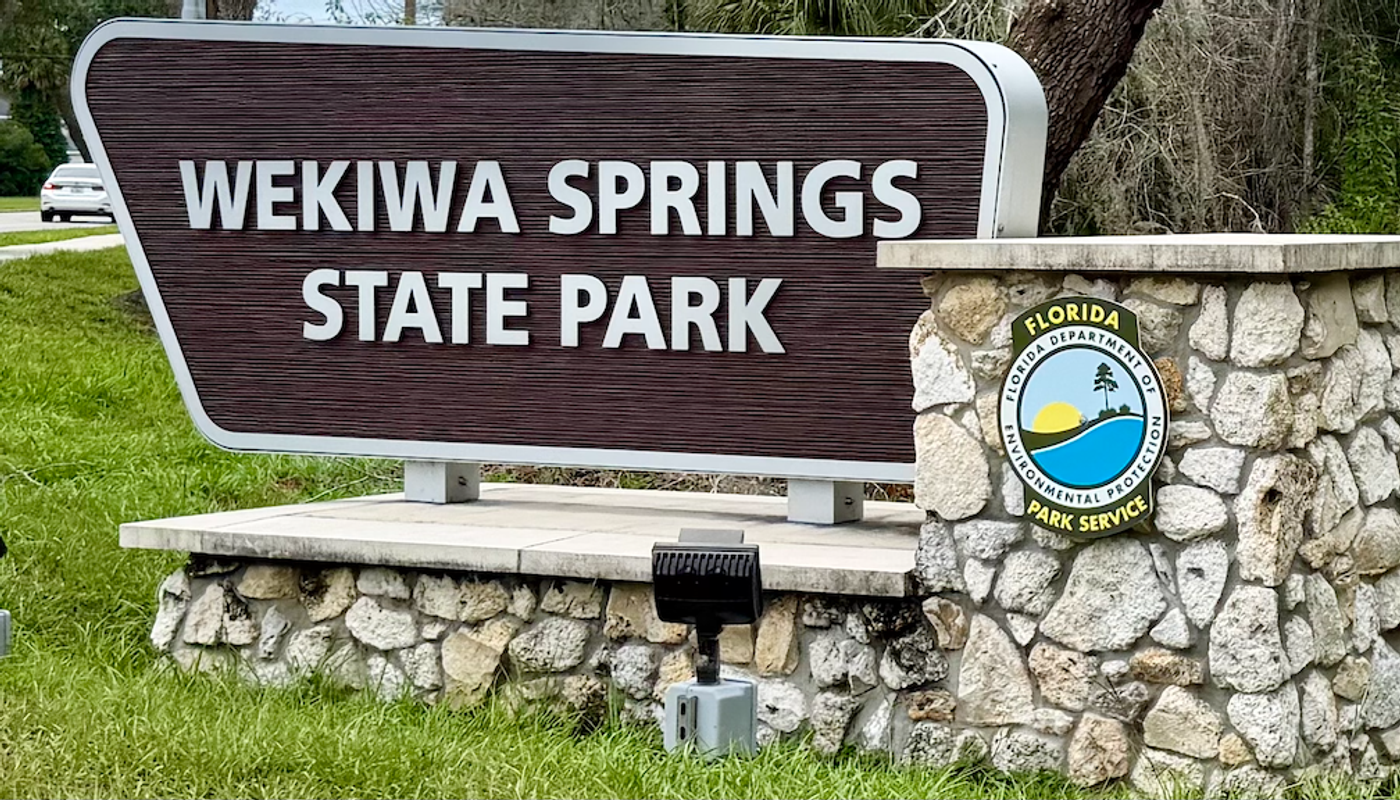
Archibald Visits Wekiwa Springs
Archibald visits Wekiwa Springs, investigates a remarkably cold spring, studies human kayaking habits, and unexpectedly meets Boris, a Russian tortoise with unusual sleeping habits.
There are places in Florida where the ground behaves exactly as one expects.
Wekiwa Springs State Park is only partially one of those places.
The day began with a visit to the famous spring itself. Clear water emerged continuously from beneath the earth, gathering into a broad pool before flowing away as a river.
This seemed unnecessarily dramatic.
The water was astonishingly clear.
It was also cold.
Humans appeared delighted by this fact.
Dozens of them voluntarily entered the spring. Some floated. Some splashed. Small humans shrieked continuously, apparently from enjoyment.
As a tortoise, I found this difficult to understand.
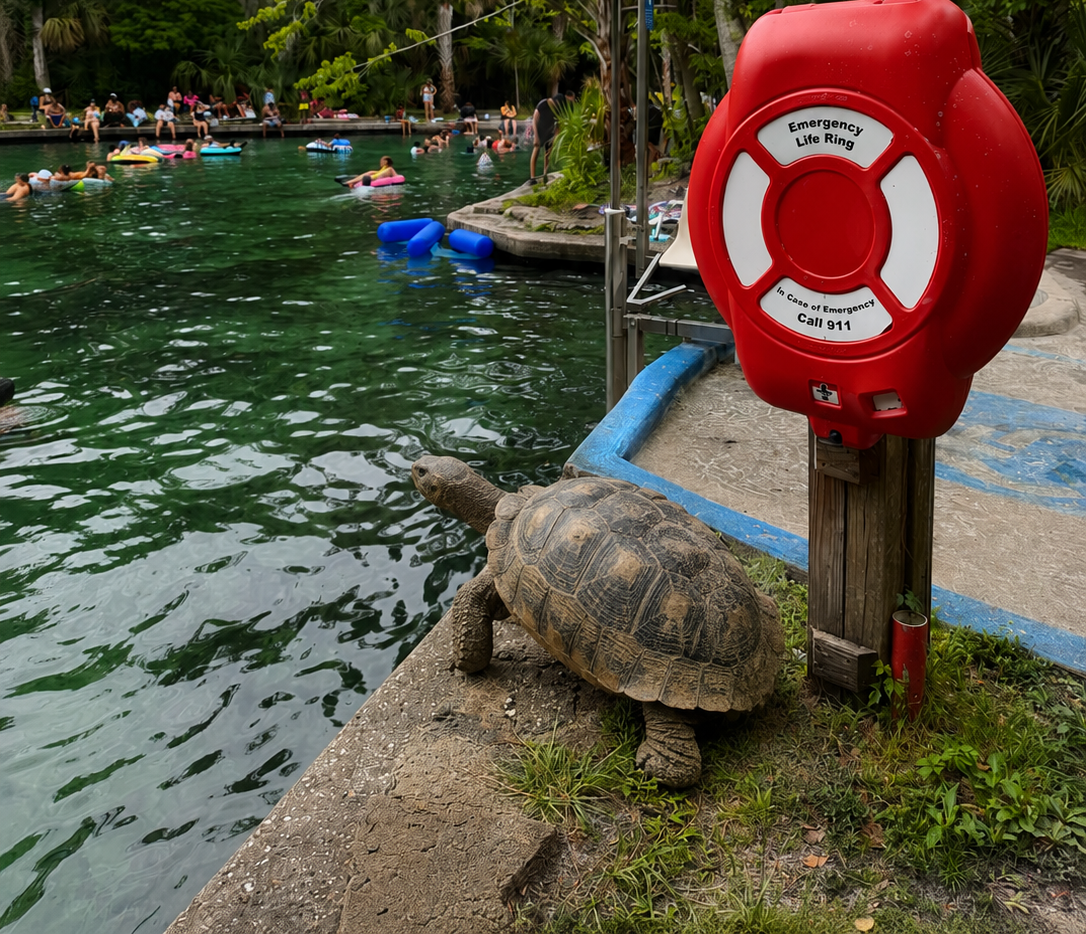
When water is cold, my preferred strategy is generally to remain beside it.
This has proven effective.
The spring area was lively, filled with families enjoying the water. It was pleasant enough, though considerably busier than the environments I typically seek out. I have always believed that quiet contemplation deserves greater appreciation.
Eventually, we left the crowds behind and explored one of the park's upland trails.
This felt much more familiar.
Longleaf pines stretched overhead. The sandy soil was firm and dependable. Palmettos lined the trail, and the air carried the scent of warm pine needles.
This was proper tortoise country.
Wekiwa Springs is home to both gopher tortoises and Russian tortoises, so I naturally hoped to encounter a cousin or two.
Before long, I spotted movement near a patch of open sand.
Success.
A tortoise.
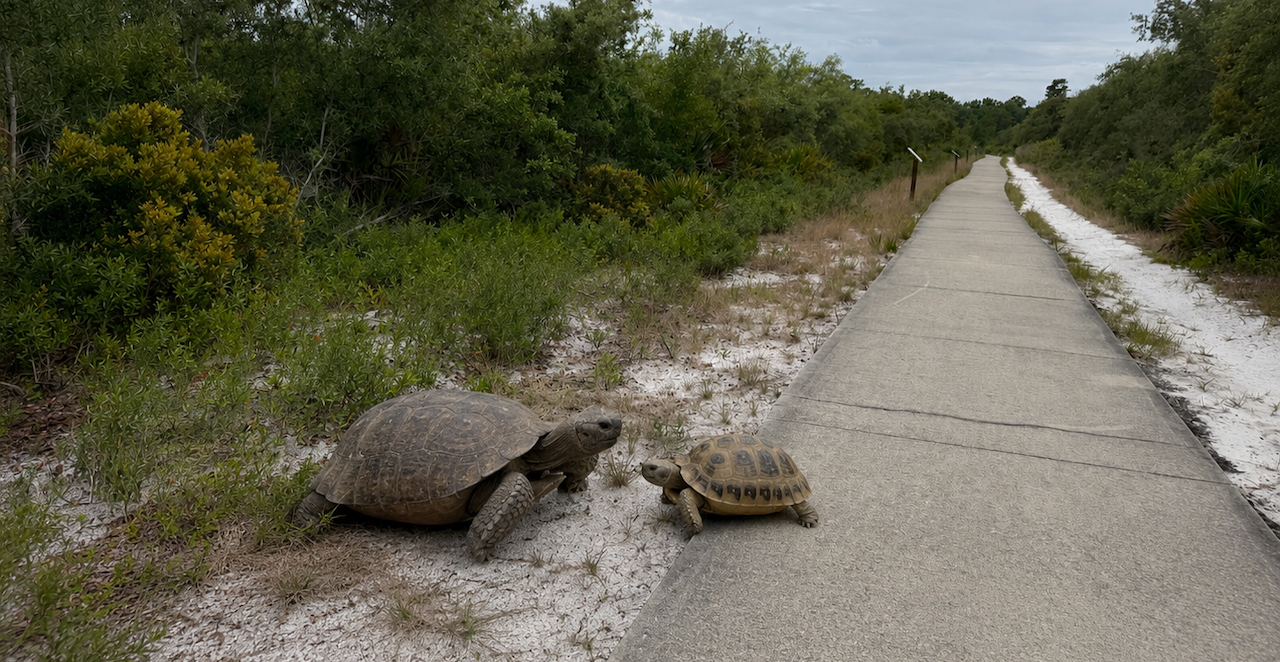
I approached confidently, prepared for what I assumed would be a pleasant exchange regarding local vegetation and burrowing conditions.
Instead, I met Boris.
Boris was not a gopher tortoise.
Boris was a Russian tortoise.
This immediately explained several things.
For one, he was considerably smaller than I am. His shell was rounder and more compact, built for a very different sort of landscape than the sandy uplands I call home.
For another, he spoke with such a strong accent that I understood only portions of our conversation.
I gathered that he had recently emerged from a lengthy period of dormancy.
"Long winter," Boris explained.
It was late May.
I found this surprising.
As gopher tortoises, we remain active throughout most of the year. We may become less active during cooler weather, but generally speaking, if the sun is shining and there is food available, I see little reason to remain underground.
Boris disagreed.
Russian tortoises, he explained, spend much of the year avoiding unfavorable conditions. In colder climates they may remain dormant through long winters, and in hotter regions they often disappear underground during the harshest summer months as well.
This seemed excessive.
By Boris's accounting, some years involve only a few months of actual tortoise activity.
I considered this carefully.
On one hand, prolonged naps possess obvious advantages.
On the other hand, one misses quite a lot.
I asked whether he ever worried about overlooking interesting plants.
He appeared unconcerned.
Different philosophies, I suppose.
Despite our differences, Boris proved pleasant company. We compared notes on burrows, discussed predators, and agreed that shade remains a worthwhile investment regardless of continent.
Eventually we parted ways, each continuing our respective investigations of the trail.
I was pleased to have met a fellow tortoise, even if communication occasionally required repetition and patient interpretation.
Later, we returned to the spring, where I observed another curious human activity.
Several people were placing narrow boats into the river flowing away from the spring and then propelling themselves downstream with paddles.
I watched for some time.
At first glance, the arrangement appeared unnecessarily complicated.
Yet the more I observed, the more appealing it seemed. The river moved at a reasonable pace. There was shade. There were long stretches of quiet.
These are qualities I respect.
I remain uncertain whether kayaking is something I personally require, but I am willing to acknowledge that it may have merit.
Carefully stated, of course.
As we departed, I reflected on the day.
The spring was fascinating, though far too cold.
The crowds were energetic, though somewhat louder than necessary.
The upland trails were excellent.
And Boris, despite being difficult to understand at times, provided valuable insight into the surprisingly different lives of Russian tortoises.
Wekiwa Springs turned out to be a place full of unexpected discoveries.
Not all of them were where I expected to find them.