
Places · San Antonio, Texas
An Evening Along the San Antonio River Walk
A summer walk along the San Antonio River leads past waterfalls, cocktails, the Alamo, riverside Tex-Mex, and a downtown transformed by colorful lights.
San Antonio was hot when we arrived, the kind of summer heat that makes even a modest walk across downtown feel ambitious. Fortunately, we were staying at Hotel Indigo north of the River Walk’s central bend, which allowed us to descend to the river and follow the water toward dinner rather than remain on the exposed surface streets.
The difference was noticeable almost immediately. Large trees shaded much of the path, and the lower elevation beside the water felt cooler than the pavement above. It was still unquestionably summer in South Texas, but the combination of shade, moving water, and fewer sun-baked intersections made the walk much more comfortable.
We had only planned a straightforward stroll into downtown. Instead, the route became one of the most memorable parts of our short visit.
Walking South Along the River
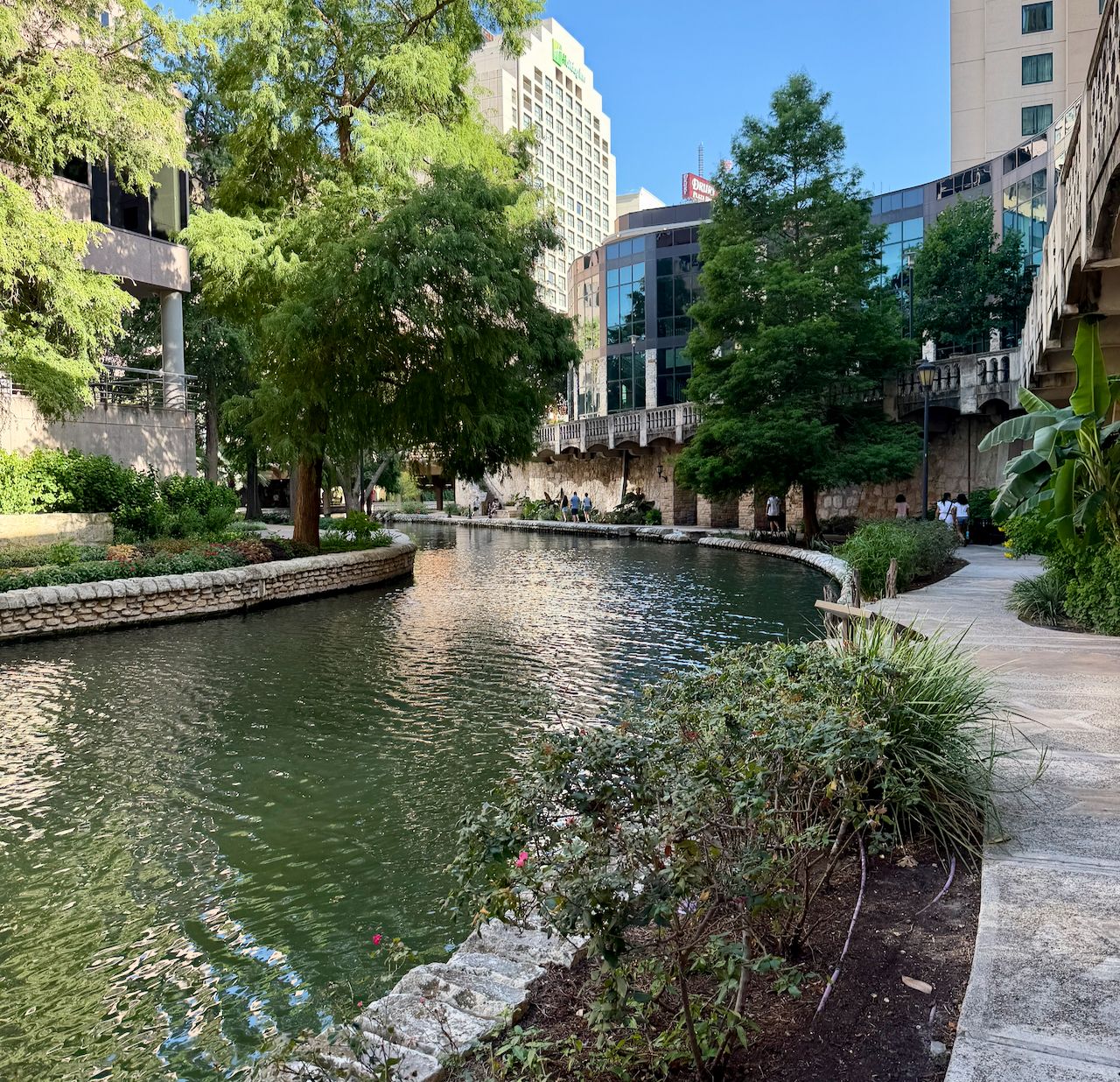
The northern portion of the downtown River Walk feels different from its busy restaurant district. It is quieter, more heavily landscaped, and at times surprisingly narrow. In a few places, the path runs close to the water without much of a barrier. On a hot afternoon, a swim could feel simultaneously tempting and possibly inevitable.
We watched our footing and continued beneath the trees, passing stone walls, stairways, bridges, and small side paths leading up toward surrounding buildings.
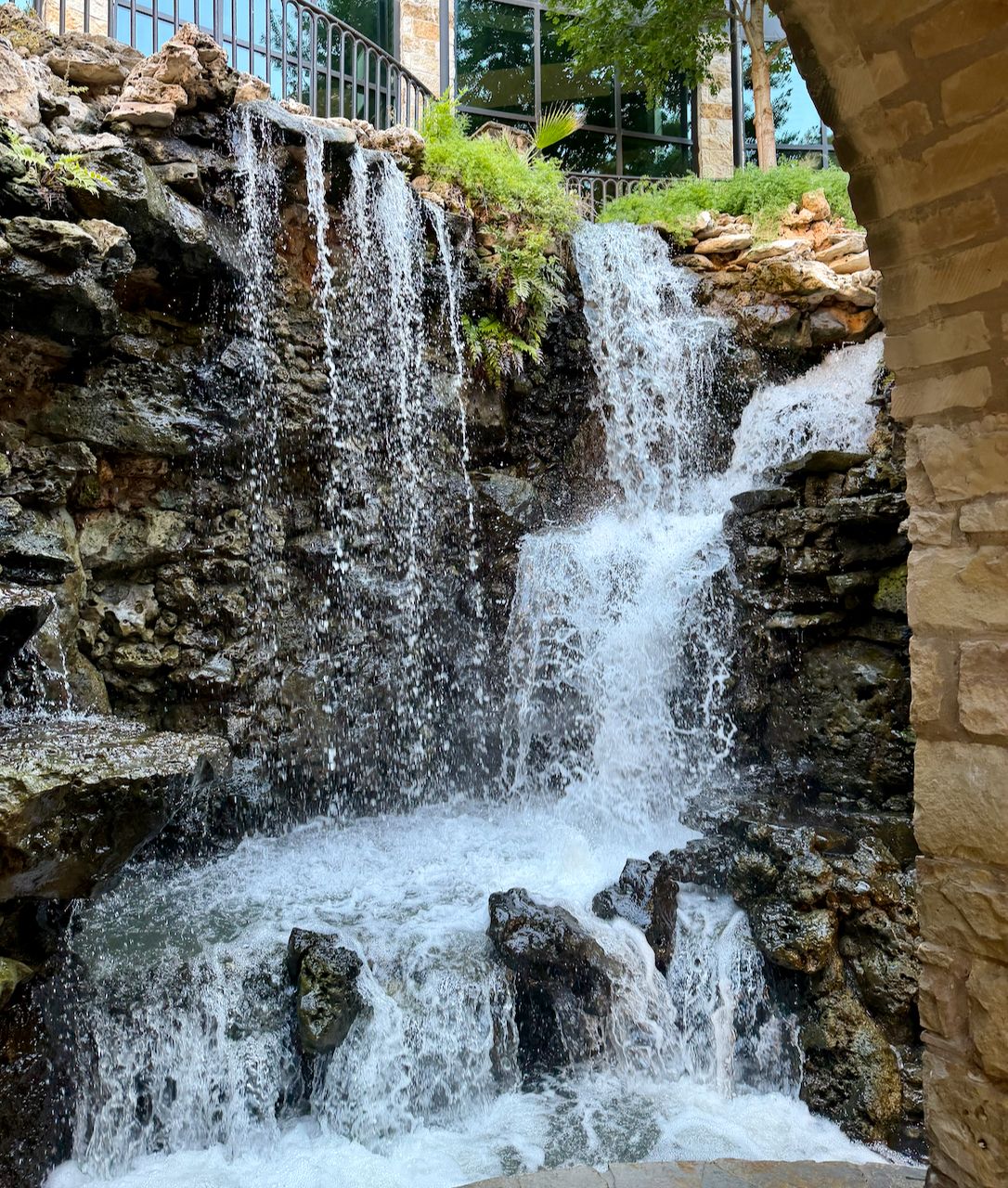
What caught us off guard was the number of water features along the way. Streams spilled from neighboring properties, small channels joined the river, and waterfalls appeared beside walkways and beneath bridges. Some were subtle, while others poured forcefully over stacked rock.
Those features kept an ordinary walk from feeling repetitive. Around nearly every bend, there was another courtyard, staircase, bridge, or patch of dense greenery to investigate.
How the River Walk Came to Be
The River Walk looks established enough to seem inevitable, but its survival was not guaranteed.
After a destructive flood struck San Antonio in 1921, city leaders began developing major flood-control improvements for downtown. At one point, a proposal called for paving over part of the river and turning it into a storm sewer. Local preservation advocates opposed that approach, and architect Robert H. H. Hugman instead promoted a plan that treated the river as an asset rather than an obstacle.
Hugman envisioned walkways, arched bridges, landscaping, shops, restaurants, and gathering places along the channel. His concept began taking physical form in the late 1930s with support from the federal Works Progress Administration, and the initial River Walk project was completed in the early 1940s.
That history explains some of the details we noticed during our walk. The River Walk is not simply a sidewalk beside a channel. Its stairways, stonework, bridges, plantings, and changes in elevation were designed to create a sequence of public spaces below the normal street grid.
Later expansions extended the system well beyond the familiar downtown loop. Today, the broader river corridor includes the Museum Reach to the north and the Mission Reach to the south, though our evening remained focused on the central downtown section. Official maps include the various segments, access points, parking information, and accessible routes.
Cocktails Beneath Downtown
For happy hour, we met friends for drinks at the Library Cocktail Lounge. The bar sits below the Maverick building on North Presa Street, close enough to the River Walk to make it an easy stop without interrupting the general direction of our stroll.
The basement setting was dark and playful, with a loose literary theme and the enclosed feeling that usually works well for a cocktail bar. Our drinks were decent rather than revelatory, but the atmosphere made it a fun place to gather before dinner. It also provided another welcome stretch of air-conditioning before we headed back outside.
A Quick Visit to the Alamo
One of the things that always surprises me about downtown San Antonio is how close the Alamo is to the River Walk. The two attractions feel as though they should occupy separate tourism districts, yet it takes only minute to climb from the restaurants and boats to Alamo Plaza.
We arrived too late to tour the interior, but the plaza was still worth the short detour. We took a few photos of the familiar limestone facade before returning toward the river.
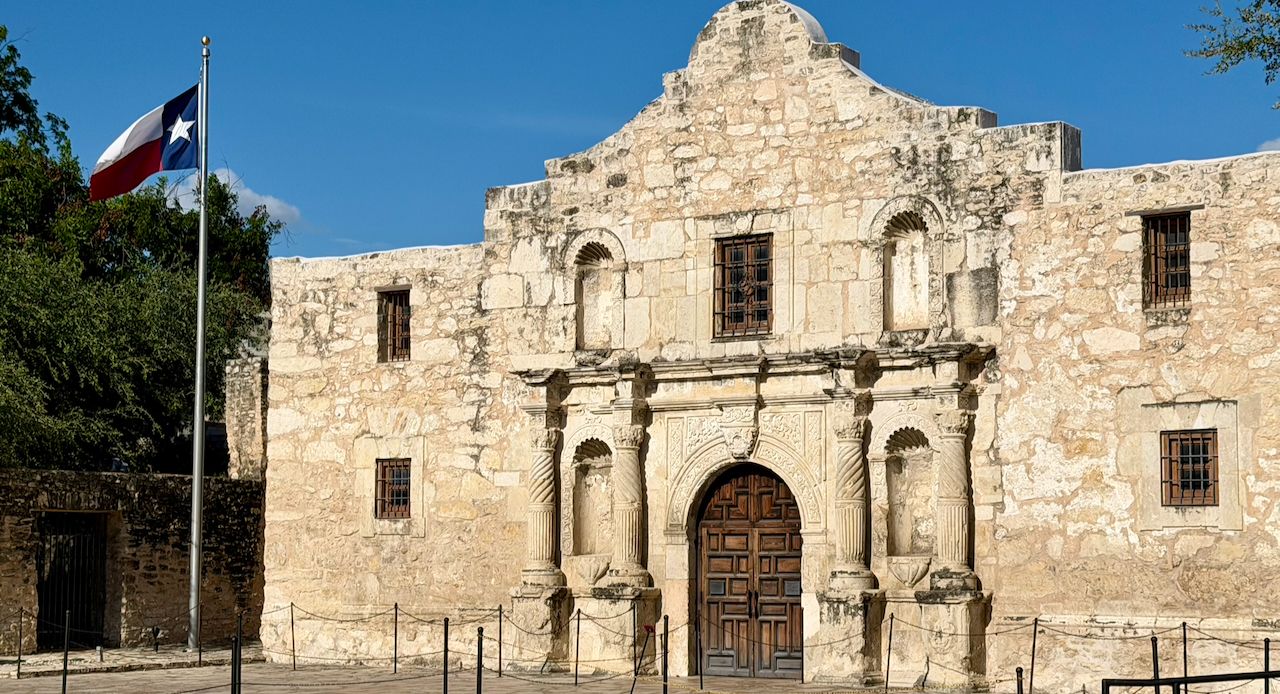
The site rewards more time than we had available that evening, particularly for anyone interested in the Spanish mission era, the Texas Revolution, or the complicated history surrounding the site. For this visit, however, it served as a quick reminder of how tightly San Antonio’s historic landmarks, restaurants, hotels, and nightlife are packed together.
Dinner Beside the River at Casa Rio
We met the rest of our group at Casa Rio, one of the most recognizable restaurants on the River Walk. Its colorful umbrellas and waterside tables have appeared in countless San Antonio photographs, and the restaurant has occupied its riverfront location since 1946. It is generally recognized as the oldest restaurant operating on the River Walk.
The setting is the main reason to eat here. Tables line the water while tour boats pass only a few feet away. From our seats, we could watch the evening traffic drift by as the last daylight faded from the channel.
Our table filled with the familiar comforts of a hearty Tex-Mex dinner: enchiladas, fajitas, rice, and beans. The food was solid and satisfying, though Casa Rio is less about chasing a groundbreaking meal than enjoying a long-established part of the River Walk experience. The restaurant was one of the first businesses to embrace the riverfront after the original public improvements, helping demonstrate that the lower level could function as an active dining and entertainment district.
By the time we finished, the sun had disappeared and the character of the river had changed.
The River Walk After Dark
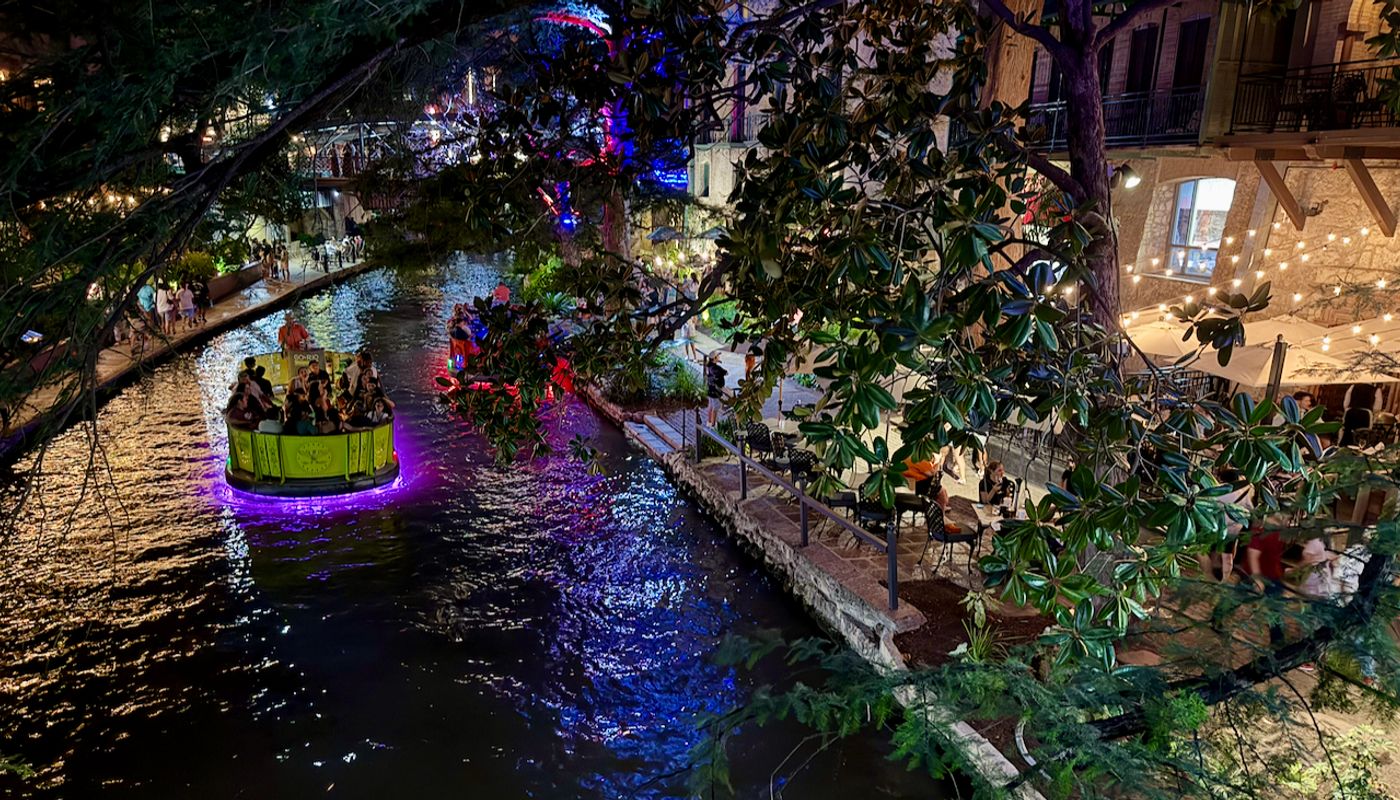
Restaurants switched on patio lights, signs reflected in the water, and the tour boats glided past with colorful lighting beneath their hulls. The last time we had visited, it was before nearly everything could be outlined, illuminated, or programmed with LEDs. The upgraded boats added streaks of green, blue, and purple to the water as they moved through the channel.
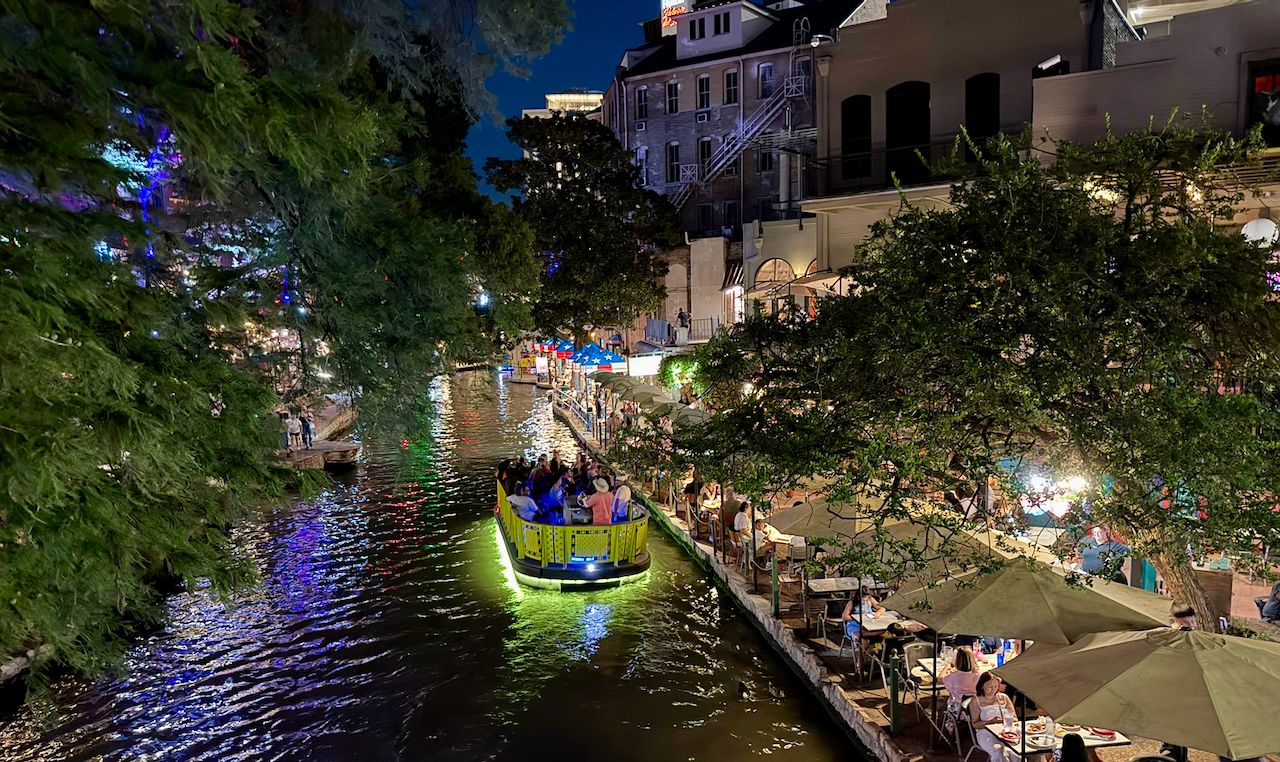
The lighting could easily have felt excessive, but on the River Walk it suited the lively atmosphere. The boats were bright without overpowering the older stone walls, tall trees, and historic buildings that give the district its character.
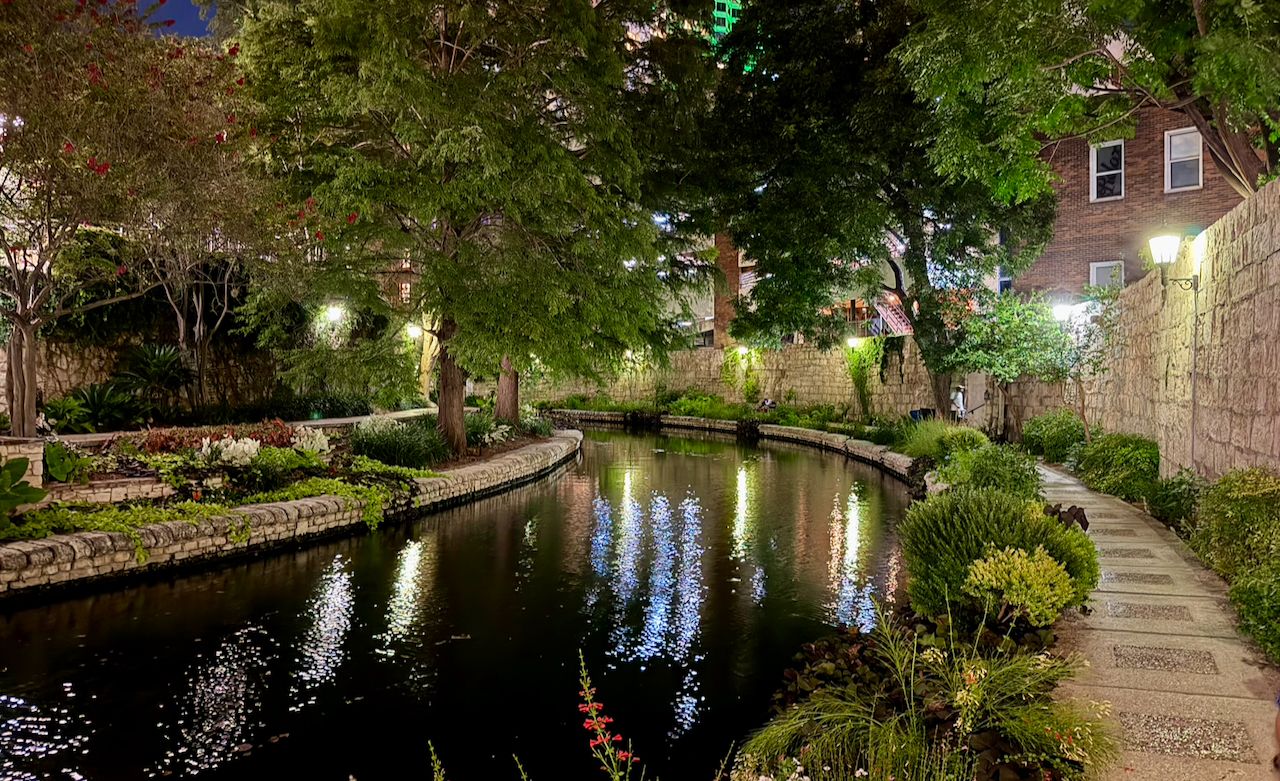
After a generous dinner, the long walk back toward the hotel was exactly what we needed. We retraced our earlier route, but the same scenery looked entirely different. Waterfalls that had been easy to study in daylight became flashes of white beneath spotlights. Trees formed dark canopies overhead, while lamps revealed only short sections of the winding path ahead.
Closer to the main restaurant district, music and conversation followed us along the water. Farther north, the crowds thinned and the river became calm again.
Travel Tips for the San Antonio River Walk
Walk in both daylight and after dark. The landscaping and architectural details are easier to appreciate during the day, while the lights and boats give the central section a different energy at night.
Prepare for uneven and narrow paths. Some stretches are tight, close to the water, or interrupted by steps. The City of San Antonio publishes maps showing elevators, ramps, and accessible routes for visitors who need to avoid stairs.
Use the river as a downtown route. The River Walk connects many central hotels, restaurants, bars, and attractions. It can be more pleasant than walking along the surface streets, particularly when shade is valuable.
Bring water during summer. Shade helps, but San Antonio heat can still be intense. We appreciated having indoor stops planned along the route.
Allow time for the Alamo. It is easy to reach from the River Walk, but touring the historic site requires more time than a quick photo stop. Check the official visitor information before arriving, particularly for current hours, timed entry, and ongoing work around Alamo Plaza.
Check official maps before exploring farther. The River Walk extends well beyond the downtown restaurant loop, and the official map collection is useful for locating access points, parking areas, and the Museum Reach and Mission Reach sections.
A Walk Worth Building an Evening Around
Our trip to the River Walk was brief, but the route gave us a compact sample of what downtown San Antonio does well. Within one evening, we walked beneath mature trees, passed waterfalls and historic stonework, met friends for basement cocktails, stopped at the Alamo, ate Tex-Mex beside the water, and watched illuminated boats cruise through the center of town.
The busiest blocks can be crowded and openly tourist-oriented, and some sections of the path require more attention than a typical city sidewalk. Even so, the River Walk remains far more than a strip of restaurants. Its layers of public planning, flood control, architecture, history, and landscaping make walking beside the river an experience in itself.
For us, the best part was seeing the route twice: shaded and green on the way downtown, then colorful and animated on the walk back.