
Places · Apopka, Florida
A Day at Wekiwa Springs State Park: Swimming, Trails, and Spring-Fed Waters Near Orlando
From the springhead to the Wet to Dry Trail, discover swimming, paddling, wildlife, and the history of Wekiwa Springs State Park near Orlando.
Visiting Wekiwa Springs State Park takes a little more planning than it once did. Day-use visitors are required to reserve entry in advance through the Florida State Parks reservation system. Current admission fees and reservation information can be found on the official park website:
https://www.floridastateparks.org/parks-and-trails/wekiwa-springs-state-park
Reservations can fill up on busy weekends and holidays, making spontaneous visits more difficult.
After arriving, however, it is easy to see why the park remains one of Central Florida's most popular outdoor destinations.
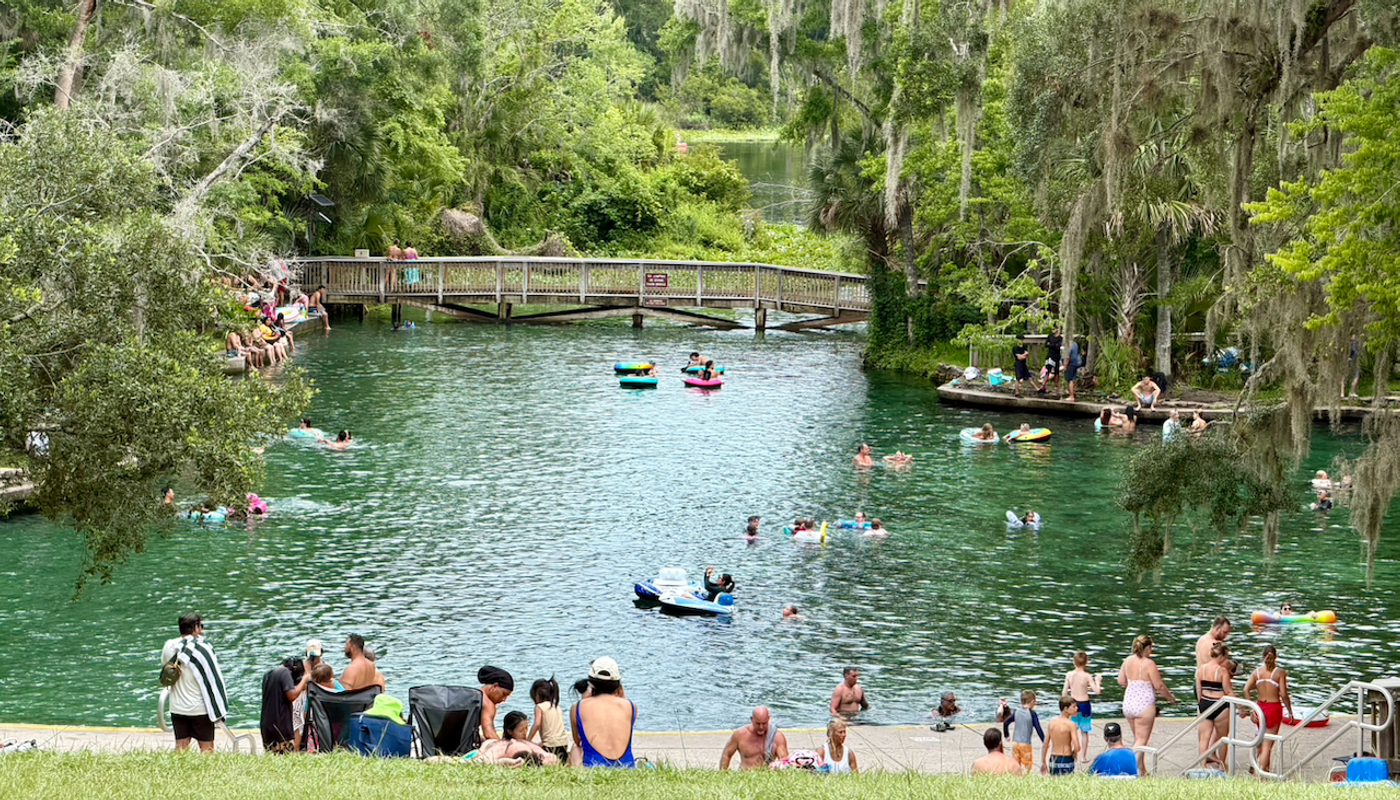
It was an oppressively muggy day in May, with the kind of heat that signals summer has arrived in Florida. As we descended the steps along the grassy hillside toward the springhead, the air became noticeably cooler. Ahead of us, clear water emerged from the limestone spring basin before beginning its journey downstream as the Wekiva River.
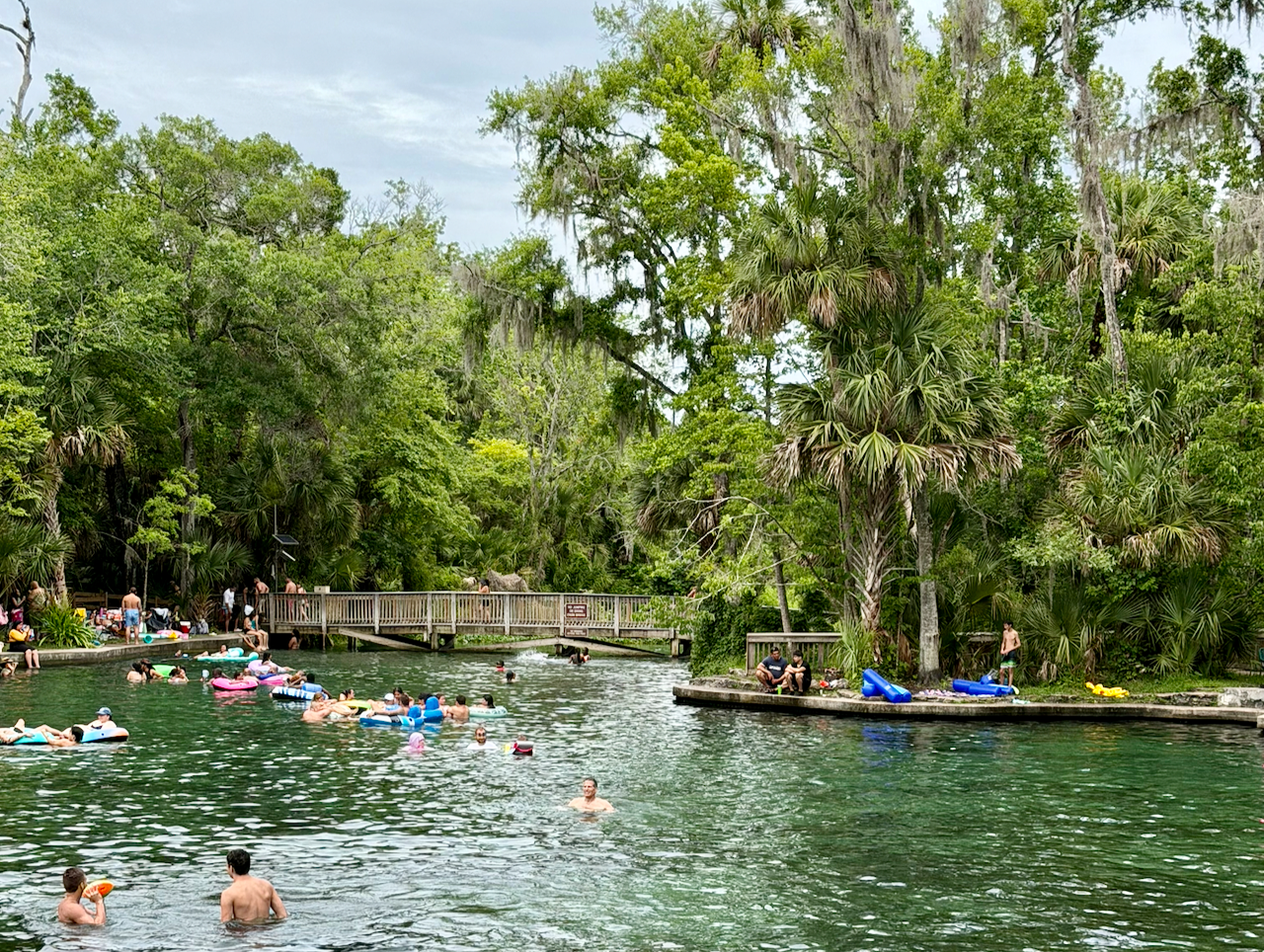
The atmosphere around the swimming area was lively. Families picnicked beneath the trees, teenagers tossed footballs across the lawn, and younger children splashed in the shallows, occasionally punctuating the afternoon with excited shrieks. Despite the crowd, the spring retained a relaxed feel, helped by the steady flow of cool water emerging from underground.Just beyond the swimming area, the spring run becomes a paddler's playground. Canoes and kayaks launch directly into the clear, winding waterway that meanders through the surrounding forest. Rentals are provided by Wekiwa Springs Adventures, the park's on-site concessionaire, which offers canoes, single kayaks, and tandem kayaks for a variety of trip lengths. Current rental information is available at:
https://wekiwaadventures.com
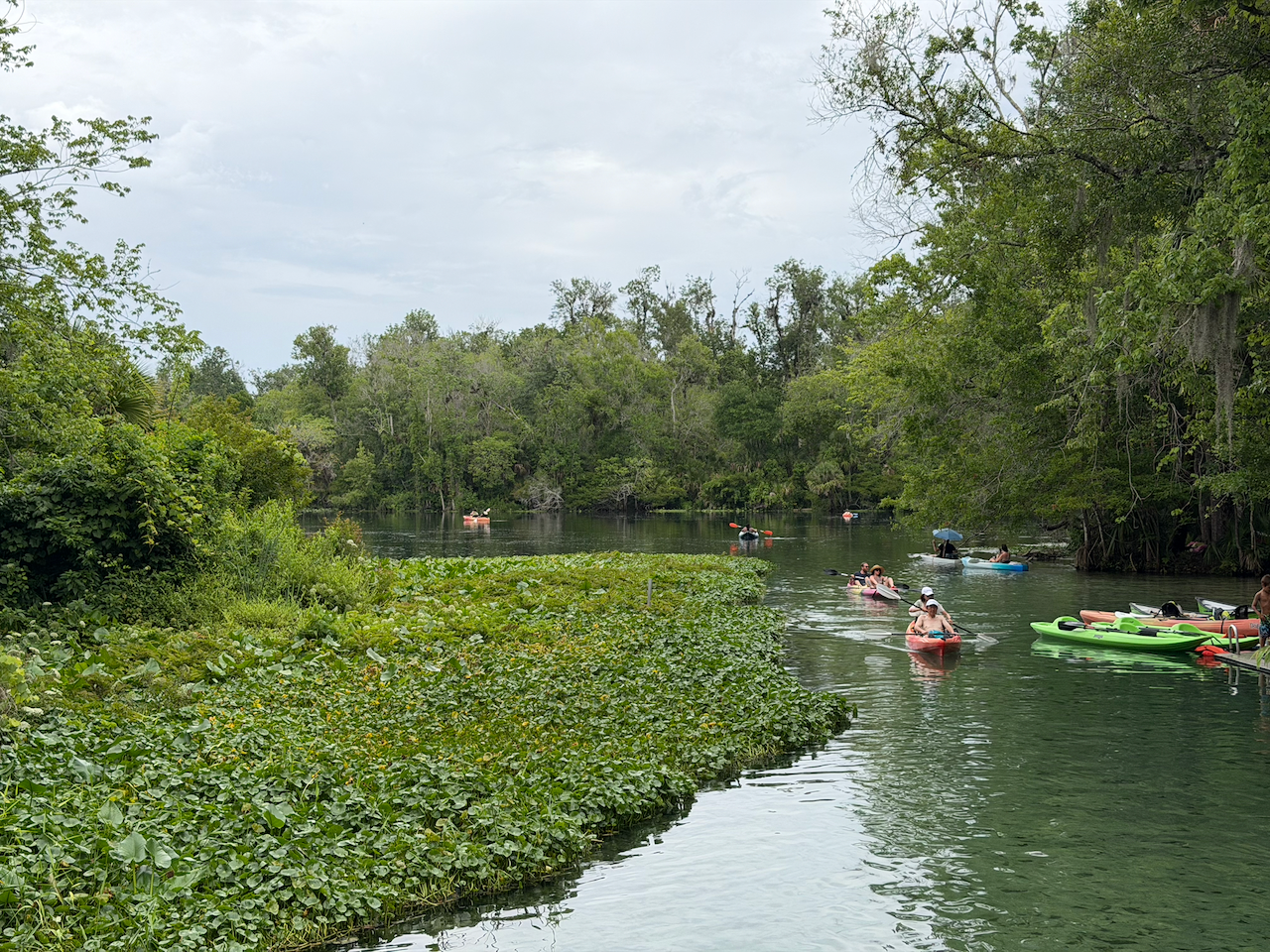
We briefly considered renting a tandem kayak, but learned that both paddlers needed to present identification. Since one of our IDs was still sitting in the car, we decided against renting and instead spent our time swimming and exploring on foot.
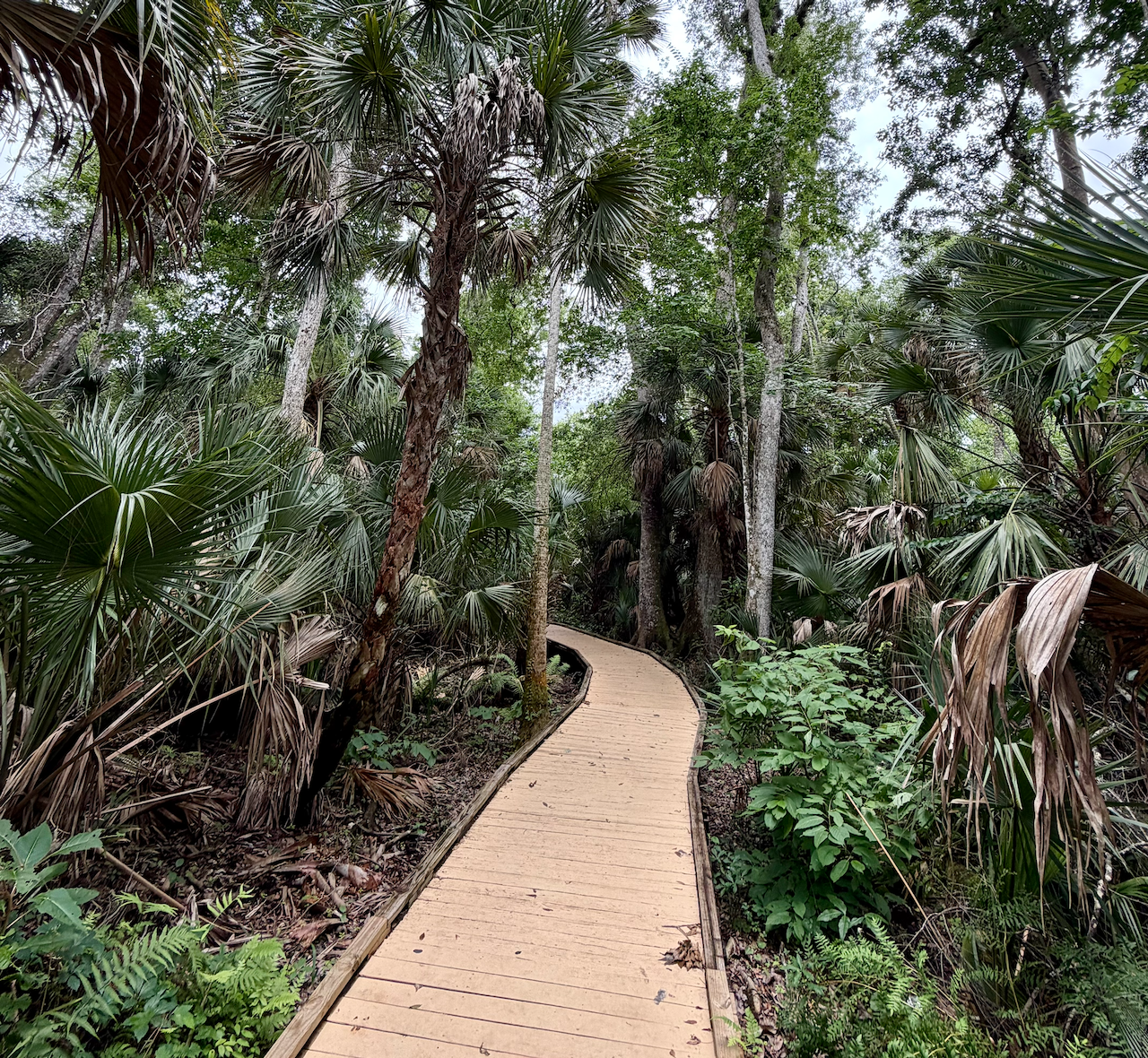
Later, we followed the Wet to Dry Trail, a short interpretive hike that climbs uphill from the spring. Much of the route is built on elevated boardwalks that pass through changing habitats, from wetter areas near the spring to drier upland forest. The walk offers a quick introduction to native Central Florida ecosystems and provides a useful reminder of how much of this landscape once looked before tourist attractions, subdivisions, and commercial development spread across the region.
The Springs and Their History
Wekiwa Springs has attracted people for thousands of years. Archaeological evidence shows that Native Americans lived in the area long before European settlement. The spring itself takes its name from a Creek word associated with springs or spring water.
In the late nineteenth century, when the spring was still known as Clay Springs, a hotel and bathhouse were built nearby to attract visitors seeking recreation and the perceived health benefits of mineral-rich spring water. By the 1890s, the area had become one of Central Florida's earliest tourist destinations.
The property later passed through private ownership, including use by the Apopka Sportsmen's Club, before being acquired by the State of Florida in 1969 and opening as a state park shortly thereafter.
Today, the park protects more than 7,000 acres surrounding the spring and the headwaters of the Wekiva River, one of Florida's designated National Wild and Scenic Rivers.
Wildlife and Natural Areas
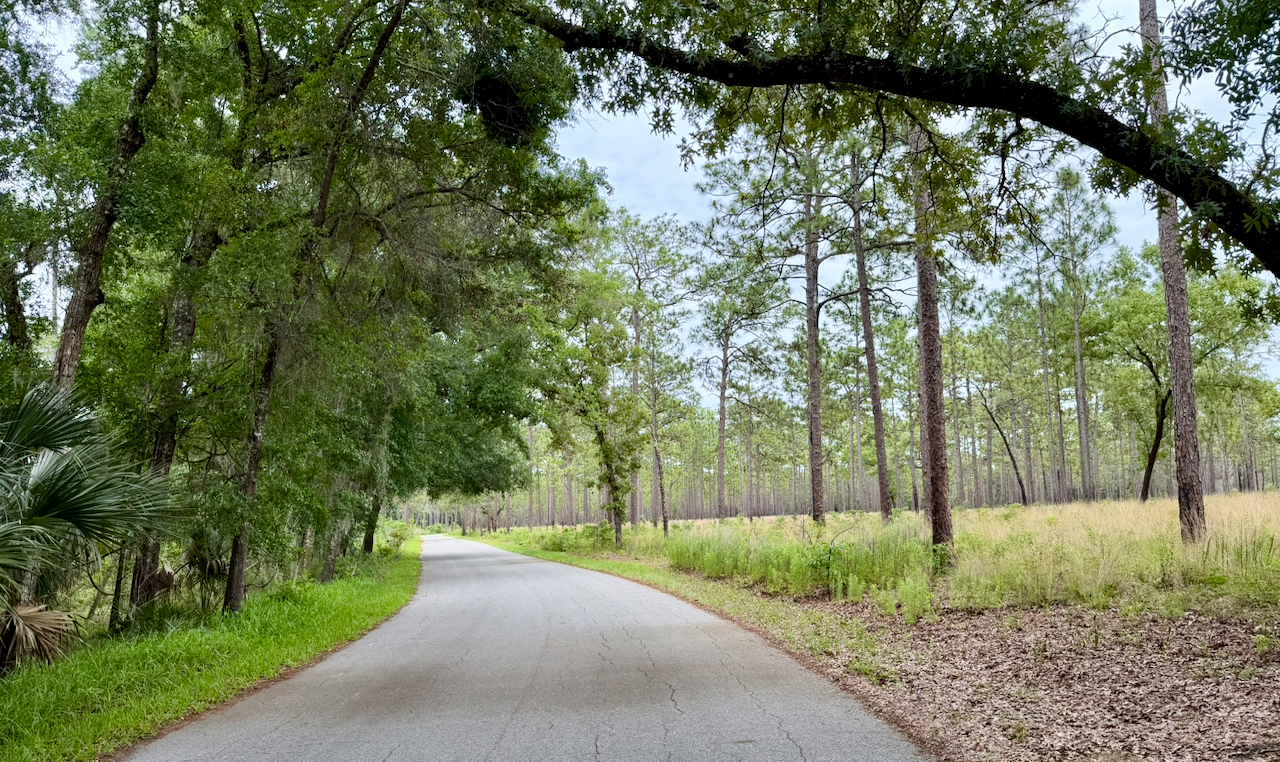
Although most visitors spend their time around the spring basin, Wekiwa Springs State Park encompasses a diverse mix of sandhills, hardwood hammocks, scrub, wetlands, and river corridors.
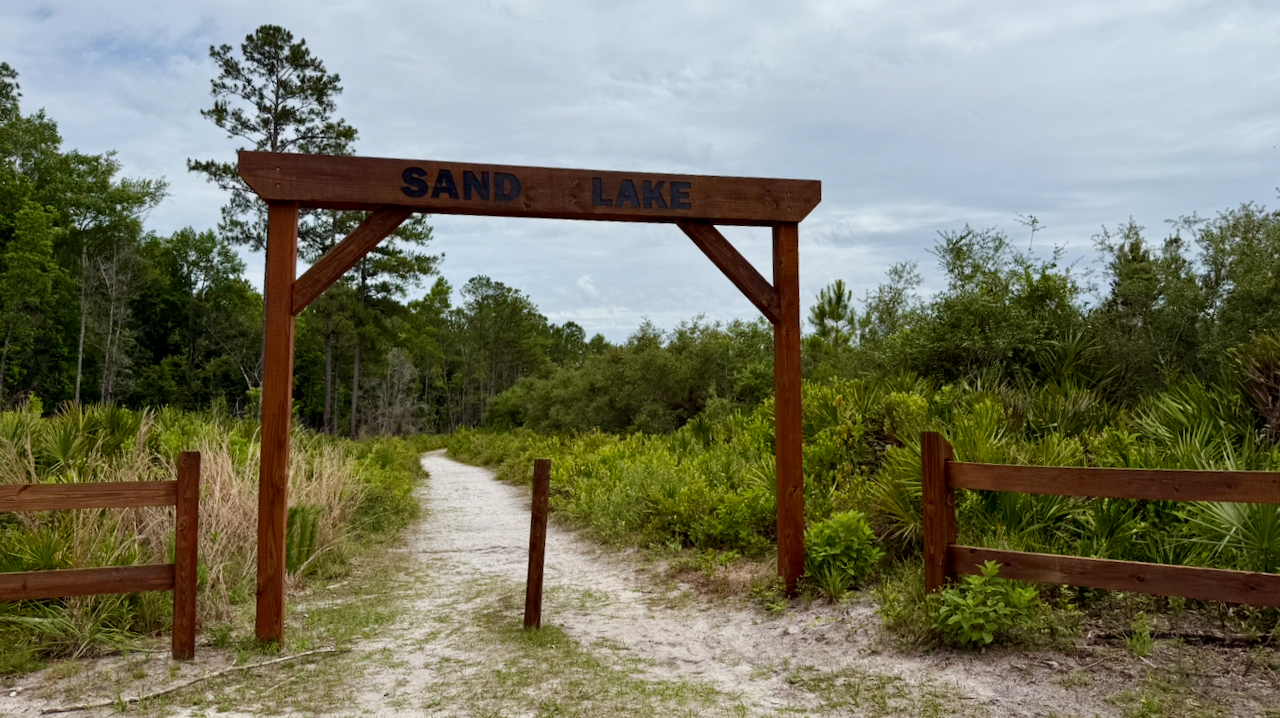
The park supports a wide variety of wildlife. White-tailed deer, raccoons, turtles, herons, egrets, and numerous fish species are commonly seen. More elusive residents include bobcats, gray foxes, coyotes, and Florida black bears. Alligators are also present throughout the river system and should always be given plenty of space.
The spring-fed waterways provide habitat for fish, turtles, and aquatic plants, while the surrounding forests support woodpeckers, hawks, owls, and migratory songbirds. Even a short hike can provide opportunities to observe native plants and animals that have become increasingly uncommon elsewhere in the region.
Travel Tips
• Reserve your entry well in advance, particularly for weekends and holidays.
• Check the Florida State Parks website before visiting for current fees and reservation requirements.
• Arrive early for the best chance at securing a good parking spot and avoiding peak crowds.
• Bring water, sunscreen, and insect repellent.
• If renting a canoe or kayak, verify identification requirements beforehand.
• Water shoes can be useful around the spring and launch areas.
• Watch for wildlife, but keep a safe distance from all animals.
• Summer thunderstorms are common, especially in the afternoon, so monitor the forecast.
Wekiwa Springs State Park offers an accessible way to experience spring-fed waterways, native habitats, and a piece of Central Florida's natural history. Whether you're swimming, paddling, or simply walking the trails, it provides a glimpse of a landscape that once covered much of the region.