

Places · Cleveland, Ohio
A Cleveland Weekend: Art, Lake Erie, and a River Regatta
A late-September weekend in Cleveland takes us from the art museum and Edgewater Park to a rowing regatta on the Cuyahoga River.
Cleveland has spent decades living down the image of a city whose river caught fire. The Cuyahoga burned more than once, but the relatively small fire in 1969 became a national symbol of industrial pollution and helped focus attention on the need for cleaner waterways. It's an important part of the city's story, though hardly the whole story anymore. The National Park Service's account of the fire offers some useful perspective on how the event entered American environmental history.
On a recent long weekend, we found plenty to appreciate in Cleveland's museums, neighborhoods, lakefront, and evolving riverfront. A faint hint of fall was in the air, the Browns were in town, and we had enough time to see several very different sides of northeast Ohio.
Art and Architecture in University Circle
Our trip started with a rather uncomfortable Frontier flight from Orlando. I could swear the seats creep closer together every few months. At least it was direct. After dropping our bags at a downtown hotel and grabbing a quick snack, we met a couple of local friends and headed east to University Circle, a district packed with museums, parks, and cultural institutions. The cool, dry late-September air was a welcome break from the Florida heat and humidity we'd left behind.
We spent the next two hours at the Cleveland Museum of Art, which has a substantial collection and, notably, free general admission. Founded with support from Cleveland's industrial-era philanthropists, the museum opened in 1916 in a neoclassical building of white marble designed by local architects Hubbell & Benes. That original structure remains central to the museum, but the surrounding spaces have changed considerably.
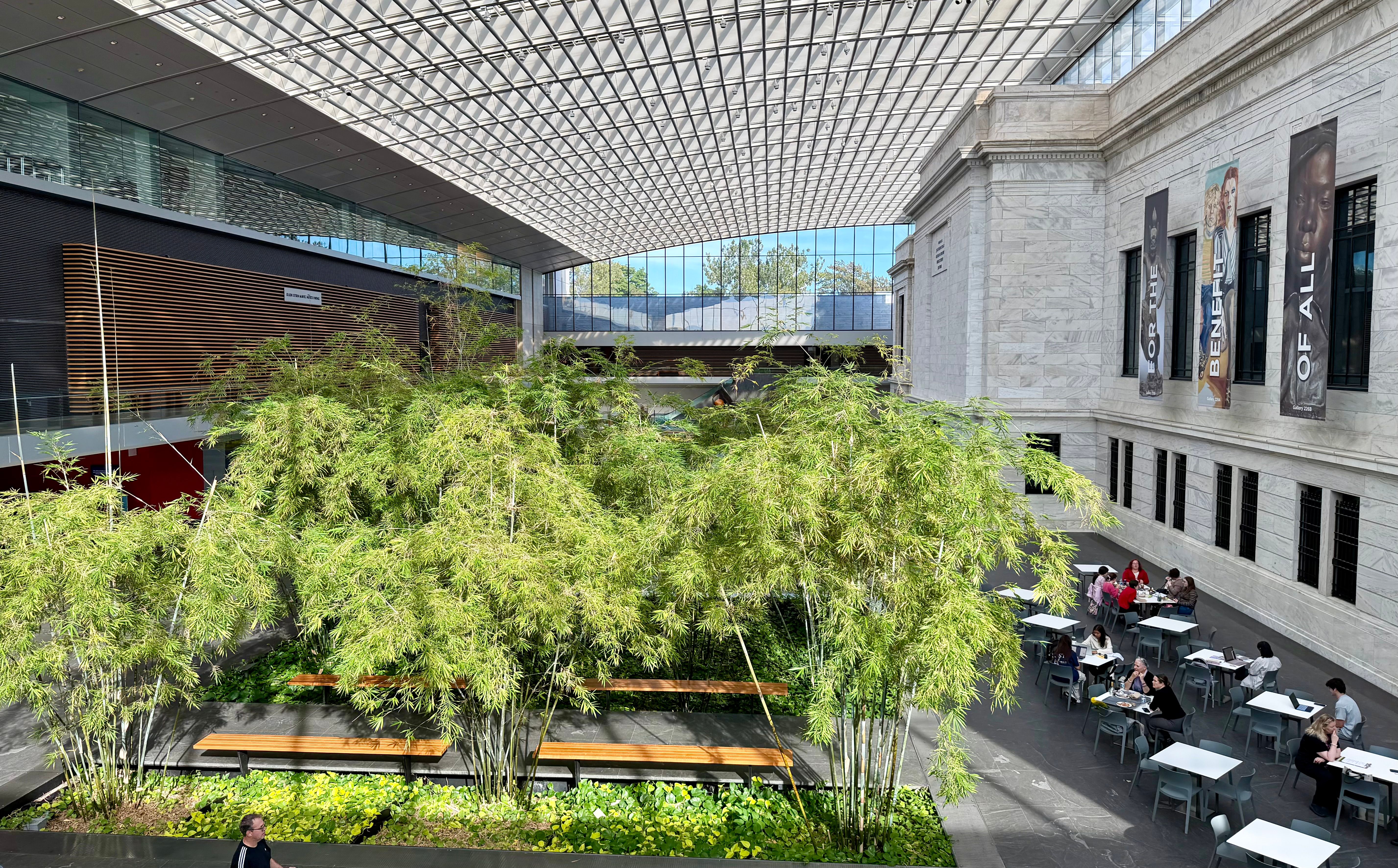
A major renovation and expansion designed by architect Rafael Viñoly brought together the original building, a 1971 addition by Marcel Breuer, and new galleries. The centerpiece is the glass-roofed Ames Family Atrium, opened in 2013. From above, the plants, café tables, and old stone facade make it feel less like a corridor between galleries and more like an indoor public square.
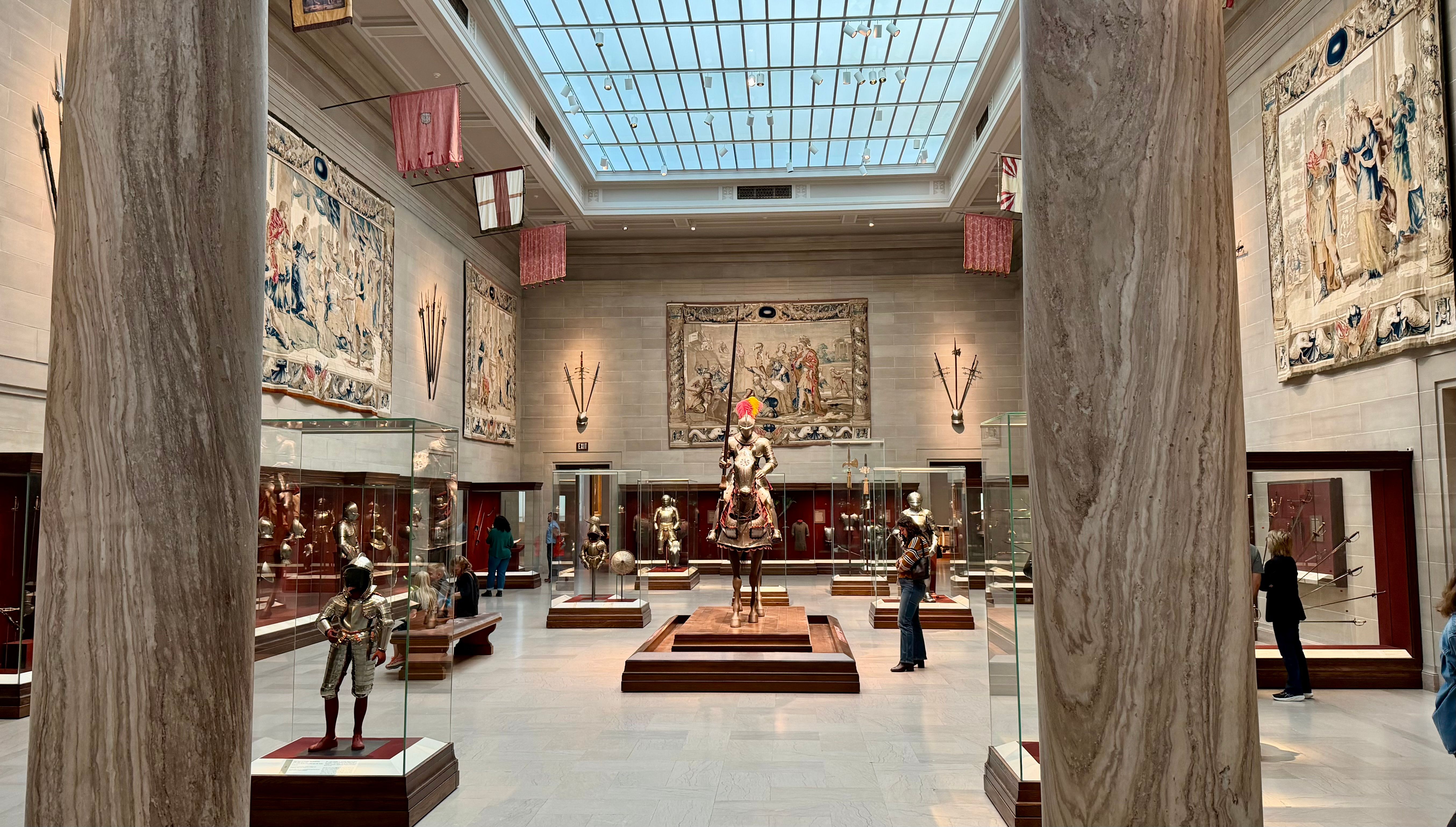
The collection kept us moving between very different periods. I particularly enjoyed the medieval galleries, where paintings and decorative objects reveal how styles varied across Europe. The armor room is understandably a crowd favorite, with suits of armor, weapons, and tapestries displayed in a setting that gives them room to breathe.
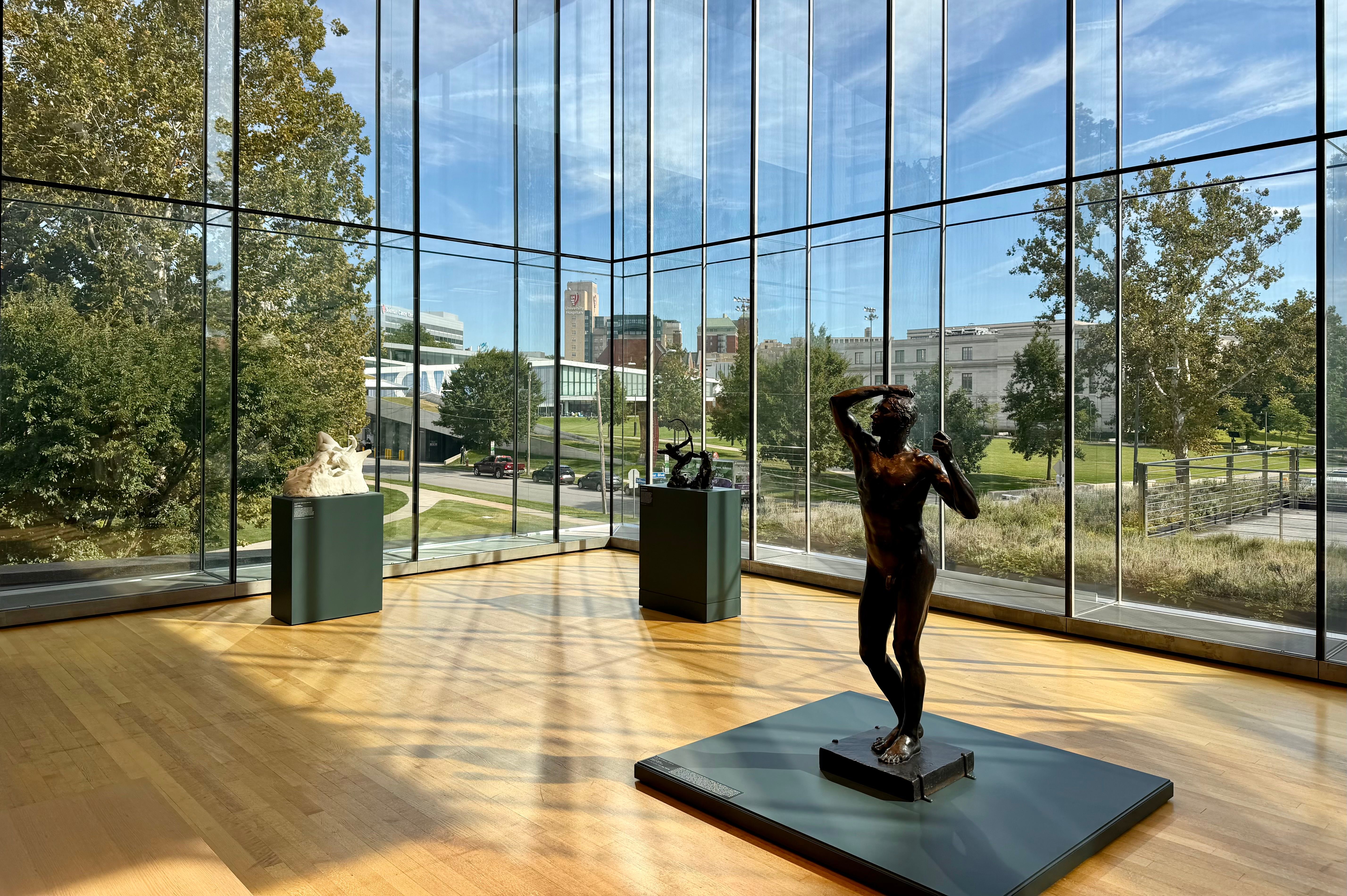
The architecture becomes part of the experience again in the modern wing. Some of the sculpture galleries are enclosed in floor-to-ceiling glass, so the park outside seems to extend right up to the artwork. It is a pleasant contrast to the more formal rooms in the original building, and a reminder that the museum is worth visiting for its spaces as well as its collection.
Afterward, our friends gave us a quick driving tour of the neighborhood. We passed Severance Music Center, home of the Cleveland Orchestra, and the campus of Case Western Reserve University, then wound through Lake View Cemetery. This landscaped Victorian cemetery is also the resting place of President James A. Garfield, whose substantial memorial dates to 1890. We only made a brief pass through, but it is another place worth returning to with more time.
Dinner took us to Abundance Culinary in Cleveland Heights. Its sign playfully reads “A Bun Dance,” and the modern Chinese restaurant occupies a carefully preserved old-fashioned diner. We shared an assortment of bao, spicy shrimp, roasted eggplant, and fried rice. It was a satisfying meal and a fun new use of a classic diner building.
Edgewater Park at Sunset
Rather than head straight back downtown, we continued west to Edgewater Park for the last light of the day. Part of Cleveland Metroparks' lakefront reservation, the park includes beaches, trails, a marina, picnic areas, and open lawns overlooking Lake Erie.
We fell straight into the tourist routine and took photos at the large Cleveland sign, with the skyline across the water. No regrets. The setting was especially pleasant as evening settled in: families were finishing picnics, couples were out walking, and people were giving their dogs one last bit of exercise before dark.
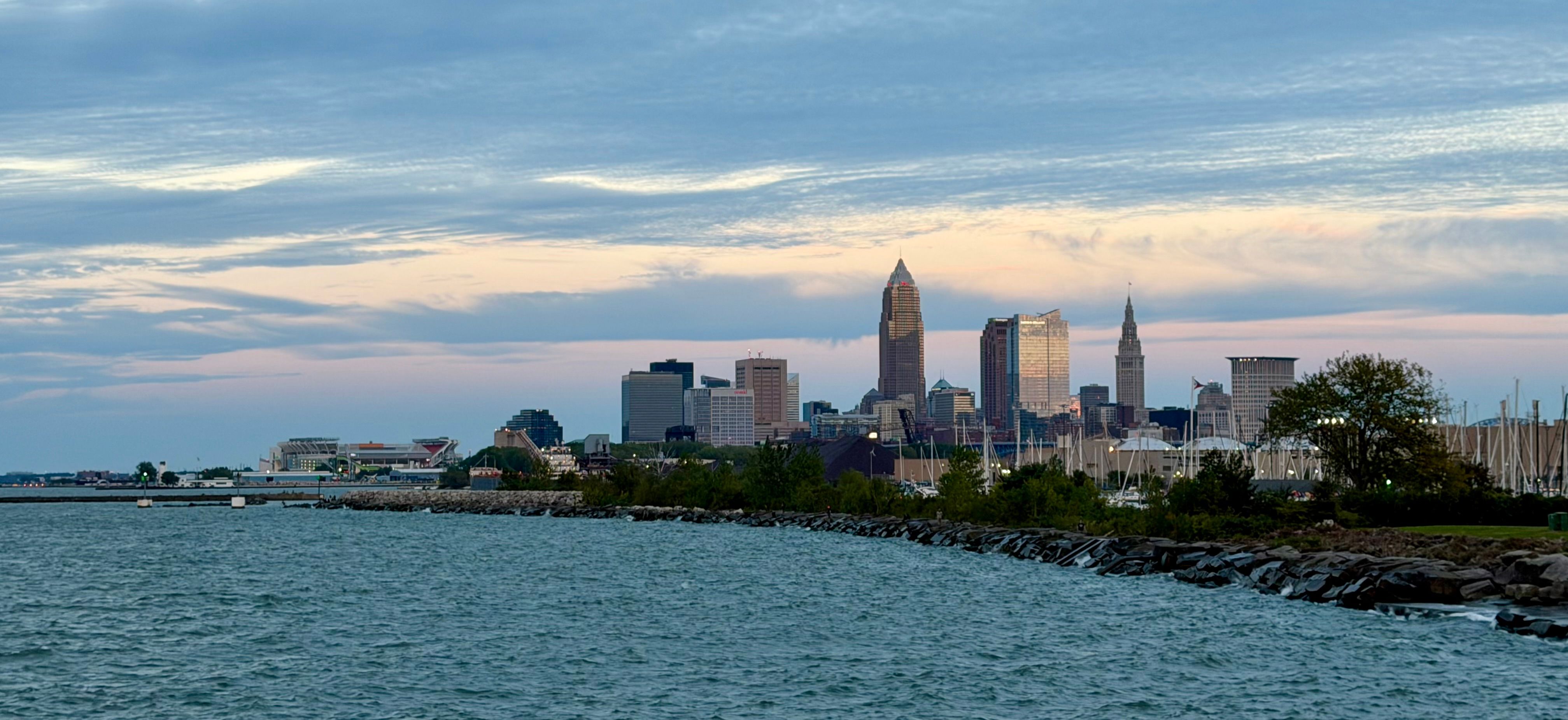
The park offers an easy way to see the city from a little distance. From the shoreline, Cleveland's tall buildings and industrial structures form a skyline that looks quite different from its street-level views. It's also a reminder of how much public green space matters in a city so closely tied to manufacturing and shipping. For us, it was a relaxed end to the first evening.
Downtown Details and the Changing Flats
Cleveland's older downtown buildings tell another part of its history. One striking example is The Arcade, which opened in 1890 and connects Euclid and Superior avenues. Its balconies, ironwork, and long glass skylight recall a period when the city was a major center of commerce. Even without a shopping agenda, the interior is worth a look.
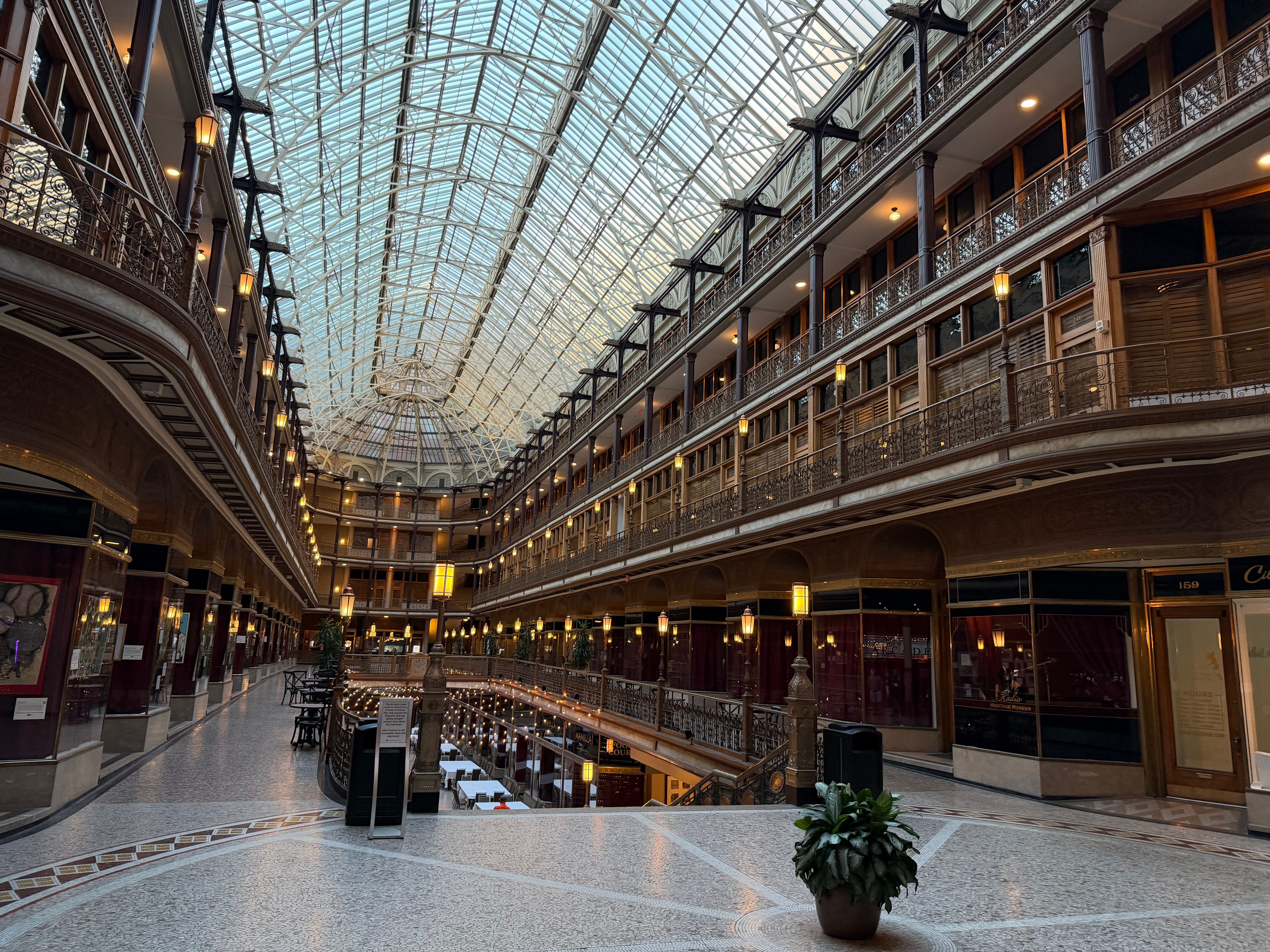
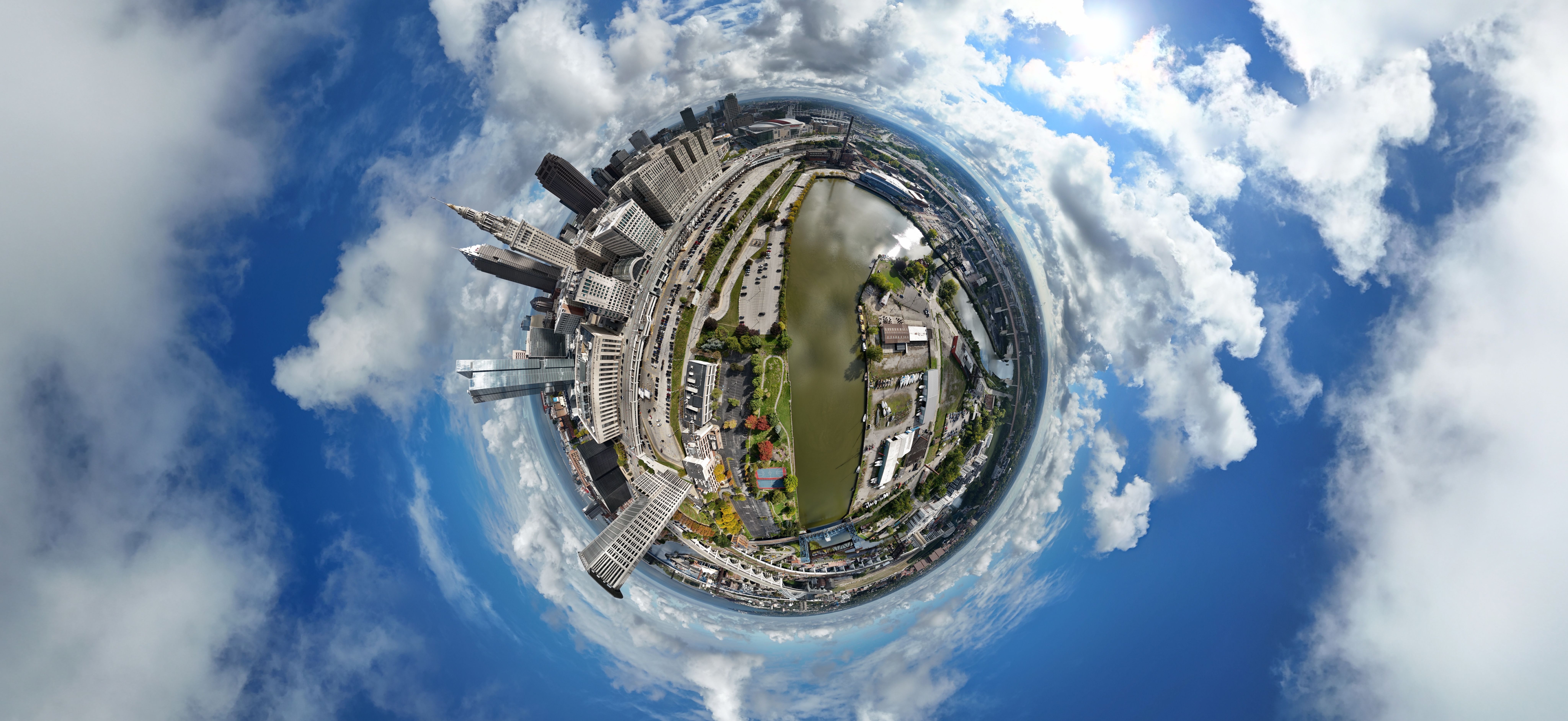
The following morning, we walked downhill from the Tower City complex into the Flats, the low-lying district along the Cuyahoga River. More than 20 years had passed since my last visit to the area's bar scene, and the changes were noticeable. Newer waterfront parks and gathering spaces have softened sections of what was once a dense industrial landscape, while restaurants and entertainment venues have brought people back to the river's edge.
The transformation is far from complete. At various points, aging industrial structures and disconnected stretches of waterfront still interrupt what could someday become a continuous public greenway. The juxtaposition is part of the Flats' character, although as we walked I couldn't help imagining what the banks might look like in another 20 years.
A Regatta on the Cuyahoga
We happened to arrive during the Head of the Cuyahoga regatta, an annual rowing event that celebrated its 30th edition in September 2026. Crews from Ohio and surrounding states had gathered near Merwin's Wharf and along the winding river course. What might otherwise have been a quiet morning walk had turned into a lively waterfront scene.
We threaded our way past team tents, spectators, and crews carrying long shells and bundles of oars toward the water. The announcements made clear just how broad the participation was, with high school, collegiate, masters, and mixed crews among the competitors. From a bridge above the river, we watched boats navigate the bends and pass between the industrial structures that make this such a distinctive racecourse.
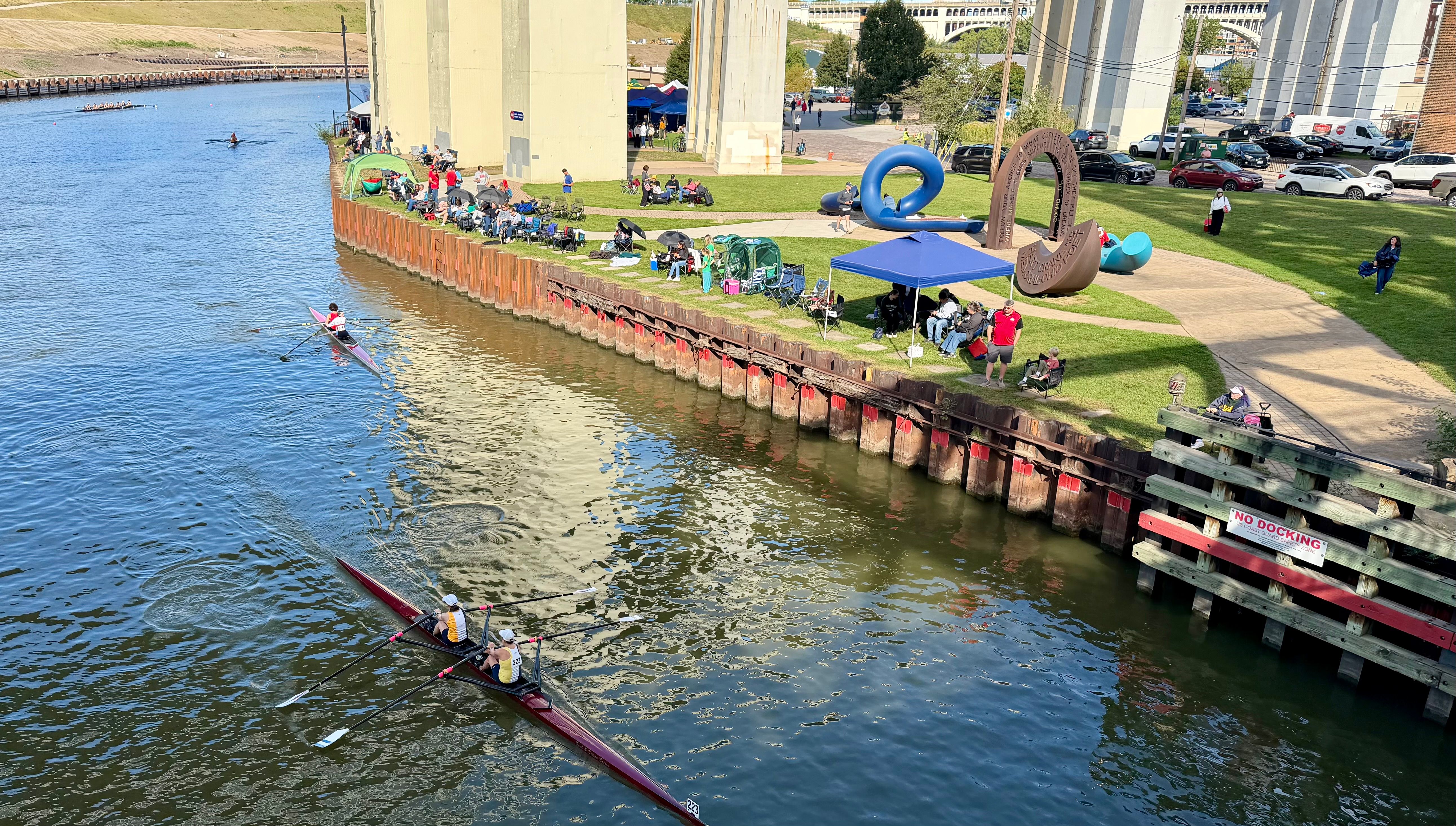
The regatta was a good example of the river's changing role. The Cuyahoga still works as an industrial waterway, but it is also a place where people race, paddle, walk, and gather. That coexistence isn't always tidy, which may be why the scene felt so unmistakably Cleveland.
After watching a few races, we headed back toward the hotel to prepare for a trip farther afield. We'd already packed quite a range of experiences into the city portion of the weekend.
Travel Tips for a Cleveland Weekend
- Allow at least a couple of hours for the art museum. General admission is free, though certain exhibitions require tickets. The museum has a paid parking garage; check its current hours, exhibitions, and parking information before going.
- Visit Edgewater Park in the late afternoon if the weather cooperates. The lakefront views are good at any time, but the skyline is especially appealing around sunset. Expect other people at the Cleveland sign.
- Check the regatta schedule if you're visiting in September. The Head of the Cuyahoga's website lists event dates and spectator information. Bridges can provide useful vantage points, but the waterfront gets busy with crews and equipment.
- Give the Flats some time on foot. The riverfront has public spaces and entertainment areas, but routes are not always continuous. A little exploring is part of the experience.
More Than One Side of Cleveland
Between the museum, our dinner in a vintage diner, the Lake Erie sunset, and the activity on the Cuyahoga, Cleveland gave us a weekend that was varied, interesting, and easy to enjoy without a rigid itinerary. The city has rough edges, but also a lot of civic pride and a visible commitment to making its public spaces better.
We explored a very different side of the region during the same trip, trading city streets and waterfront activity for a peaceful walk at Holden Arboretum—and then the noise of a Browns game. Read about those experiences in From Treetops to Tailgates: Two Sides of Cleveland.