
Archibald · St. George, Utah
Archibald Visits St. George: A Rather Important Relative
I visited a remarkably self-important cousin in St. George, where a giant tortoise mural seemed to confirm his boasts—until Grandmother Maeve intervened.
I had been looking forward to visiting St. George, Utah.
This is not something I say often about travel. I prefer familiar sand, dependable shade, and a burrow whose location never comes into question. But the Tall One and the Pretty One were heading west, and St. George was home to my distant cousin Waylon.
Waylon is a Mojave desert tortoise. I know precisely how we are related, though explaining it would involve several ancestral branches and an old disagreement about a migration. Tortoises maintain meticulous genealogical records, naturally. Humans, with their comparatively short attention spans, seldom appreciate the details.
Waylon and I have corresponded for years. His letters usually begin with the weather and end with an account of his own remarkable achievements.
According to Waylon, he played a decisive role in making St. George what it is today. He knew where the water was. He knew how to survive in country that had defeated others. The town, he implied, owed him a considerable debt.
I have always regarded his claims with caution. Every family has someone who mistakes confidence for evidence.
A Familiar Face on Main Street
St. George greeted me with red cliffs, clear skies, and sunlight that made no allowance for those of us traveling close to the ground. The air was much drier than Florida's, and I immediately began assessing the shade.
Then I saw the mural.
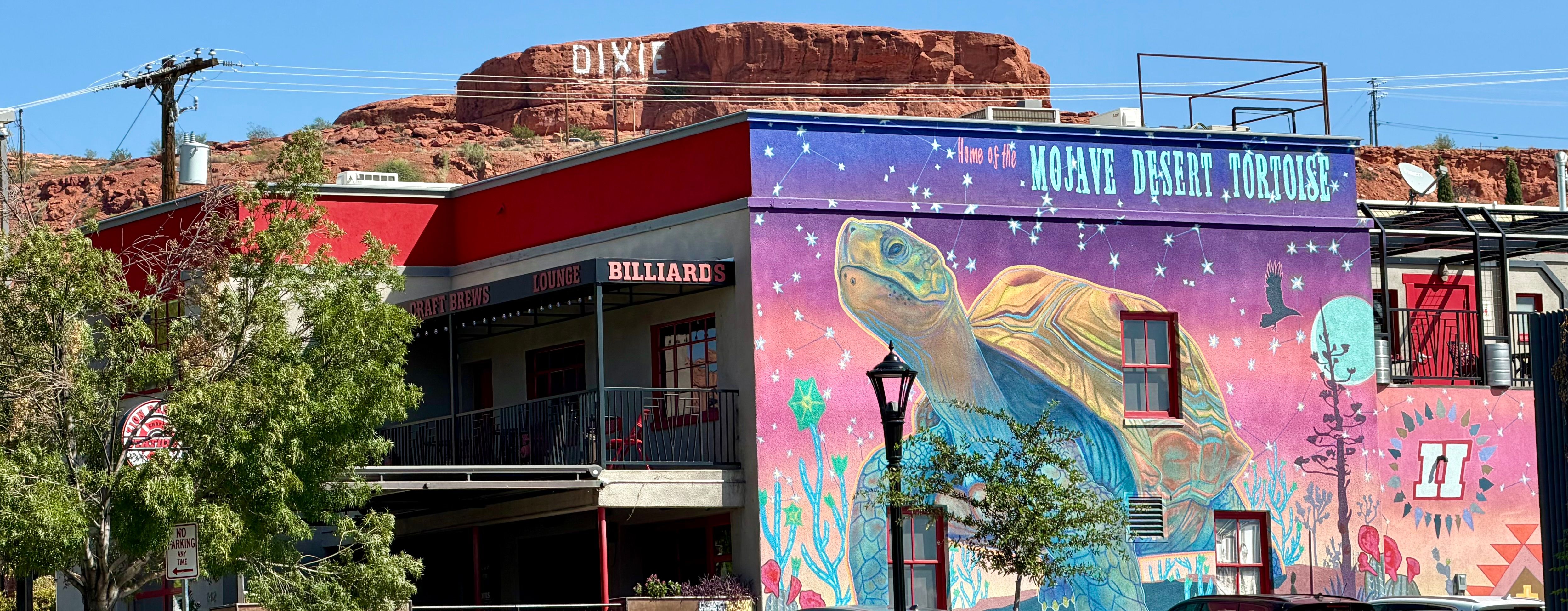
An enormous desert tortoise occupied the side of a building downtown. Its head rose above the windows; its shell stretched across the wall. Above it were the words Home of the Mojave Desert Tortoise.
I stopped to examine it.
The resemblance to Waylon was extraordinary. The set of the head, the expression, even the general air of knowing more than anyone else—it might just be my cousin looking down at me from several stories up.
I have never seen such an honor bestowed upon a tortoise in Florida.
Was it possible that Waylon has actually accomplished everything he claimed?
For the first time, I wondered whether I had underestimated him.
Water With a Complicated Itinerary
Downtown St. George offers tidy paths, well-kept trees, and several agreeable patches of shade. It also presented a mystery.
In a courtyard, a small stream ran through a stone-lined channel, over pebbles and beneath a crossing. I followed it until it disappeared under the paving.
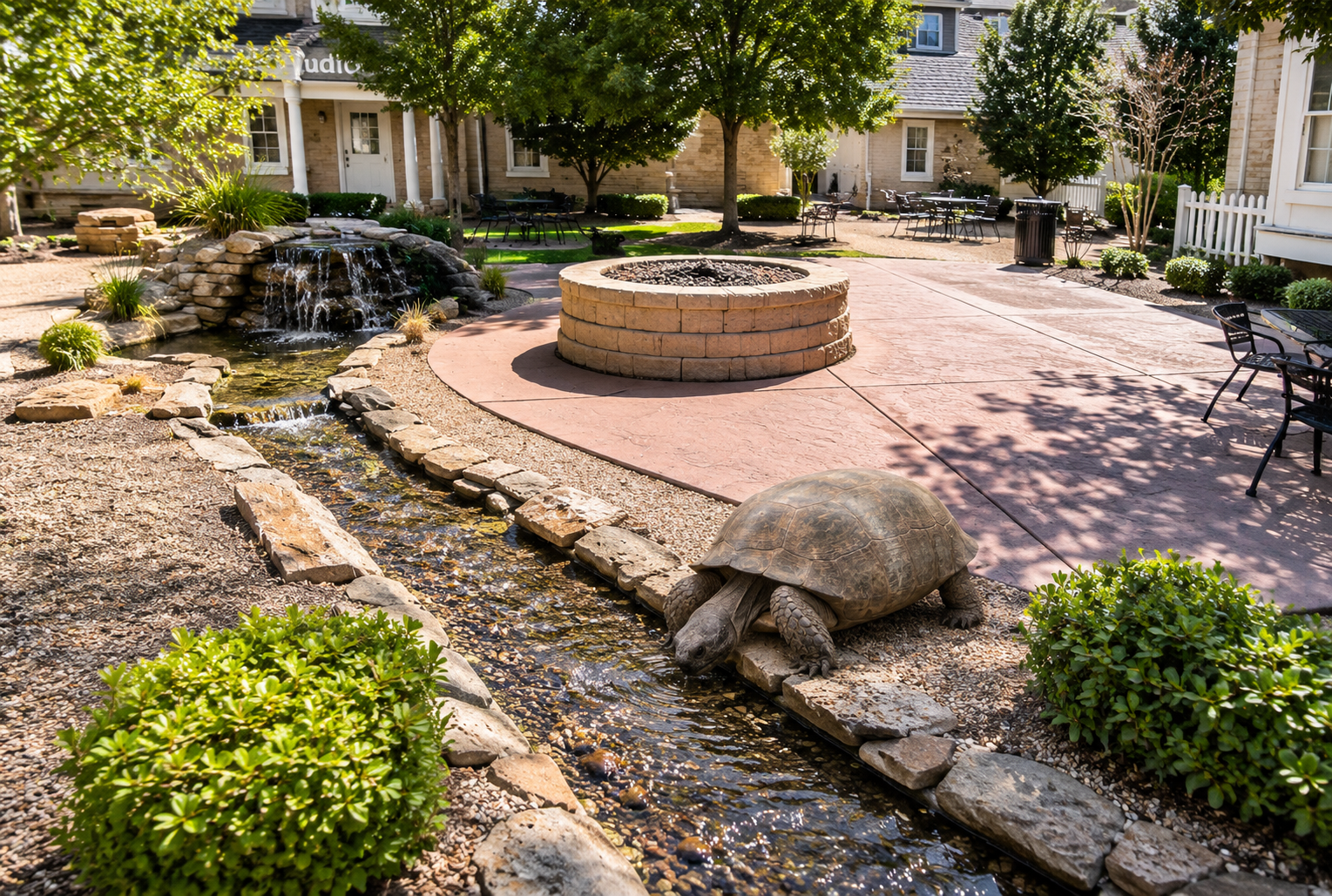
I waited. It did not return.
Farther along, I found water flowing again, apparently unconcerned by its unexplained absence.
I am familiar with water moving. At Wekiwa Springs, it comes out of the ground and travels away with tremendous enthusiasm. Florida also has ponds that remain where one left them and wet ground that sometimes swallows things it ought not to swallow.
What I had not encountered was water being given an itinerary by humans. Here it was guided between stones, sent beneath footpaths, and brought back into view wherever someone thought it would look attractive.
Elsewhere, a fountain launched water into the air, only for it to fall immediately back to earth. The machinery then repeated the operation.
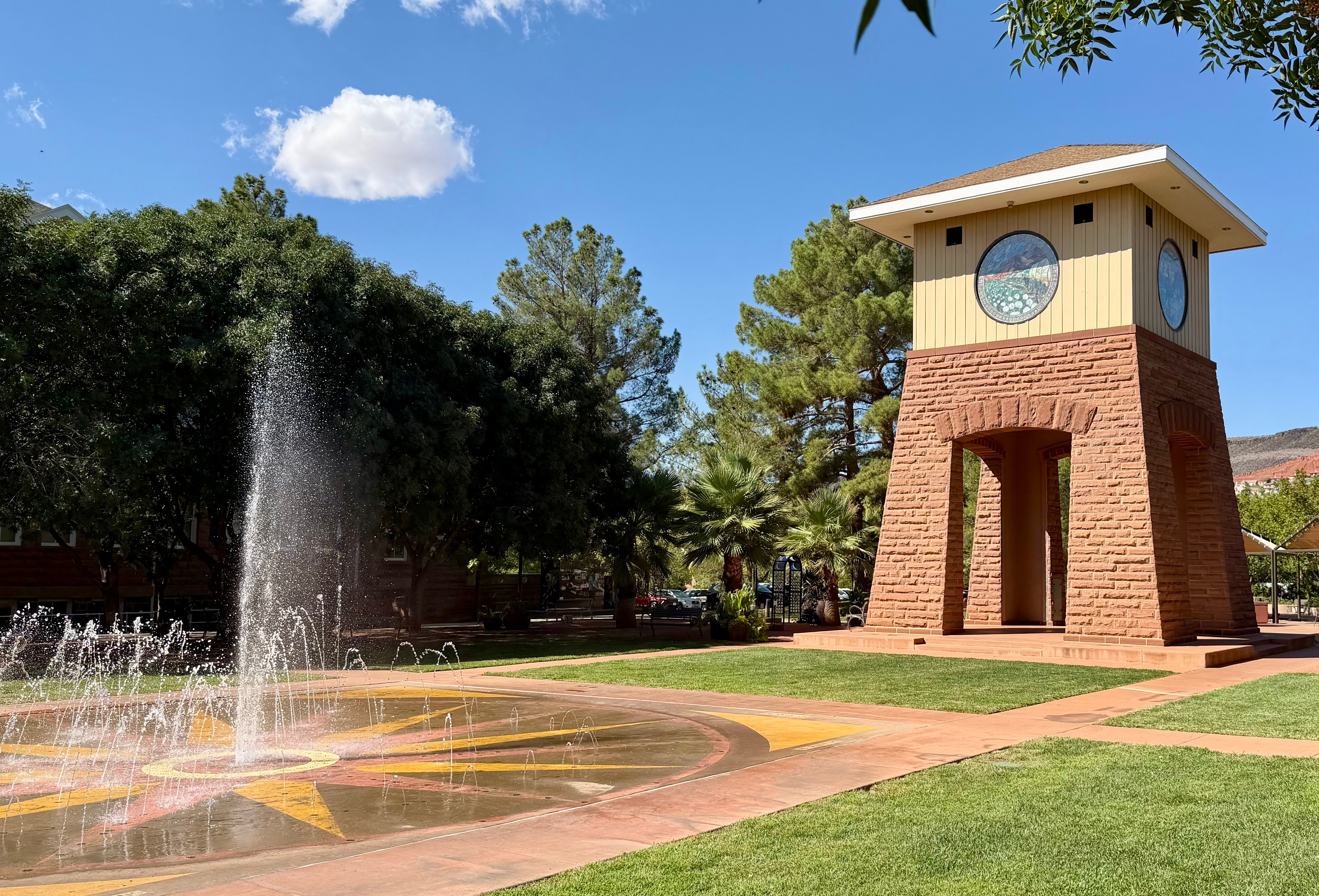
In Florida, humans devote considerable effort to getting rid of excess water. In St. George, they appeared to devote equal effort to keeping it, moving it, and occasionally throwing it upward.
At least they had the good sense to plant shade trees. Shade is a long-term investment.
A Housing Problem in Red Sandstone
The bluffs above town looked promising from a distance: quiet country, scattered plants, broad views, and no obvious shortage of places to rest.
Up close, I discovered a serious defect.
The ground was rock.
I tested it with a forefoot. Nothing yielded. I tried another spot, with identical results. It seemed the earth here had decided long ago to stop cooperating with excavation.
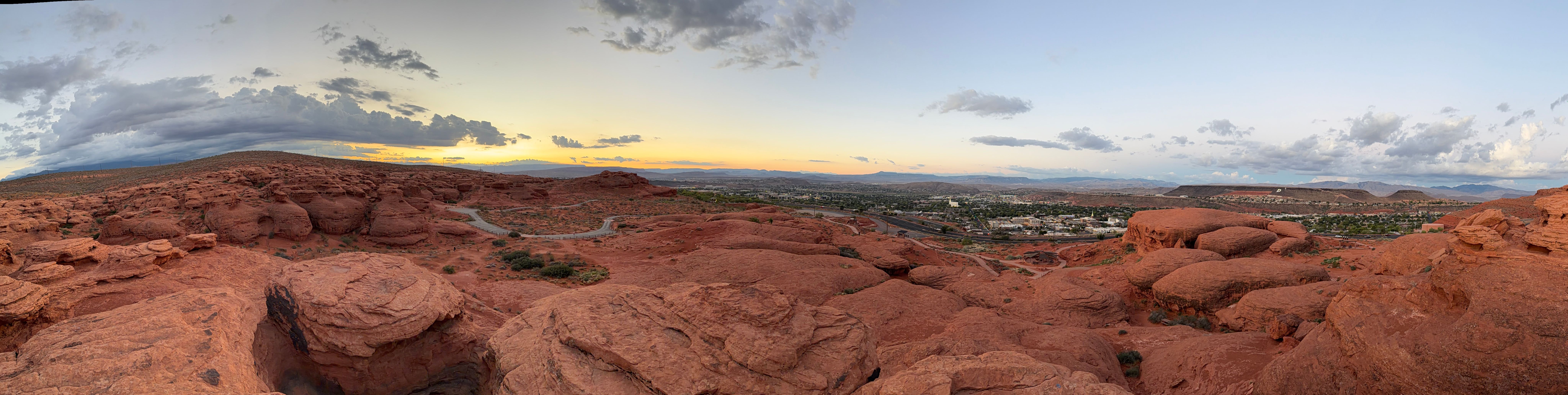
A burrow is not a luxury. It protects a tortoise from heat, cold, and creatures inclined to make poor decisions. My Florida sand permits a reasonable amount of digging. This stone offered no such understanding.
Yet the sandstone had its advantages. Beneath ledges were shallow recesses and openings worn into the rock by erosion. I settled under one overhang and found cool shade, still air, and no immediate need to excavate anything.
The landscape had, in effect, provided some accommodation in advance.
I was reluctantly impressed. Waylon would later remind me that desert tortoises dig their own burrows where the soil allows. Still, outsourcing part of the work to geology struck me as efficient.
Waylon, in His Element
I found Waylon near a patch of desert shrubs, resting in the shade of a low rise.
"Archibald," he said.
"Waylon."
"Long way from Florida."
"Further than I would recommend."
He nodded. "Good to see you."
"Likewise."
We had covered the essential greetings. Tortoises need not make a ceremony of affection.
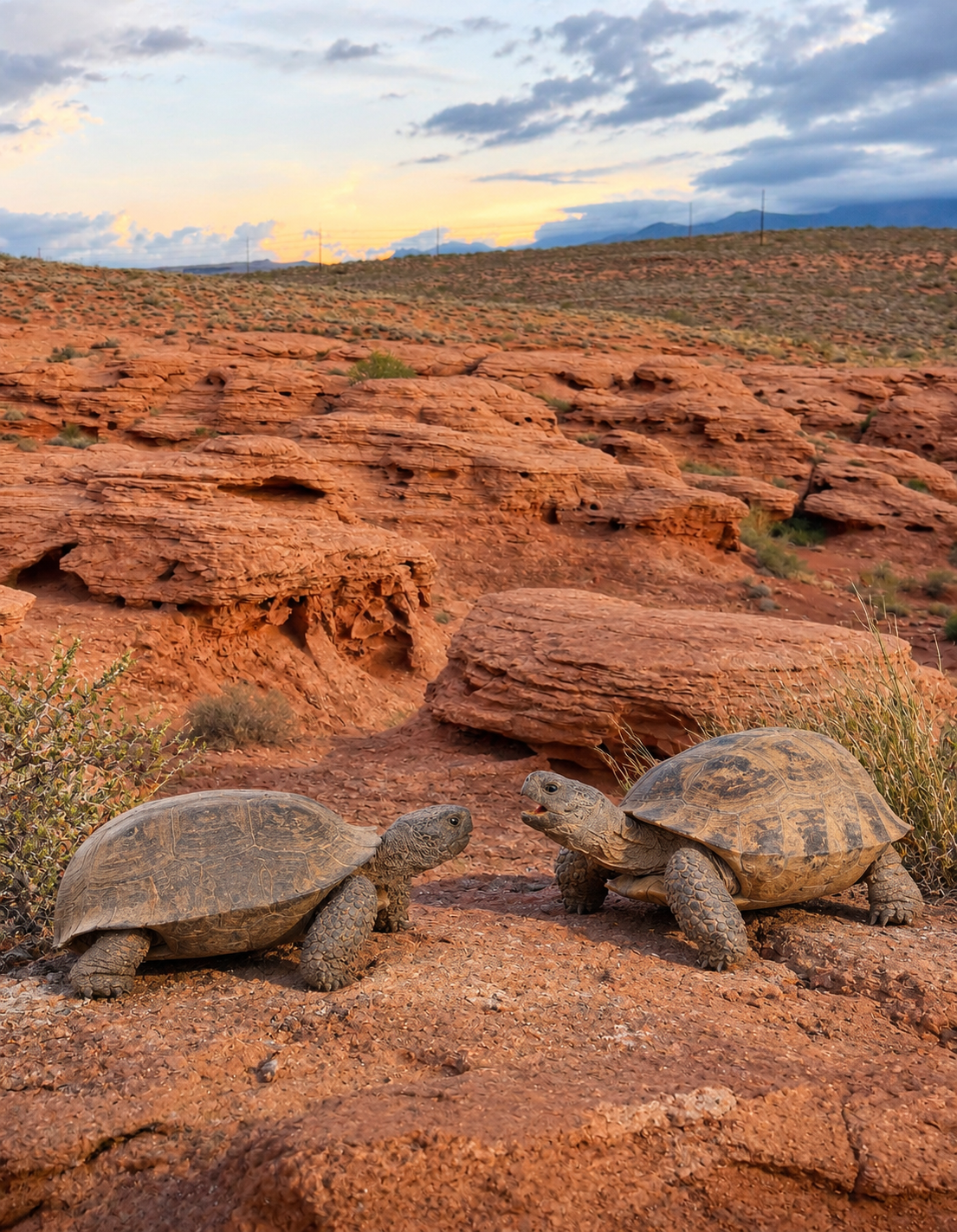
Waylon showed me the country he knew so well. He moved confidently over loose stones and pointed out the places where seasonal plants appear after rain. He shared a few tender shoots from his favorite foraging spots. Some were quite good. Others suggested that desert life requires a flexible palate, and a strong jaw.
We passed desert plantings of barrel cacti, prickly pear, and sharp-leaved shrubs. I admired their economy with water, though several looked determined to discourage close inspection.
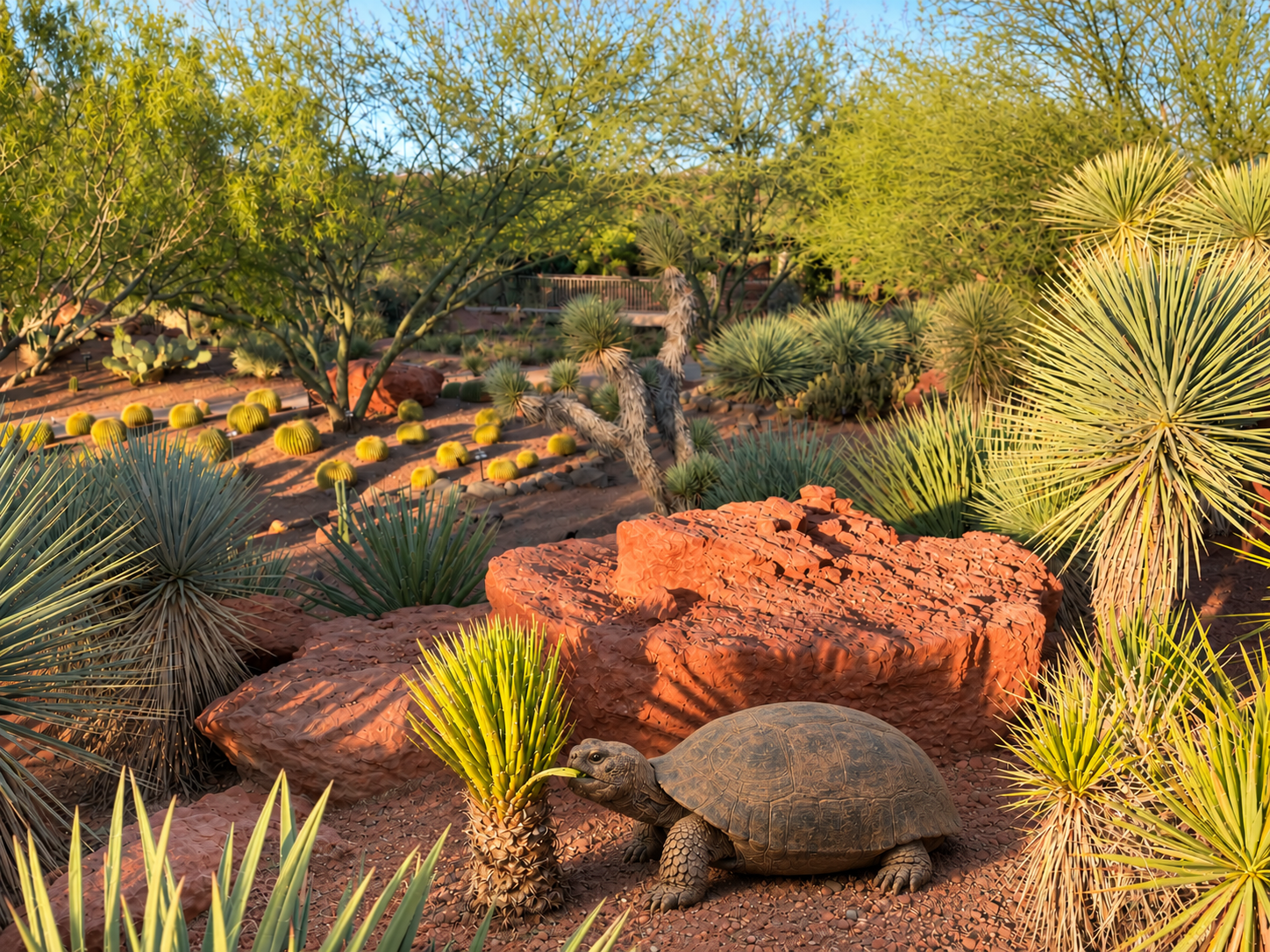
St. George's Red Hills Desert Garden offers a particularly good look at plants adapted to this dry region. In Florida, greenery tends to grow whether anyone has requested it or not. Here, every leaf seemed to have considered the expense.
"Not everyone can manage out here," Waylon observed.
"I noticed the shortage of agreeable soil."
"Takes experience. Knowing the land. Finding water." He paused. "I've been rather useful around St. George."
This sounded familiar.
"Useful enough to have your portrait painted downtown?" I asked.
Waylon looked pleased, though he made an effort to conceal it.
"You've seen that, then."
"It looks remarkably like you."
"Does, doesn't it?"
He offered no correction. Instead, he spoke of his knowledge of hidden water, the travelers he had supposedly assisted, and the reputation he enjoyed in town. He was particularly proud of the Red Cliffs Desert Reserve, which helps protect Mojave desert tortoises and their habitat.
I approved of the reserve. Back home, I had seen what happened when humans neglected native habitat, and I appreciated efforts to protect it.
Waylon seemed to think the reserve reflected especially well on him personally.
"They take care of important folks around here," he said.
I glanced toward town, where his enormous likeness presided over a building.
For once, I had no ready objection.
"Waylon," said a voice behind us, "what have you been telling your cousin?"
Grandmother Maeve Sets the Record Straight
An elderly desert tortoise emerged from behind a yucca. Her shell was weathered, her expression composed, and her manner suggested that she had long since lost interest in hearing excuses.
Grandmother Maeve.
She greeted me, asked after the sand back home, and inquired whether the Tall One and the Pretty One were still caring for the native plants near my burrow. Satisfied with my answer, she turned to Waylon.
"Have you been claiming credit for the town again?"
"Just discussing local history, Grandma."
"Then let's have it accurately."
I mentioned the mural. Maeve nodded at once.
"Jedidiah. Waylon's great-great-grandfather."
I looked at my cousin. He was inspecting a stone with unusual concentration.
Maeve explained that Jedidiah had guided early travelers toward a watering place on their journey west. Knowing where water could be found was no small accomplishment in this country.
"That painting honors Jedidiah," she said. "Not Waylon."
"I never said it was me," Waylon protested.
"No. You just waited for Archibald to say it."
I was grateful for the stone at my feet. It provided somewhere to direct my attention.
"Jedidiah knew this country," Maeve continued. "He could find water when others couldn't. Waylon got lost in his own burrow last spring."
"I had added a new tunnel," Waylon muttered.
"And you dug it yourself," Maeve replied.
I could have pressed the matter. Waylon had allowed me to believe he was the hero of an old story, and I rather disliked being misled. But he had also welcomed me, shared his shade and his best plants, and shown me a part of the world I would otherwise have misunderstood.
His hospitality was genuine, even if his historical contributions were not.
Besides, Maeve had delivered a correction considerably more effective than anything I could have devised.
She regarded us both.
"You boys come into town tomorrow. I've arranged something."
Waylon brightened.
I became suspicious.
The Trouble With a Moving Platform
Maeve had secured places for us on a float in the Dixie Days parade.
I have no objection to platforms. A stationary platform can be an excellent place to observe one's surroundings. This one, however, was attached to a vehicle.
It vibrated underfoot, lurched forward, and stopped without warning. People waved from the sidewalks. Music and voices filled the streets. Apparently, the purpose was to travel slowly while attracting as much attention as possible.
I prefer to travel slowly without attracting any.
Waylon looked delighted. Maeve had found a secure place to sit and appeared entirely at ease.
Then a cowboy began spinning a rope.
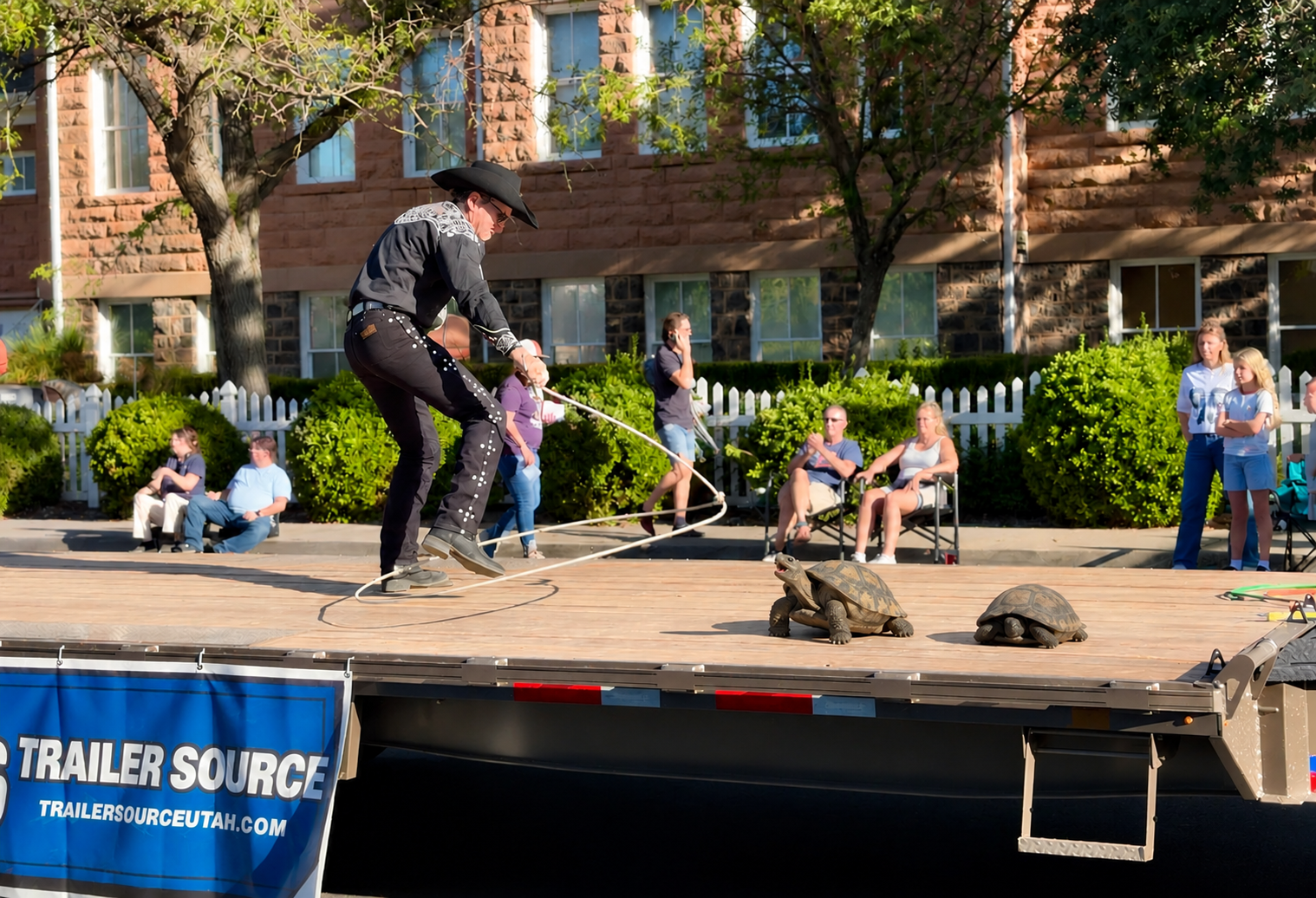
I watched for the animal he was trying to catch. There was none. He swung the rope overhead, stepped through its turning loop, and continued until the crowd applauded.
It was an impressive amount of skill directed toward accomplishing nothing in particular.
The float jolted. I planted my feet.
"Enjoying yourself?" Waylon asked.
"I'd prefer the ground not to travel without my consent."
"You'll get used to it."
"That is not a persuasive argument."
Maeve made a quiet sound that might have been a laugh.
Despite my reservations, I began to see the appeal. The townspeople seemed pleased to be together. Children waved, the red hills stood above the streets, and the procession moved at a pace that was, at least, not unreasonable.
More importantly, I was sharing it with my relatives.
I will acknowledge—carefully—that I experienced something approaching excitement. It was brief, but unmistakable.
A Reasonable Place to Have Family
Later, Waylon and I rested on the rocks overlooking St. George. The setting sun lit the sandstone in deep oranges and reds. Below us, the town settled into the valley, and the distant mountains faded into the evening.
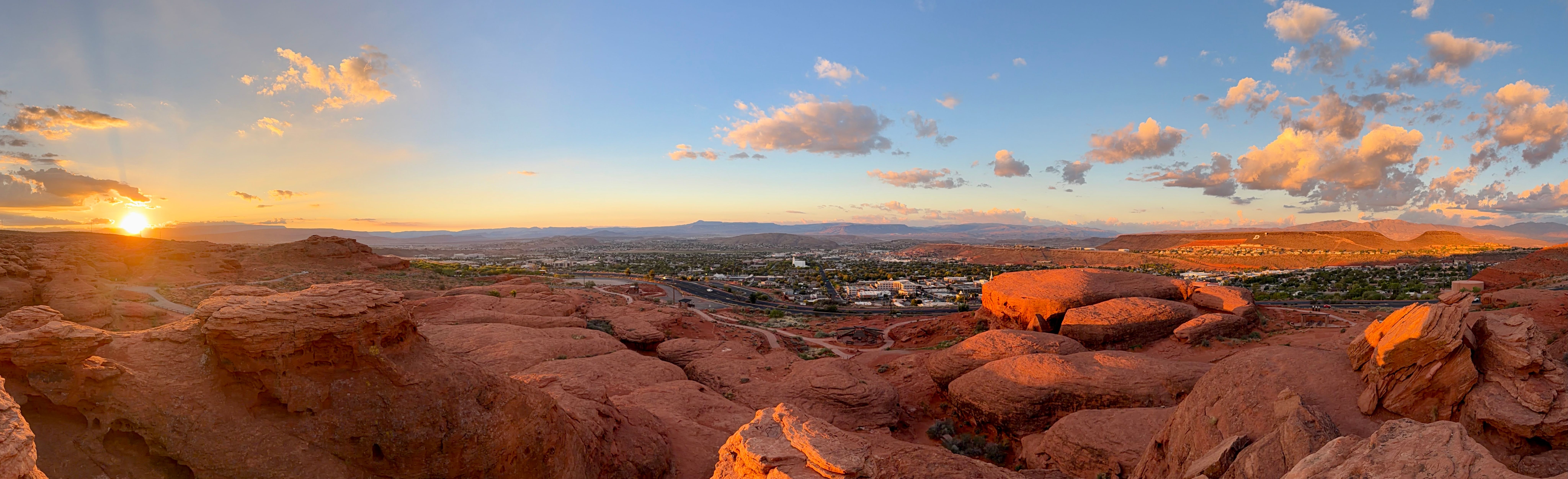
Neither of us spoke for a while.
I thought of the differences between our homes. Florida offers sand that yields to determined digging and water that is usually plentiful. Waylon's country demands careful timing, an appreciation for rocky shelter, and considerable attention to the sun. Yet we agree on the essentials: sound ground, a safe retreat, useful plants, and the wisdom of resting when conditions call for it.
"Your great-great-grandfather sounded like an admirable tortoise," I said.
"He was."
"And your grandmother is a formidable one."
"She is."
I considered bringing up the mural again, but decided against it. Waylon had been a good host. Maeve had already dealt with his claims, and there was no sense in excavating the matter further.
"I'm glad I came," I told him.
He looked at me. "Me too, cousin."
We watched the light withdraw from the cliffs.
The world, it seemed, was larger than necessary. But having family in distant places made the distances easier to justify.
I would visit St. George again.
Preferably without the moving platform.